With demand for skilled workers in agribusiness and veterinary science growing, now is the perfect time to introduce your students to these fields. In fact, research shows that middle school is when students benefit from career exploration the most. There are a lot of different hands-on tools you can use to create a middle school career exploration unit focused on agriculture. Read on to see our favorites!
1. Swine Litter Processing Simulators
Introduce your students to the concept of swine litter processing and other animal husbandry concepts with realistic, hands-on experience. Our Swine Litter Processing Simulators include four lifelike piglet simulators. You also get teeth and tail snippers, ear notching tools, and plastic scalpels. We’ve also included supplies for practicing teeth clipping and castrating.
The included curriculum takes approximately one to two hours to complete. It includes presentation slides, student activities and assessment tools, which you can use to explore topics like proper processing techniques and the importance of swine health.
We recommend two sets of simulators for a 20-student class exploring agriculture and veterinary technician careers.
Use this kit to explore careers in animal systems as well as veterinary technology, clinical pathology, and surgery.
Add soft skills practice with these supplemental scenario cards: Agriculture Career and Vet Tech Career

2. Animal Clinic Design Kit
Introduce your students to vet science and related careers with our interactive Animal Clinic Design Kit. Your students will get hands-on experience researching, designing, and creating their own animal clinic. Each kit includes five gridded white boards, microfiber cloths, dry erase markers, scaled vet furniture sets, and student key cards.
The kit curriculum takes about four hours to complete. It covers topics such as veterinary technician careers, animal welfare act and animal care, and best practices and design options for animal clinic design. Each activity include objects, materials required, and approximate class time.
We recommend two kits for a 20-student class exploring veterinary technician careers.
Use this kit to explore careers in veterinary technology, clinical pathology, nutrition, and surgery as well as zoological and exotic animal technology.
Add soft skills practice with this supplemental scenario card set: Vet Tech Career

3. Bovine and Swine Breeders
The Bovine Breeder™ artificial insemination simulator and Swine Breeder™ artificial insemination simulator are unique experiential learning tools for exploring skills needed in agribusiness and veterinary science careers. The Bovine Breeder lets students practice accurate cervix manipulation, AI gun positioning, and pregnancy palpation. The life-sized Swine Breeder helps students practice proper birthing techniques. (In fact, it’s durable enough for students to sit on while checking for standing heat and simulating AI techniques).
The included curriculum takes approximately three to five hours to complete. It features lessons on reproductive systems, the basics of AI, and proper insemination techniques. These lessons include detailed steps for activities, time and materials needed, student handouts, and any necessary information for instructors to teach the lesson.
We recommend one simulator for a 20-student middle school career exploration class.
Use these simulators to explore careers in animal systems and agribusiness as well as veterinary technology, clinical pathology, and surgery.
Add soft skills practice with these supplemental scenario cards: Agriculture Career and Vet Tech Career
4. Agriculture Education Kits
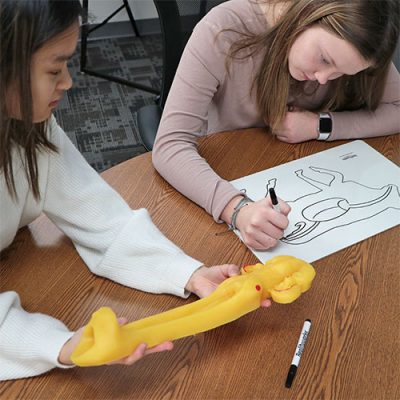
Use these Beef Cattle, Swine, and Chicken Kits to introduce students to the concepts they’ll need for success in animal science careers, such as breeds, reproduction and feeding and management. Each kit includes two posters on judging and feeding and management. You’ll also get five sets of Breed ID flashcards and Diseases and Parasites trivia cards, five whiteboards with the animals’ outline printed on it, and more.
The included curriculum takes about seven hours to complete. It covers topics such as marketing, careers, and training; body systems; and selection and judging. Each lesson includes student materials and slide presentations. After completing this curriculum, students will be able to discuss and list careers in beef, swine, or poultry production.
We recommend four kits for a 20-student class exploring agriculture and veterinary technician careers.
Use these kits to explore careers in animal systems and agribusiness as well as veterinary technology, clinical pathology, nutrition, and surgery.
Add soft skills practice with these supplemental scenario cards: Agriculture Career; Vet Tech Career; and Food Processing, Production and Safety Career
5. Electrical Wiring Kit
The Electrical Wiring Kit gives students an introduction to electrician careers with a safe, hands-on lesson in wiring common electrical circuits. The portable, battery-operated kit provides instant assessment and corrective feedback. It contains a wall panel demonstrator, electrical wiring components, electrical wiring assessment kit, student exercise workbook, and curriculum.
The included curriculum takes approximately 13 hours to complete and features lessons on electrical safety, electrical principles, and basic wiring skills. There are 16 different exercises within the curriculum that are meant to give students a general understanding of electrical wiring common in households and commercial environments.
We recommend five kits for a 20-student class teaching trade skills careers.
Use this kit to explore careers in electrical and HVAC work.
Add soft skills practice with these supplemental scenario cards: Electrician Career, Construction Career, and Manufacturing Career.

6. Small Cow Model Set
Use our Small Cow Model Set (5-pack) to create interactive group tasks focused on exploring cow anatomy, important concepts for success in a variety of agriculture and vet tech careers. Each small cow model is one-tenth the size of an actual cow. Additionally, they feature realistic details of internal and external anatomy. Each set includes five identical cow models on stands, a quick start guide, and online access to curriculum.
The included curriculum takes approximately three hours to complete. It features lessons on cow anatomy, the digestive tract, and reproductive systems. The goal of this curriculum is to help students learn the anatomy and physiology of dairy and beef cows through a variety of activities and use of the cow models.
We recommend one set for a 20-student class exploring agriculture and veterinary technician careers.
Use this set to explore careers in animal systems and agribusiness as well as veterinary technology, clinical pathology, and surgery.
Add soft skills practice with these supplemental scenario cards: Agriculture Career and Vet Tech Career

7. Bovine Milking Udder Simulator
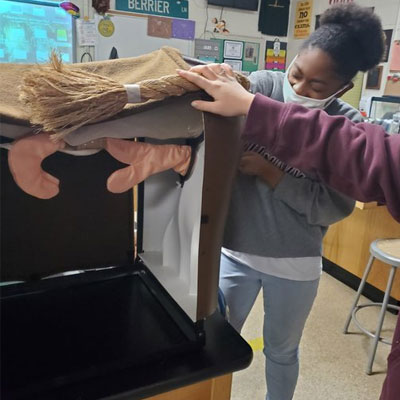
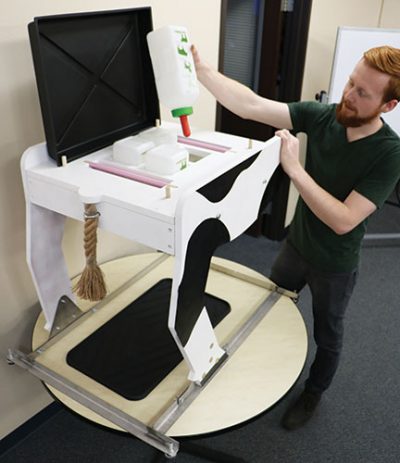
The Bovine Milking Udder Simulator is a working model of a cow udder. You can use it to demonstrate proper udder care, milk diseases, and infection treatment and prevention — important concepts for a variety of animal systems and agribusiness careers. It includes collapsible hindquarters with a stand, four milking udder bottles, and a chambered udder bag to hold the udder bottles.
The simulator’s curriculum takes about four to five hours to complete. Students will learn about the development and structure of a bovine udder and milking procedures. It also addresses general udder anatomy information. Every lesson includes activities with objectives and required materials.
We recommend one simulator for a 20-student class middle school career exploration class.
Use this simulator to explore careers in animal systems and agribusiness as well as veterinary technology, clinical pathology, nutrition, and surgery.
Add soft skills practice with these supplemental scenario cards: Agriculture Career and Vet Tech Career
8. Canine Vet Trainer
This lifelike Canine Vet Trainer provides consistent, realistic practice caring for a dog — great for students who are dreaming of veterinary and related careers! The trainer replicates a mid-sized Labrador Retriever. It has moveable limbs to make restrain hold practice realistic. Additionally, students can practice venipuncture, catheterization, and bladder palpation as well as subcutaneous injections.
The included curriculum takes approximately three hours to complete. It features lessons on basic canine anatomy; veterinary technician skills; and bladder issues, palpation, and urinary catheterization in dogs. Each lesson includes approximate class time for each activity, student materials, and slide presentations.
We recommend two trainers for a 20-student class exploring agriculture and veterinary technician careers.
Use this trainer to explore careers in animal systems as well as veterinary technology, clinical pathology, nutrition, and surgery.
Add soft skills practice with these supplemental scenario cards: Agriculture Career and Vet Tech Career

9. Plant Mini Educational Hydroponics System
Our Plant Mini Educational Hydroponics System Class Pack (5-pack) gives individual students or small groups the opportunity to take responsibility for growing an assortment of plants — great for students interested in exploring plant science careers. Each system includes a water tank, lights, a fan, a water and nutrient access hole, reusable grow cups, mini germination domes, and more!
The included curriculum takes about two hours to complete. It covers topics such as plant life and defining hydroponics. In these lessons, students will identify types and parts of hydroponics, define the plant structure and a seed, and discover career opportunities in the field of plant science and with hydroponics.
(New to hydroponics? The included quick start guide contains all the information you need to get started successfully.)
We recommend two class packs for a 20-student middle school career exploration class.
Use these systems to explore careers in plant and natural resource systems; agribusiness; and agriculture, food, and natural resources.
Add soft skills practice with these supplemental scenario cards: Agriculture Career; Horticulture Career; and Food Processing, Production and Safety Career

10. Greenhouse Insects Kit
The eight oversized models in this portable Greenhouse Insects Kit represent adult greenhouse insects in realistic, full-color detail. Use the models and accompanying curriculum and flashcards to explore the skills needed for careers in plant and natural resource systems, like identifying larva and adult insects. Some of the models include an aphid, fungus gnat, mealybug, and leafminer.
The included curriculum takes approximately one hour to complete. It teaches insect identification, but it could be adapted to a longer block of time with supplemental materials. The goal is to help students understand common types of insects found in greenhouses. It comes with presentation slides, student activities, and assessment tools.
We recommend one kit for a 20-student class exploring agriculture careers.
Use this kit to explore careers in plant and natural resource systems; agribusiness; and agriculture, food, and natural resources.
Add soft skills practice with these supplemental scenario cards: Agriculture Career; Horticulture Career; and Food Processing, Production and Safety Career

11. Plant Science Kit
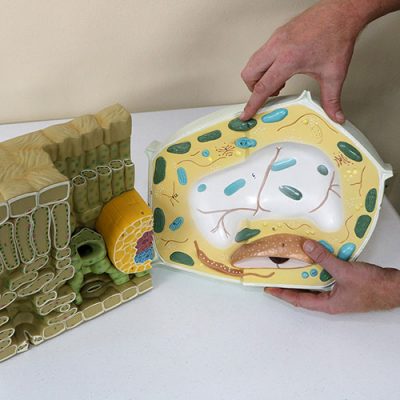
Use the Plant Science Kit to provide students with a foundational understanding of basic plant science concepts and related careers. Students can interact with realistic models of a dicot plant leaf and plant cell, and use the included plant science trivia cards and posters to learn more.
The included curriculum takes approximately 10 to 14 hours to complete. Your middle school students will explore opportunities in botany and plant science careers, and develop an understanding of plant cell structure. It helps students learn about basic plant science fundamentals as they relate to horticulture, agriculture, botany, and science.
We recommend one kit for a 20-student middle school career exploration class.
Use this kit to explore careers in plant and natural resource systems as well as agriculture, food, and natural resources.
Add soft skills practice with these supplemental scenario cards: Agriculture Career; Horticulture Career; and Food Processing, Production and Safety Career
Learn More
If you’re looking for information on middle school career exploration opportunities, we suggest:
- Our free career exploration curriculum, which introduces students to in-demand careers within agriculture
- Our downloadable infographics, which cover topics such as job outlooks and the soft skills today’s employers are looking for
- Our blogs on middle school career exploration in trades, Family and Consumer Science, and health science