 Math is a vital skill in culinary careers. An error can literally drain profits! But do your students struggle to remember fractions, decimals and other math basics? If you’re spending valuable class time reviewing foundational math before you even begin to teach your own culinary content, keep reading. You’ll get tips for engaging your students in basic math skills and jump-starting culinary math content so your students can develop the skills they need to succeed.
Offer “bite-sized” content chunks
The Generation Z students who occupy your classroom today — students who grew up with technology and have never known a world without smartphones — prefer their content in “snackable” chunks. They are looking for bite-sized nuggets of information that can be quickly understood and shared, like short videos or eye-catching graphics.
In fact, there is some research that shows that small bits of knowledge often create deeper meaning through references to shared stories or experiences.
If you’re looking for help creating snackable classroom content, consider this blog. Author and educator Lori Gracey walks readers through steps to break larger lessons into chunkable bites.
Gamify your content
Gamification is also a great way to engage Generation Z because that is what they love to do. What’s more, Gen Z students expect real-time data and instant feedback. They value recognition and rewards for their efforts.
If you’re interested in learning more about gamification, especially with math content, consider these resources:
- Introduction to Gamification in the Math Classroom
- A Game of Jeopardy
- PokeMath – Pokemon Gamification of Math Class
Integrate math throughout your curriculum
Too often math is taught separately, then instruction moves on to different culinary concepts. As a result, students may not understand that math is an integral part of the culinary process.

Instead, consider weaving culinary math concepts throughout your curriculum. Can you find ways to integrate math into using kitchen tools? Converting recipes? Planning menus? By taking time to highlight how math is used within all of these concepts, you’ll help students understand that they’ll be using math skills over and over, both in culinary courses and on the job.
Work smarter, not harder
Looking for more help teaching math in your culinary courses? Don’t reinvent the wheel when it comes to teaching basic math skills. Here are our favorite free resources for free math lesson content:
- With Khan Academy, you can create a free account and access a wealth of resources to teach math, from kindergarten through college.
- Math Planet is an online resource where you can study math for free. It covers pre-algebra topics as well as algebra, geometry and SAT/ACT prep. Select specific topics like “Greatest Common Factor,” and you’ll find examples, videos and more.
- Homeschoolmath is a comprehensive math resource site for homeschooling parents, parents, and teachers that includes free math worksheets, lessons, online math games lists, ebooks, a curriculum guide, reviews and more. The resources emphasize understanding of concepts instead of mechanical memorization of rules. It has lessons for kindergarten through twelfth grade.
Incorporate hands-on learning aids
Speaking of working smarter, not harder, hands-on tools are a great way to get students excited about content while satisfying their desire for active learning opportunities. If you’re looking for more tangible methods for teaching culinary math, consider our new Culinary Math Training Kit.
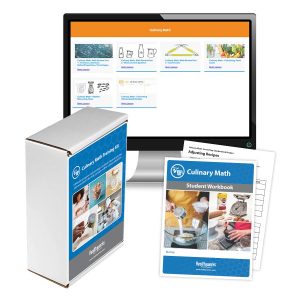
With lessons, student workbooks and hands-on resources, this kit offers a fun, out-of-the-box way to review math concepts and introduce students to basic culinary math.
What’s more, the curriculum includes six lessons for 7-8 hours of teaching time. Students will learn about kitchen measuring tools, converting standardized recipes, and calculating food costs. Workbook activities will integrate hands-on math and measurement activities with common tools found in kitchen labs.
You can learn more about our Culinary Math Training Kit here.
Utilize videos
Videos are a terrific tool to use with Generation Z. Why?
- They’re often short and therefore easy to digest (bite-size)
- They’re easy to access from a variety of devices
- They provide visual learning opportunities
- They offer increased simplicity
- They provide a variety of information
Looking for resources? Consider YouTube. Here is one of our favorites.
More culinary math resources
Looking for more information? We recommend watching our recent webinar, “Teaching Math In Your Culinary Program.” You’ll find more articles, links, and free resources for implementing the tips we suggest above, plus more!