 Looking to help your high school students earn a Child Development Associate® (CDA) Credential? In a recent webinar, we discussed the process for students seeking a CDA credential, the benefits for students and faculty, and more. Read on to hear what our presenters, Denise DuBois, Realityworks Family and Consumer Sciences Senior Product Manager and Co-Chair of the Alliance for Family and Consumer Sciences, and Sandra Kowalchek, Partner Relationship Manager for the Council for Professional Recognition (Council), had to share about this excellent opportunity for students to jumpstart their careers and suggested hands-on tools for your childcare programs.
Importance of Industry-Recognized Credentials
There are six key elements for developing career pathways. These elements are important to consider for any pathway program you develop, including early childhood education or childcare careers. Consider how you could use these elements to guide childcare pathway development:
- Building cross-agency partnerships
- Identifying industry sector and engaging employers
- Designing education and training programs
- Identifying funding needs and sources
- Aligning policies and programs
- Measuring system change and performance

Tip: Building a high school career pathway program? Visit the career tech website for a variety of helpful resources.
Many districts require that career pathways lead to industry-recognized certifications or credentials of some kind. To find the right certifications or credentials for your program, ask the right questions such as:
- Does your state department recommend a specific certification or testing agency?
- Are your instructors licensed to teach courses?
- What are local employers looking for?
- Is employment transferable?
- What is the cost of certification or a specific credential?
If you are developing a new program, make sure you research how to get your students properly certified. Think about the six key elements for developing career pathways. Certifications and credentials are part of the step for aligning policies and programs. The CDA certification is the premier national childcare certification high school students can earn.
What Is the CDA Credential?
The CDA credential is the most widely recognized credential in early childhood education. It is a key steppingstone on the path to career advancement in early childhood education. To be awarded the credential, candidates must complete an assessment process and demonstrate that they are able to put their knowledge of the CDA Competency Standards into practice in their daily work with children and families.
Benefits of a CDA Credential
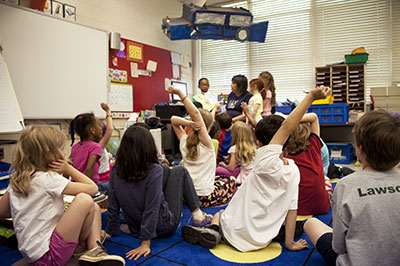
Students benefit by graduating high school job-ready with a nationally recognized CDA credential and can jumpstart higher education with core knowledge of child development. They will have the knowledge, skills, and confidence to work with young children. Students will gain valuable skills and competencies
that early childhood employers want.
Faculty benefit by empowering students with explicit, measurable, and transferable learning competencies recognized in all 50 states and the U.S. military. They can serve as a CDA Professional Development (PD) Specialist™ and further their own training and expertise if desired. Faculty will prepare students for success in college and career opportunities.
Tip: You can apply to serve as a PD specialist here. PD Specialists receive an honorarium of $100 for each completed CDA verification visit®.
Earning a CDA Credential in High School
There are three CDA Credential setting types: Center-Based (3-5 years or birth-36 months), Family Childcare (birth-5 years), and Home Visitor (birth-5 years). The credential combines theory, practice, and demonstration. Students need 120 clock hours of professional early education based on the eight CDA Subject Areas and 480 hours of work experience to build competency.

Before Applying for a CDA Assessment
Before applying for a CDA assessment, candidates must select a PD Specialist. As part of the assessment process, candidates must complete a CDA verification visit with a Council-endorsed PD Specialist. During this visit, the specialist reviews the candidate’s professional portfolio, observes the candidate working with children, and facilitates a reflective dialogue with the candidate.
Candidates must identify a PD Specialist prior to submitting their application. Once a PD Specialist agrees to conduct their visit, they will provide the candidate with their endorsement number. Candidates are required to provide this endorsement number on their application. Candidates can find a PD Specialist by using the Find-A-PD Specialist Directory on the Council’s website, asking a specialist they already know, or asking an early childhood education professional in their community to become a specialist by applying for and completing the Council’s online training.
Applying for a CDA Credential
Candidates must apply directly to the Council with their full application fee for a CDA credential. They must ensure the application has the code “CTE” (Career Technical Education) under Section B: Type of Program. Candidates can apply online or using a paper application. Paper applications can be found in the CDA Competency Standards book.
After an application is processed and approved by the Council, candidates will receive a Ready to Schedule Notice. The notice informs the candidate that they are now able to schedule the CDA verification visit with their PD Specialist and schedule the CDA Exam at a Pearson VUE testing center.

Engaging Tools for Your Childcare Pathway Programs
The following Realityworks teaching tools can help prepare students for childcare careers with hands-on activities.
Child Care Experience™ Program
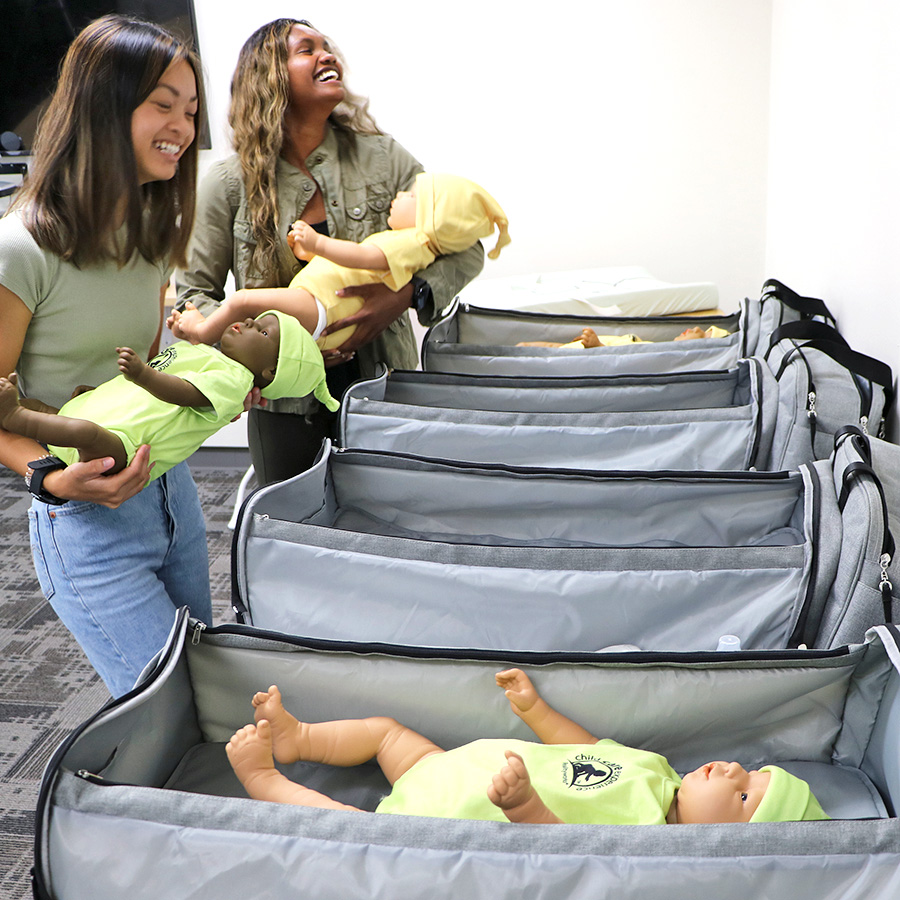
The Child Care Experience (CCE) is a complete simulation involving hardware, software, and curriculum to provide a capstone project for early childhood education pathway programs. It offers the most realistic childcare simulation possible. Each student participates in an in-class simulation, during which they manage the care of multiple infants simultaneously.
RealCare Baby® Infant Simulator
RealCare Baby (formerly known as Baby Think It Over® or BTIO®) is the world’s most advanced infant simulator. Educators around the world use this unique learning aid to teach early childhood education, parenting, infant health lessons, and sex education. This smart baby adds meaning and accountability to lessons by using wireless programming to track and report on caregiver behaviors.

Child Care Career Scenario Cards
Child Care Career Scenario Cards offer a simple and effective way to help students learn a variety of soft skills. Written by subject matter experts, the cards focus on 19 soft skills. Each scenario includes points of view to consider and key discussion questions. The scenarios cover real-word situations students could encounter in their childcare careers.
CDA Scenario Kit
We incorporate scenario-based learning in our CDA Scenario Kit, which includes scenarios for the 13 competency areas students must master as part of the CDA certification. This kit comes with scenario cards and workbooks focused on infant/toddler and preschool childcare scenarios and activities. The scenarios are based on real-world situations that people who work in in childcare must handle.

Child Care Center Design Kit
The Child Care Center Design Kit is a hands-on design experience for students tasked with designing three different rooms in a childcare center. Students will learn best practices for laying out infant, toddler, and preschool rooms for optimal learning and student interaction. The kit includes curriculum written by an experienced FCS instructor with a strong childcare program.
More Resources
- Access the full webinar to learn about the CDA assessment and credentialing process, hear tips for success, and discover new Council initiatives
- Get FREE posters and infographics about child abuse prevention, childcare careers, and more to hang in your classroom
- Access FREE career exploration lessons, including lessons on childcare careers