 Anyone who teaches animal anatomy and physiology knows the value of good animal anatomical models. (And most will tell you they’re on a constant lookout for high-quality options). A good animal anatomical model brings engaging, hands-on learning to a variety of important agriculture topics, from animal systems to livestock evaluation and the breeding, feeding and management of farm animals. That’s why we hold our own animal models to such high standards. In fact, we ensure they have 3 essential features.
Looks real
You know you have a good anatomical model when your students buy into it. A realistic model will grab your students’ attention. It will help them focus on the topic you’re teaching and apply course material to the real world (essential for today’s learners).
Teaches what it says it will
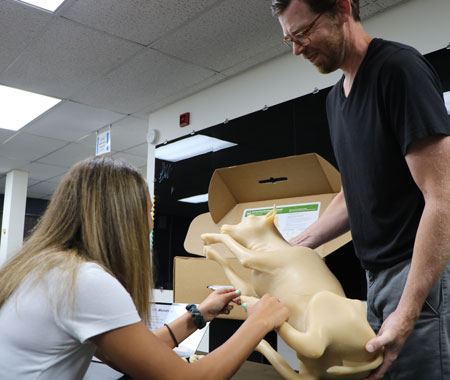
Animal anatomical models work if they include the organs and systems they’re supposed to. This is particularly effective when the models can be taken apart and assembled by students. Students can learn animal anatomy in situ, which adds an extra element of realism. It also makes the learning experience more memorable, which helps today’s students retain key information.
Did you know that our large animal models separate at the midline? This reveals removeable body parts and organs. See them in action:
Matches the curriculum used in the classroom
Why is this requirement important? You can have the best-looking anatomical model around, but if you cannot use it or integrate it seamlessly into your curriculum, then it is not the best choice.
Many of our animal models include lesson plans, presentation slide, activities and assessments. All of them include teacher guides so you know exactly what your model addresses.

Learn more
If you’re looking for more information on using animal anatomical models, we recommend these resources:
- Get suggestions for creating a 21st Century animal science program in our free animal science program implementation guide
- See recommended training tools and curricula for addressing important animal science concepts
- Learn how to utilize 3D models for student engagement in this on-demand webinar, “Using Models to Effectively Teach Animal Science Concepts:”