Hydroponics systems bring so much value to the classroom; opportunities for student engagement, career exploration and hands-on, STEM-focused lessons are just a few reasons to start a program in your school.
Earlier this summer, we hosted a free webinar on getting your school’s buy-in for a hydroponics program. Hosted by Jamey McIntosh, longtime Realityworks product manager, this webinar addressed the importance of hydroponics, steps to starting a hydroponics program and details about Realityworks’ own Hydroponics Educational Systems.
Why grow with hydroponics?
According to Jamey, there are 5 big reasons for growing with hydroponics:
- Limited space. In many locations, especially cities, there isn’t always enough space or soil available to grow plants in the ground. Hydroponics allows people to grow gardens even in limited space.
- Clean and efficient. Hydroponic farming is a clean and efficient way to grow vegetables and other plants. Plus, it can happen in a closed environment for year-round growing
- Solve food shortages and growing issues. Hydroponic farming can help solve food shortages, especially in areas where drought and famine are issues. And when weather conditions are unfavorable for large-scale crop production, hydroponics can help overcome these weather variables.
- Increased growth rates and time to harvest. Water and nutrients are continually made available to the plant roots in a hydroponics system, allowing plants to grow at the fastest possible rate and reducing the time between planting and harvesting.
- Learn and experiment with new ways to grow plants. Hydroponics allows for testing and experimentation of variables and environmental changes to determine the best way to grow certain foods.
5 Key Steps to Starting a Hydroponics Program
As Jamey shared in his webinar, steps to starting a hydroponics program include:
- Learn what is available, what your time and space limitations are and the outcome you’re looking to accomplish
- Create a plan. When do you want to start growing? When do you want to harvest? What materials do you need, and what are your expectations for students?
- Expect challenges and triumphs. Growth happens but prepare for trial and error. And don’t forget to share your experiences with others!
- Learn from others. Realityworks Lead Test Engineer spent a year growing exclusively with hydroponics, experimenting with everything from butternut lettuce and kale to sugar peas and cucumbers. There were wins and there were losses, and he learned a lot!
- Do it! Start the process – create space to start growing, incorporate a hydroponics system and act on the plan. Take the leap; you never know what you’ll learn
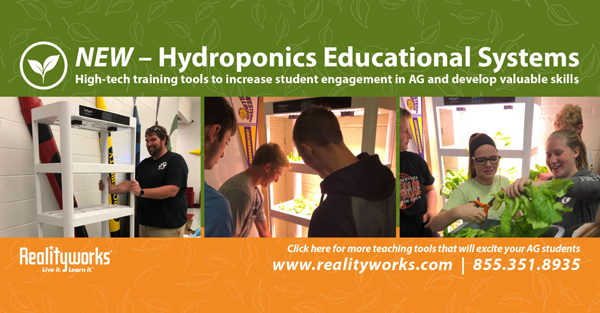
Hydroponic learning opportunities
As we shared in this blog post, hydroponics programs present untold learning opportunities for today’s students. Top reasons for bringing hydroponics into the classroom include addressing STEM concepts, offering relevant learning opportunities, providing immediate hands-on engagement, addressing a wide range of topics and providing opportunities for cross-departmental collaboration.
Learn more!
- Watch Jamey’s complete webinar below:
- Review Realityworks’ Hydroponics Educational Systems here
- Access a free Hydroponics: Know How to Grow guide here
- Learn how educators are using Realityworks’ Hydroponics Educational Systems here
Are you using hydroponics in your program? Share your experiences in the comments!