 The need for veterinarians in the workforce is projected to grow 20% in the next several years, putting veterinarian skills in high demand. That’s why we created the Canine Auscultation Trainer, a new tool for teaching these important animal care skills. Read on as we explore this unique trainer’s hands-on features — and watch the video below to see a demonstration!

Over 20 Heart, Lung, and Bowel Sounds
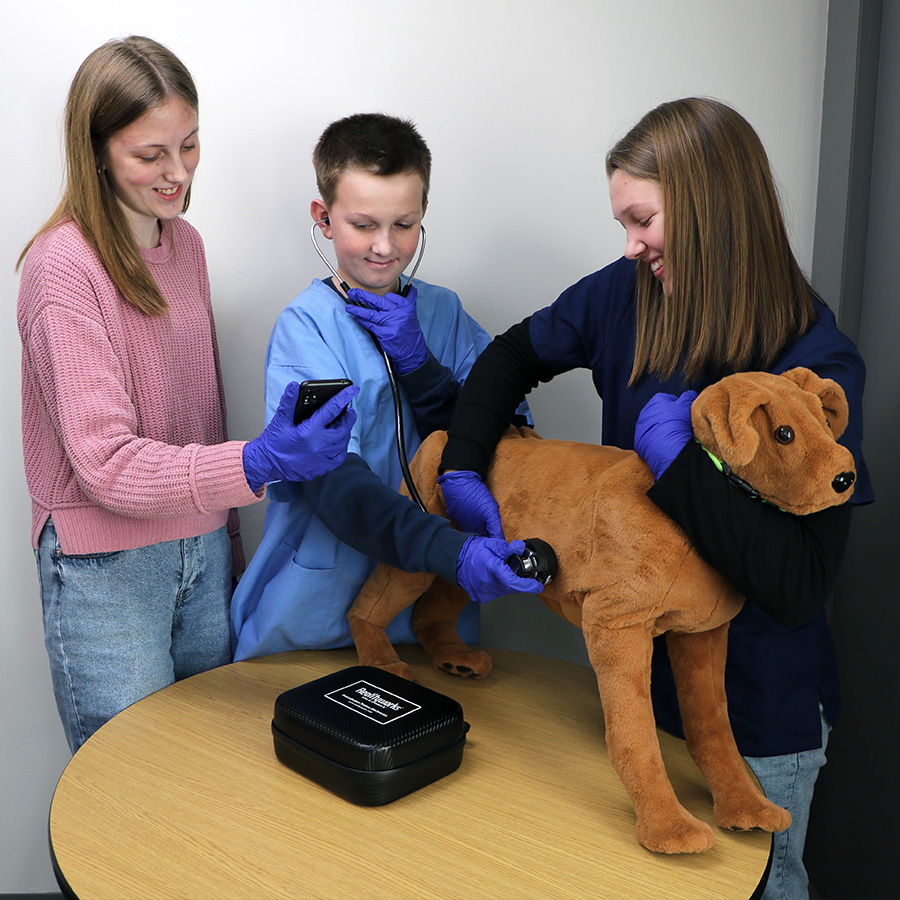
One crucial veterinarian skill is knowing how to properly auscultate a dog. The Canine Auscultation Trainer features 22 heart, lung, and bowel sounds that students can listen to using the included RealityScope, a stethoscope attachment. Students must place the RealityScope in the correct locations to hear each sound. You can see a complete list of sounds below.
Heart
- Healthy, slow, and fast heartbeats
- Fast and slow arrythmias
- Continuous, diastolic, and systolic murmurs
- Patent ductus arteriosus
- Atrial fibrillation
Lung
- Slow, normal, and fast breathing
- Faint and heavy breathing
- Wheezing
- Crackles
- Stridor
- Stertor
Bowel
- Healthy
- Hyperactive
- Hypoactive

Smart Device with App for Diagnostic Practice and Assessment
The Canine Auscultation Trainer comes with a smart device and app that allows the user to select which sounds they want to auscultate for. Students can use the device in practice mode to learn correct auscultation sites and what each sound means. Once they’ve had enough practice, they can test their veterinarian skills in the assessment mode where they must find the correct locations and identify the sounds themselves.
Movable Limbs for Restraint Hold Practice
Another vital veterinarian skill is knowing proper restraint holds. The Canine Auscultation Trainer can sit, stand, and lay down to practice proper positioning for general exams, specimen retrieval, and more! While the trainer won’t wiggle around too much, you can still practice applying bandages and ties as you would with a real dog.
Standards-Based Curriculum
This trainer also comes with downloadable curriculum that teaches students the important veterinarian skills of proper stethoscope use and auscultation of the heart, lungs, and bowels. It features two lessons with three to four hours of teaching content. You can teach the complete curriculum start to finish or pick and choose the best activities for your needs.
See a complete curriculum overview here.
Additional Resources
- Do you teach large animal veterinarian skills as well? Read this blog post to discover hands-on learning aids for teaching skills like bovine injection, piglet ear notching, and bovine birthing
- Explore all of our animal and veterinary science products here
- Find hands-on learning aids, lesson plans, and packages of pre-bundled tools for engaging students in veterinary science here