For the last 30 years, Family and Consumer Science (FCS) teachers have been using our RealCare Baby (Baby) in classes related to training for childcare, child development, and early childhood education careers. Baby has served us well, but we thought it was time to bring in a new simulation that teaches more advanced infant care skills. That’s why we created the Child Care Experience™ Program (CCE). This new program is not meant to replace Baby but provide the next step for students as they continue to develop their skills.
The Baby and CCE programs fill a continuum of these three areas: child development leads to early childhood education, which leads to childcare careers. Both programs help students gain necessary skills for childcare and early childhood education careers as well as important life skills. Baby helps students understand basic infant care and the responsibilities of parenthood, while CCE helps them learn how to care for multiple infants simultaneously and the responsibilities of a childcare provider.
Enhance your childcare program with hands-on learning
RealCare Baby and CCE provide essential hands-on experiences for child development, early childhood education, and childcare career preparation. Students who use these tools are more confident and competent as they develop important job and life skills.
Request a personalized quote today!

What Is Baby?
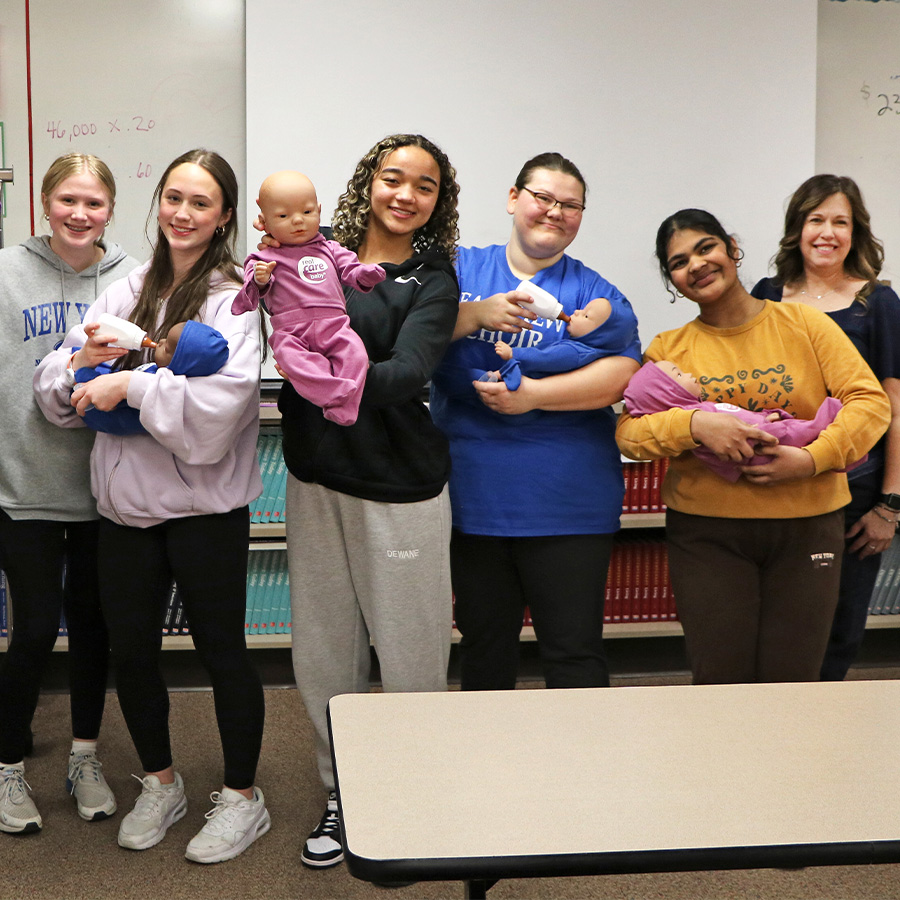
RealCare Baby (formerly known as Baby Think It Over® or BTIO®) is the world’s most advanced infant simulator. Educators around the world use this unique teaching tool to aid students in training for childcare, early childhood education, and parenthood. This smart baby requires meaning and accountability by using wireless programming to track and report on caregiver behaviors. Baby requires its caregivers to respond to four specific care events 24/7, just like a real infant. Baby’s included curricula cover topics such as basic infant care and healthy choices.
RealCare Baby at a Glance
Focus: Basic parenting and infant care education.
Ideal for:
- Introduction to parenting or child development courses
- Building empathy and responsibility
- Teaching students about the real demands of caring for an infant
Simulation highlights:
- Realistic infant simulator that cries, coos, and needs care
- Tracks student care behaviors for accountability
- Supports lessons in parenting and family life education
What Is CCE?
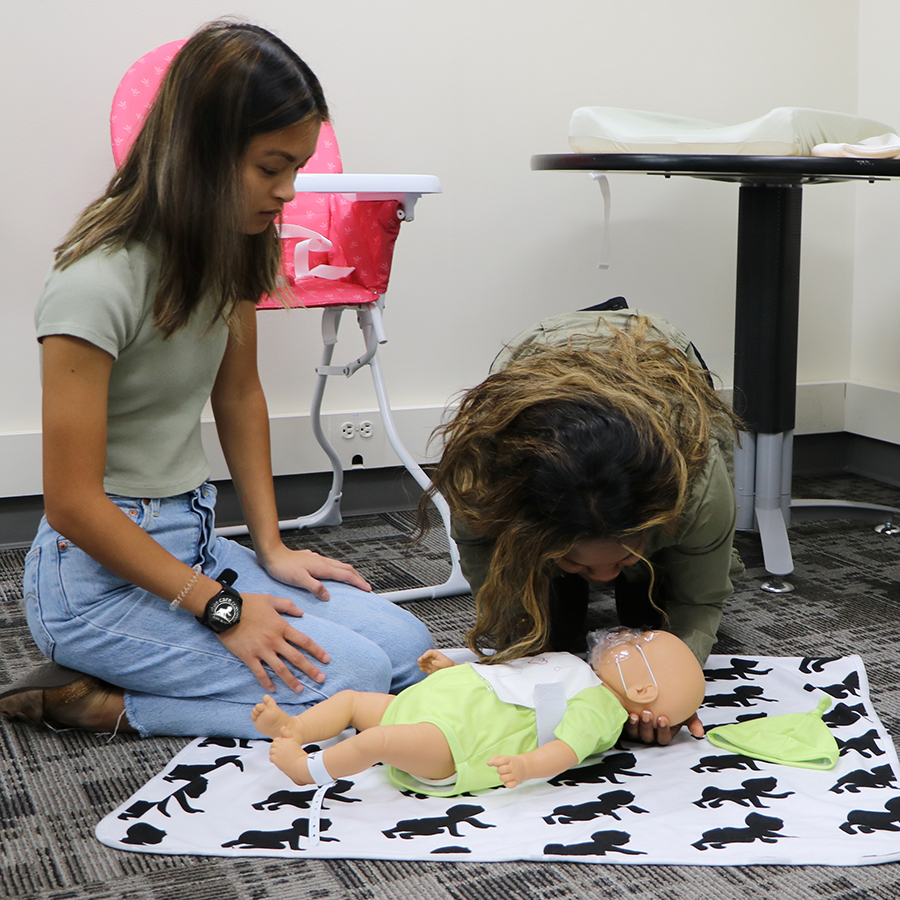
The Child Care Experience Program is the most realistic childcare simulation on the market. This complete simulation involves hardware, software, and curriculum that are ideal when training for childcare and early childhood education careers. This program helps you create a pop-up childcare center in your class, offering an excellent capstone project that gives students on-the-job childcare training from the comfort of the classroom. CCE’s eight-lesson curriculum addresses communication with parents, opening a childcare center, emergency infant CPR, and more.
CCE at a Glance
Focus: Advanced childcare career preparation
Ideal for:
- Early childhood education and childcare career pathways
- Simulating real-world work environments
- Helping students prepare for industry expectations
Simulation highlights:
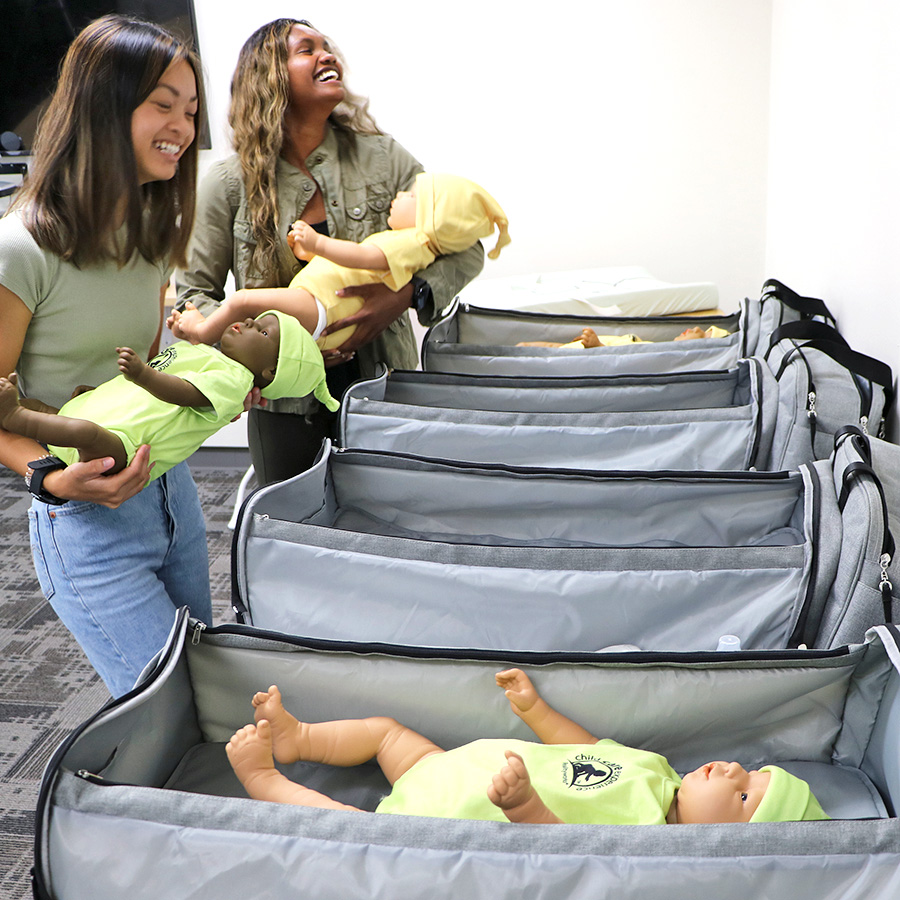
- Students care for multiple infants of different ages
- Includes timecards, care journals, caregiver communication, and emergency response
- Mirrors what happens in actual childcare centers
When To Use Baby Versus CCE
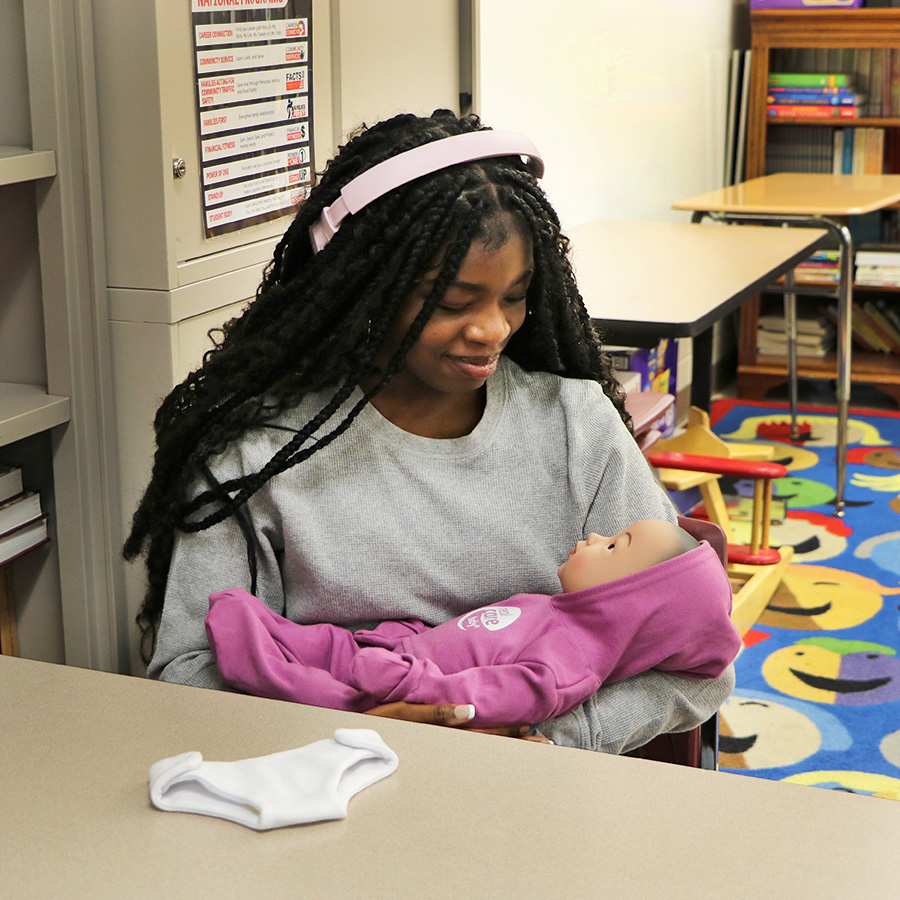
Baby is meant to help teach basic infant care and child development, making it a perfect fit when students just start training for childcare and early childhood education careers as a freshman or sophomore. This simulator teaches students about bottle feeding, diapering, rocking, and burping infants.
Once students have mastered the basics, they can move on to CCE. CCE offers more advanced training for childcare careers. In this program, students must manage multiple infants of different ages simultaneously. They must also clock in, keep a detailed infant care journal, and handle random infant health and parent communication scenarios just like they would in a real childcare center.

How To Use Baby and CCE
Baby is meant to be taken home with students for them to practice caring for the infant independently. Students learn about child safety and abuse prevention, infant and toddler development, and emergency procedures in the classroom and practice handling Baby’s care events in demo mode. Once they’re ready, they can take Baby home for the weekend. After they’ve returned Baby and reviewed their simulation report, they can reflect on what they learned through the experience.
CCE is meant to be used in the classroom to create a pop-up childcare center. Students can begin training for childcare careers by learning about infant feeding and nutrition, the developmental domains of infancy, and lesson and daily schedule planning through lectures and activities before practicing caring for the CCE Babies in demo mode. Then, students will be ready for their simulation experience. You can choose to start them off with just two CCE Babies to care for and work your way up to four or hit the ground running with four CCE Babies immediately. While one to four students participate in the simulation, the rest of the class can work on their soft skills with the included scenario cards.
How Teachers Use Both Programs
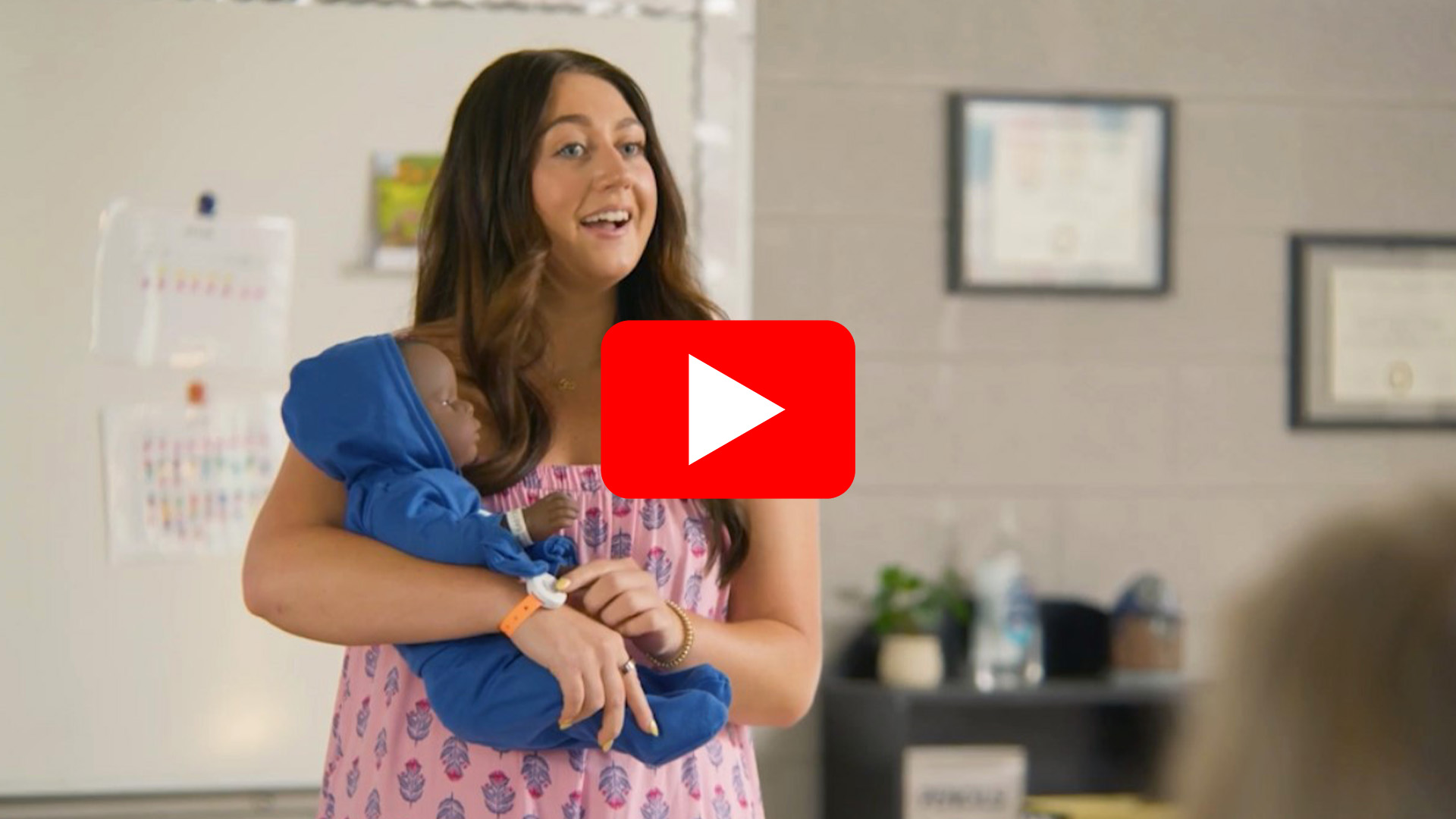
Letha Hougland, a FCS teacher in Colorado, has students training for childcare careers using both RealCare Baby and Child Care Experience programs. Hougland has used Baby with her child development students since she began teaching in 2020 and piloted CCE with her ninth- through twelfth-grade students recently.
“When a student gets assigned their own RealCare Baby, they have an ownership of that baby,” said Hougland. “But with CCE, they’re not in charge of just one baby — the program opens the experience up to be a bit more authentic. It changes the focus from basic care needs to thinking about the bigger picture: taking care of CPR and choking hazards, reporting procedures and proper handwashing techniques… all the things you wouldn’t get if you were treating the infant as your own. It broadens what they need to know.”
Read Hougland’s full story to learn more.
Rae Ann Leonhardt is a FCS teacher in Wisconsin whose dual-credit courses offer hands-on environments that prepare students to earn industry-recognized credentials. She leverages a variety of tools to teach her students, including Baby and CCE. Leonhardt has used Baby in her Parents and Children class for the last 10 years and recently implemented CCE into her Careers with Kids classes.
“RealCare Baby goes home – it’s a completely out-of-class simulation,” said Leonhardt. “With Baby, we’re looking at how you care for an infant at home as a parent. In comparison, the CCE simulation is in class. My students actually spend a minimum of 10 hours per semester in our partner childcare center, but the value I found in this simulation is when they go to the childcare center, they provide no care. They’re observing and playing, while the teachers diaper, feed, and make decisions. Now, the CCE simulation gives them a look at that work – they get to decide what’s going on when the baby cries, how to handle four babies that are crying at one time. Until this simulation, students were experiencing the kids, but not the care. Now they experience the care, too.”
Read Leonhardt’s full story to learn more.
Benefits of Both Programs
While CCE and Baby are two very different programs, they certainly have their similarities! Both programs increase student engagement by bringing lessons to life. The hands-on learning in these lifelike simulations captures and holds the attention of today’s easily distracted students. CCE and Baby also assist in training for childcare and early childhood education careers by increasing students’ retention of key concepts in those fields. Students will learn transferable career skills through these effective programs that make lessons memorable.
Enhance your childcare program with hands-on learning
RealCare Baby and CCE provide essential hands-on experiences for child development, early childhood education, and childcare career preparation. Students who use these tools are more confident and competent as they develop important job and life skills.
Request a personalized quote today!
Additional Resources
Training for childcare careers in your classroom? Learn more about Baby, CCE, and our other childcare career pathway learning aids with these resources:

- Free, on-demand webinar – Two Unique Programs, One Unforgettable Child Development Experience: Using Baby alongside CCE
- Free Guide – Childcare Career Pathway Classes: 5 Free Student Activities for Your Program