 With the demand for sports medicine physicians rising, the need for engaging, hands-on learning in your sports medicine program rises as well. That’s why we’ve created a variety of sports medicine teaching tools that give students safe, hands-on, repeatable practice. In a recent webinar, Molly Kellgren, Realityworks Health Science Product Manager, presented on the importance of hands-on learning and demonstrated some of our hands-on tools. Read on to see what she had to say about experiential learning and our sports medicine trainers.
Why Hands-On Learning?
Hands-on learning is a more effective learning method than lecture-based discussions. This is because we retain about 75 percent of what we do as opposed to five percent of what we hear. Research backs up the efficacy of tools and activities that are interactive and hands-on, especially wearables and simulators, as this type of learning benefits many learning styles.
David Kolb created the Experiential Learning Theory Model and published this work in 1984. The theory outlines a four-stage cycle of learning:
- Concrete Experience: Doing/having an experience
- Reflective Observation: Reviewing/reflecting on the experience
- Abstract Conceptualization: Planning/trying out what was learned
- Active Experimentation: Concluding/learning from the experience
Hands-on learning allows teachers to bring real-world scenarios, activities, and events into your sports medicine program to create long-lasting, meaningful understanding, especially when students don’t have access to real sports medicine injuries. Students can do more than sit and listen while working with hands-on tools; they can collaborate and make connections, creating a more engaging and authentic learning experience.
Hear from a Sports Medicine Professional
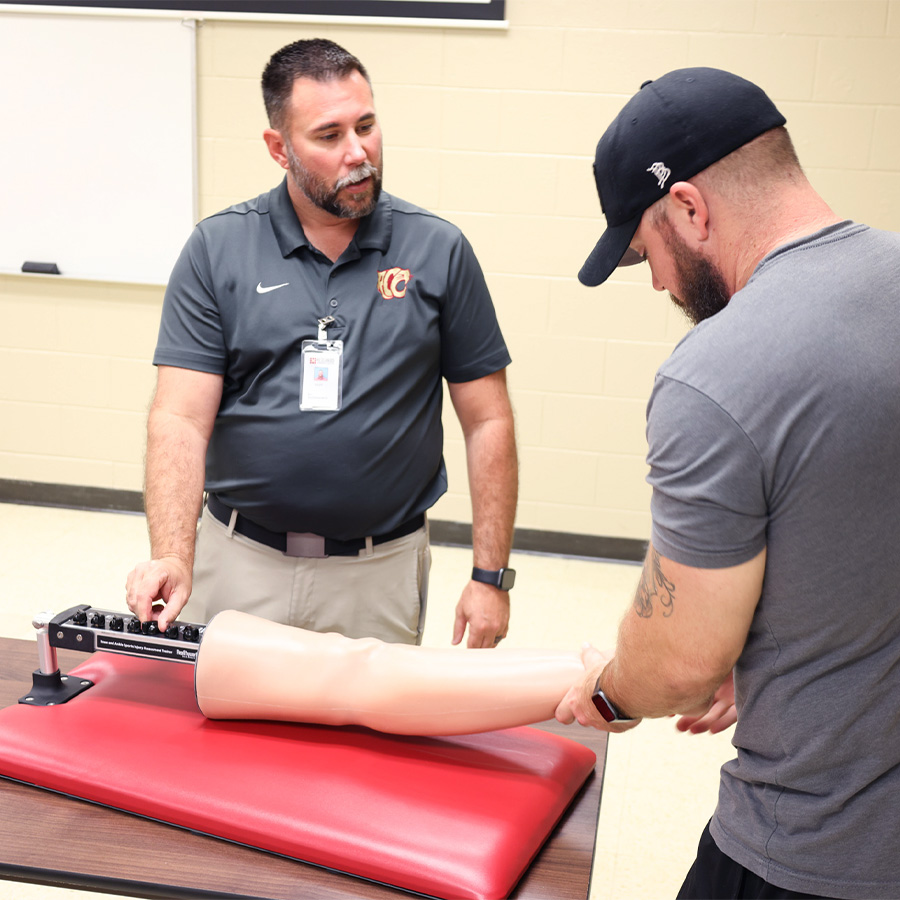
Recently, we had the opportunity to visit Eli Zucksworth, Director of Athletics at Redlands Community College, on his home turf in El Reno, Oklahoma. Realityworks brought along a couple hands-on learning tools for Eli and his students to try out. Here is what Zucksworth has to say about hands-on learning:
Hands-On Teaching Tools
Now that we understand the importance of hands-on learning, let’s take a look at some tools that can help you bring it into your sports medicine program.
1. Knee and Ankle Sports Injury Assessment Trainer
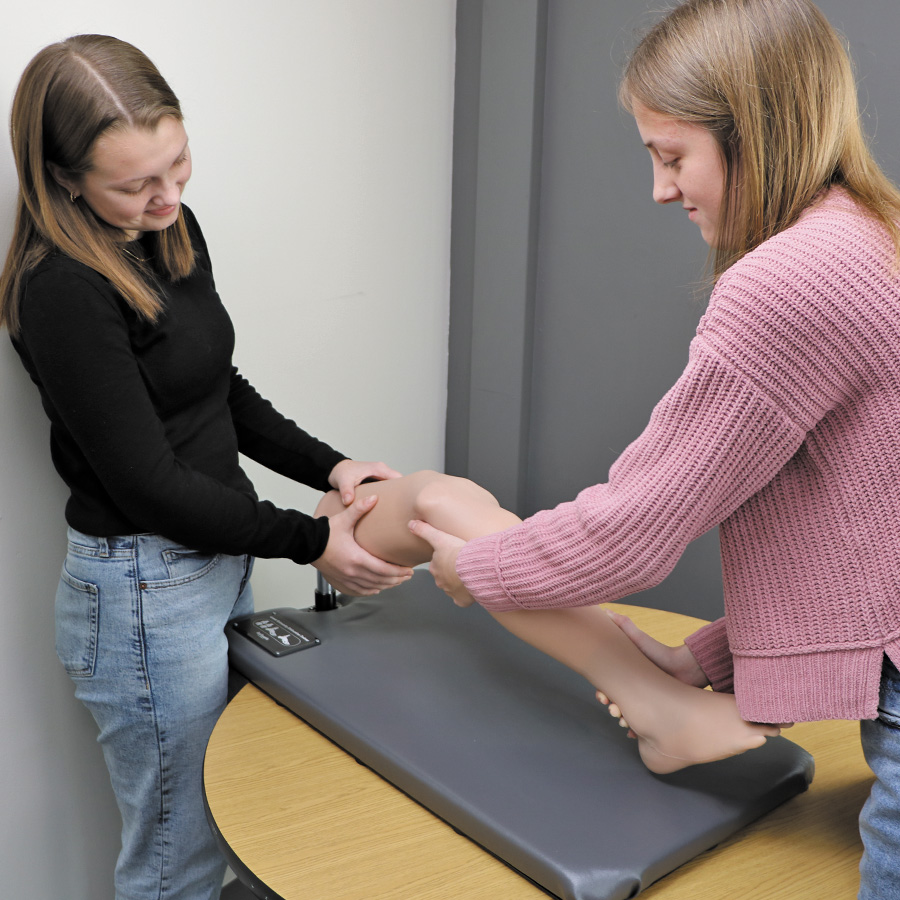
The Knee and Ankle Sports Injury Assessment Trainer features three knee ligaments and four ankle tendons and ligaments. Great for standardized experience and repeatability, this unique trainer allows learners to perform diagnostic tests. Students can use the trainer to determine if there are knee or ankle ligament injuries.
2. Lower Extremity Dislocation Trainer
The Lower Extremity Dislocation Trainer mimics medial and lateral patella dislocation as well as anterior and posterior ankle dislocations. Students can practice techniques for relocating the dislocations repeatedly until they’ve mastered the skill. Its articulating joints and muscles allow students to get hands-on practice with a model that looks and feels real.

3. Upper Extremity Dislocation Trainer
The Upper Extremity Dislocation Trainer features articulating joints and realistic skin that can simulate anterior and posterior should dislocations, simple elbow dislocations, volar dislocation of the thumb, medial and lateral dislocation of the pointer finger, and dorsal and volar dislocations of the middle finger. The trainer comes with tie-down straps to secure it to tables and desks as students practice reducing these dislocations. This unique trainer also comes with standards-based, downloadable curriculum covering shoulder, elbow, and finger dislocations. The curriculum boasts up to four teaching hours and includes presentation slides, student activities, and pre- and post-assessments.

4. Concussion Education Kit
Use the Concussion Education Kit to help students understand the effects of a concussion, how concussion symptoms can feel, and how to treat and prevent concussions. This interactive kit has supplies for up to 10 students to experience a concussion simulation simultaneously. Additionally, it includes NATA-aligned lesson plans, a poster set, and a Brain and Cerebral Arteries Model.
BONUS: Environmental Factors in Sports Medicine Lab Kit and Sports Nutrition Lab Kit
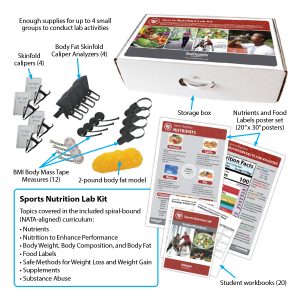
Looking to further enhance your sports medicine program? Our Sports Nutrition Lab Kit and Environmental Factors in Sports Medicine Lab Kit offer even more opportunities to engage students with real-world learning. The Sports Nutrition Lab Kit helps students explore the critical role of nutrition in athletic performance, while the Environmental Factors Lab Kit dives into the effects of conditions like heat, cold, and altitude on the human body. Both kits include hands-on activities and interactive lessons that will empower your students to make informed decisions in their future sports medicine careers.
Additional Resources
- Watch the full webinar on demand
- Check out our implementation page to see how you can implement these tools in your sports medicine program
- Decorate your classroom with FREE posters with information on sports medicine careers, healthcare soft skills, and more