 Teaching accurate arm injury assessment is essential for preparing students to evaluate shoulder and elbow conditions with confidence. These skills are critical in fields like sports medicine, physical therapy, and orthopedics, where quick, accurate evaluations can make a real difference in patient outcomes. Yet without realistic tools, it can be difficult to provide meaningful hands-on practice. The Shoulder and Elbow Injury Assessment Trainer offers a safe, repeatable way to help students build assessment skills before they enter real-world settings.
11 Arm Injury Assessments
The Shoulder and Elbow Injury Assessment Trainer features 11 arm injury assessments students can practice.
Shoulder Tests:
- Empty Can Test (Jobe’s Test)
- Belly Press Test
- Hornblower’s Test
- Neer’s Test
- Hawkins-Kennedy Test
- O’Brien’s Test
- Crank Test
- Anterior Apprehension
Elbow Tests:
- Valgus Stress Test
- Mill’s Test (Tennis Elbow)
- Medial Epicondylitis Test (Golfer’s Elbow)

Scaffolding Learning for Skill Development
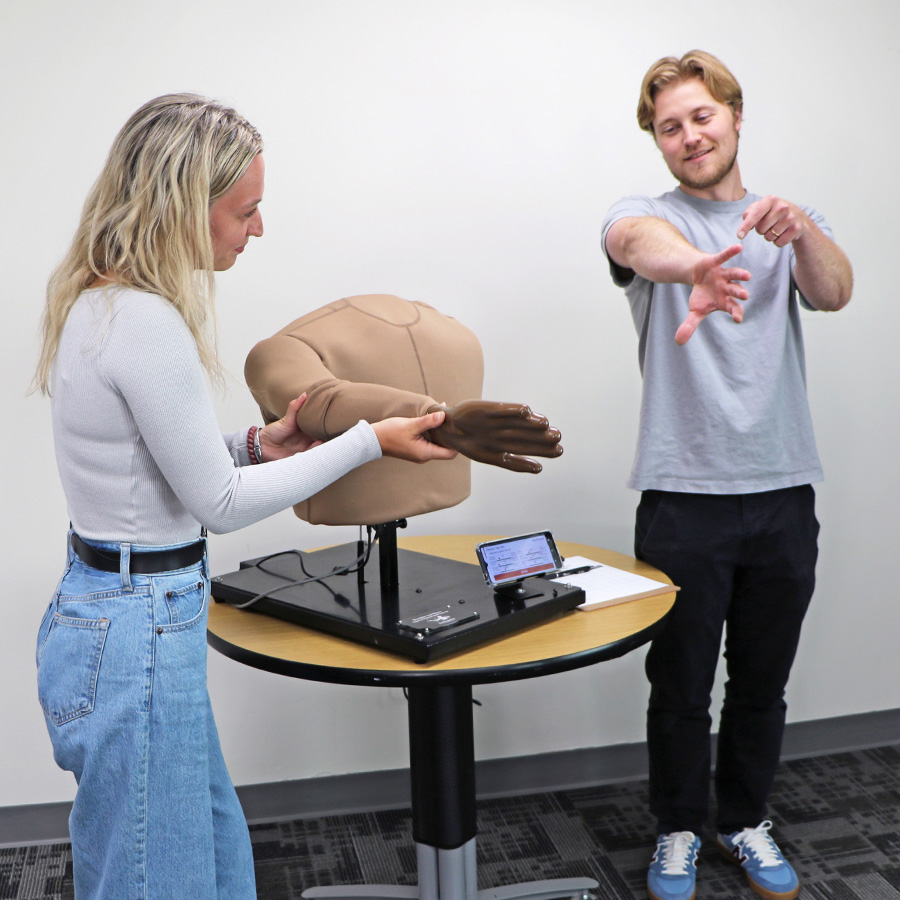
This arm injury assessment trainer supports scaffolded learning through two interactive modes:
- Practice Mode: Students receive immediate feedback on positioning and technique, allowing for independent practice without constant instructor oversight.
- Assessment Mode: Students analyze patient injury descriptions and choose appropriate tests, simulating real-world decision-making.
Immediate Feedback Enhances Learning
Not only do students get immediate feedback on positioning while in this arm injury assessment trainer’s Practice mode, but the trainer also indicates when the patient would experience pain as they perform their tests. The positioning feedback supports independent practice, as the instructor won’t have to monitor the student throughout practice. This allows students to self-correct in real time, reinforcing proper technique and building muscle memory for each assessment.
Curriculum Included for Easy Integration
The trainer comes with a downloadable curriculum that includes:
- Lessons on rotator cuff injuries, labral tears, acromioclavicular injuries, and more
- Presentation slides
- Student activities
- Assessment tools
The full curriculum takes four to seven hours to complete, but instructors can easily select specific lessons to fit their course needs.