 From students to seasoned professionals, corn disease identification is a crucial skill for anyone in agriculture. Using realistic, hands-on models can make the learning process more effective and engaging. In this blog, we’ll explore how the detailed Abnormal Corn Ear Models can support hands-on agricultural education.
Real-World Application
Understanding corn disease identification is a critical skill for anyone pursuing a career in agriculture, agronomy, or crop management. The Abnormal Corn Ear Models provide a hands-on way for students to develop this expertise, ensuring they can recognize common corn abnormalities in the field.
Engaging Classroom Experience
The Abnormal Corn Ear Models bring a dynamic, hands-on element to corn disease identification lessons, making learning more interactive and engaging. Instead of relying solely on textbooks or images, students can physically examine the detailed models, allowing them to explore abnormalities up close.

Designed for All Learners
These models cater to a variety of learning styles, making them an effective tool for all students. Visual learners benefit from the detailed, true-to-life representations of corn diseases, while tactile learners gain a deeper understanding by physically handling the models and feeling the abnormalities. Auditory learners can reinforce their knowledge through class discussions and group activities centered around corn disease identification.
Identify 11 Abnormalities
Many crops won’t see all abnormalities in a year. The Abnormal Corn Ear Models help students practice corn disease identification with realistic, reusable models of 11 diseases and disorders, plus one healthy model for comparison. You can see a complete list of abnormalities below.
- Pinched ear
- Incomplete kernel set ear
- Bird damaged ear
- Blunt ear syndrome
- Poor pollination tip
- Diplodia rot ear
- Drought damaged ear
- Stink bug damaged ear
- Ear worm damaged ear
- Tassel ear
- Tip dieback ear

Reusable Learning Resource
While real corn ears can be valuable teaching tools for corn disease identification, they are not always readily available and can deteriorate over time. The Abnormal Corn Ear Models provide a consistent and durable alternative, allowing students to study various corn diseases and disorders year-round.
Standards-Based Curriculum
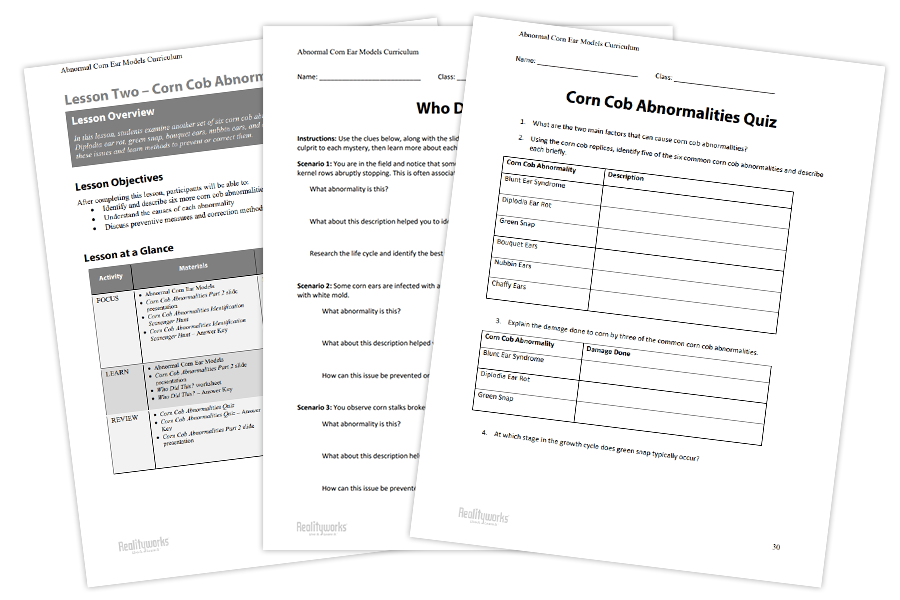
The Abnormal Corn Ear Models come with a downloadable, two-lesson curriculum that helps teach corn disease identification. The lessons cover corn growth and development as well as abnormal corn ear symptoms, factors, and development time. The complete curriculum takes one to two hours to teach, but you can easily select specific activities to incorporate into your current lesson plan.
You can see a sample of the curriculum here.