 Hands-on electricity education took center stage in our recent webinar, “Shockingly Effective: Teaching Electricity for Real-World Learning,” where educators explored innovative ways to bring electricity concepts to life. With practical tools and real-world applications, the session offered valuable strategies to electrify your STEM curriculum. Whether you’re new to teaching electricity or looking to energize your current lessons, the insights below offer inspiration and actionable strategies to make your lessons meaningful and effective.
Why Explore Hands-on Electricity Education?
One of the biggest struggles with teaching electricity is that it’s invisible. Students can draw circuit diagrams, learn about electrical theory, and build simple circuits, but once they do that, they can’t really transfer that knowledge to the real world. Without a visible or tangible connection, it’s hard for them to understand how those concepts apply outside the classroom.
Where Do You Start?
When putting together a STEM learning experience of any kind, you should ensure that students engage with real-world problems, develop critical thinking and engineering skills, and are prepared for future careers in STEM fields. With electricity, there’s enough content to learn that people can get master’s degrees in electrical engineering. How do you take all that information and decide what’s best for your class? Ultimately, you must balance electrical concepts and content with transference driving experience, which is something Realityworks’ tools can help with.

Trailer Circuits STEM Kit
The Trailer Circuits STEM Kit is the ideal solution for educators who want to make learning electricity engaging, tangible, and safe. This kit transforms the mystery of electricity into a concrete set of skills through the real-world context of wiring a trailer, making the learning process both accessible and practical. It provides a complete learning experience that results in high transference as students go from learning the basics of electricity to building and troubleshooting their own circuits.
The kit includes three Trailer Circuits Trucks, each with their own box and accessories. The inside of the box provides a visual of what each item is and where it goes as well as a diagram of the Trailer Circuits Truck. This reduces questions from students about what the materials are and helps keep them organized.

The Trailer Circuits STEM Kit comes with an eight-lesson curriculum written by an electrician with over 20 years of experience in the industry. The kit and its curriculum are not just about automotive wiring, either. They’re meant to establish a foundational understanding of electricity in a practical manner. Teachers are using this kit in STEM, automotive, robotics, and more.
We often hear from educators that safety is a huge concern when exploring hands-on electricity education. Many students get scared the first time they short circuit something and don’t want to work with electricity anymore. One of the coolest features of the Trailer Circuits STEM Kit is that it acts just like a 12-volt automotive system, but it’s completely safe. You can touch all the terminals and metal parts without fear of injury.
Electrical Wiring Kit
The Electrical Wiring Kit helps teach students the essential principles and techniques of electrical wiring. This portable, battery-operated kit provides a safe and repeatable way for students to practice wiring common electrical circuits, offering instant assessment and corrective feedback as they work.
We created this kit to address several concerns from educators trying to engage students in hands-on electricity education. It lets you teach electrical wiring in the classroom on a desk or table and enables students to analyze whether they wired it correctly with minimal assistance from the instructor. Once again, it’s a completely safe, shock-free teaching tool that won’t scare students with sparks or injuries.
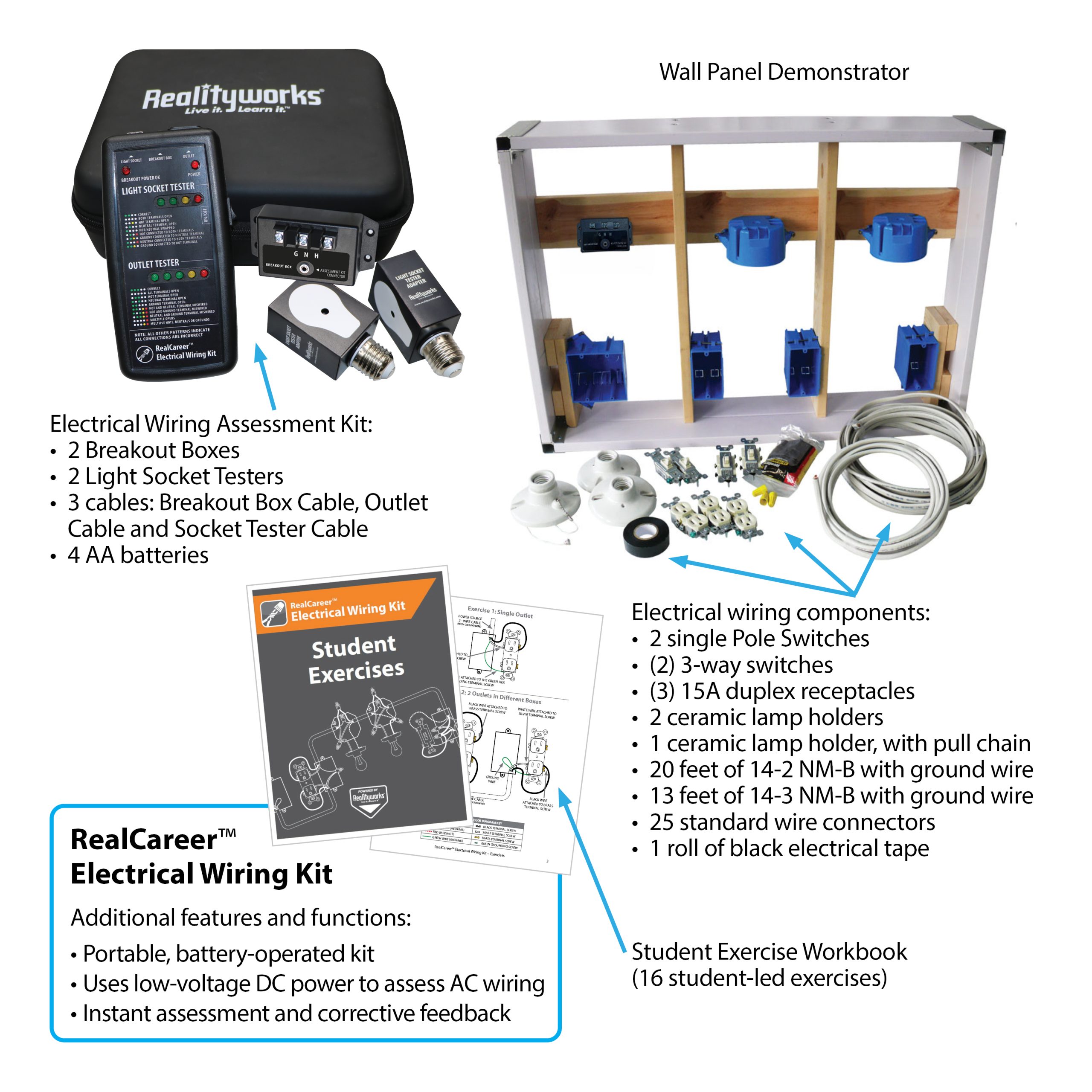
This learning aid sets the stage for forward transfer, meaning once they wire a circuit with the kit, it’s easy for them to transfer that experience to wiring a real circuit. One of the kit’s best features is that you don’t have to hook it up to live, 120-volt power. The kit comes with a battery-powered tester that hooks up to the included Wall Panel Demonstrator. The demonstrator shows the same codes seen on inspectors’ testers in the real world. This gives students immediate feedback on whether they wired their circuits correctly, freeing up your time to help students with questions.
The Electrical Wiring Kit comes with 12 exercises that start with a simple single outlet and work their way up to more difficult tasks, like wiring a three-way switch with one light. You can choose the exercises that make the most sense for your class or teach all 12. Each exercise comes with a guide that directs students on how to make those connections.
Safe and Effective Implementation
When creating your own hands-on electricity education lessons, think about real-world learning experiences, safe and positive activities, mixed ability teams, and defined team roles. Real-world learning experiences help students transfer their knowledge from the classroom to the home or workplace. Setting them up for safe, positive experiences keeps students from being scared of or discouraged by failure. Additionally, having students work in teams builds important soft skills and pairing students who aren’t as comfortable with electricity with students who have more experience can take the pressure off nervous beginners. Finally, defining team roles can help everyone learn the content comfortably.

Students with less experience can take on the “apprentice” role. They manage tools and materials as well as prepare wires and connectors. The “electrician” guides the apprentice. They use tools to make circuit connections and manage safety. The third role is the “engineer.” This student directs the team’s work by managing notes and worksheets, providing guidance to the electrician and apprentice.
Additional Resources
- Watch the complete webinar for free
- Explore all our STEM-powered learning experiences here
- Discover STEM implementation resources