 If you’re looking for a classroom STEM kit that brings engineering principles to life in a way that’s hands‑on, data‑driven, and genuinely exciting for students, meet your next favorite: the DataSnap Air Racer STEM Lab. This innovative lab reimagines traditional CO₂ car races by using a reusable, air‑powered system that lets learners build, test, and refine their own vehicles through data collection—no single‑use cartridges required.
8 Customizable Air Racers
This classroom STEM kit includes eight customizable vehicles for students to experiment with. Learners can adjust the front and rear wheels (narrow or wide), weight, front and rear wings (flat or curved), and collision bumper. These interchangeable parts give students the freedom to experiment with different design variables, helping them see firsthand how small adjustments influence performance. The cars snap together easily with simple tools that are included for easy assembly.
Pneumatic Race System
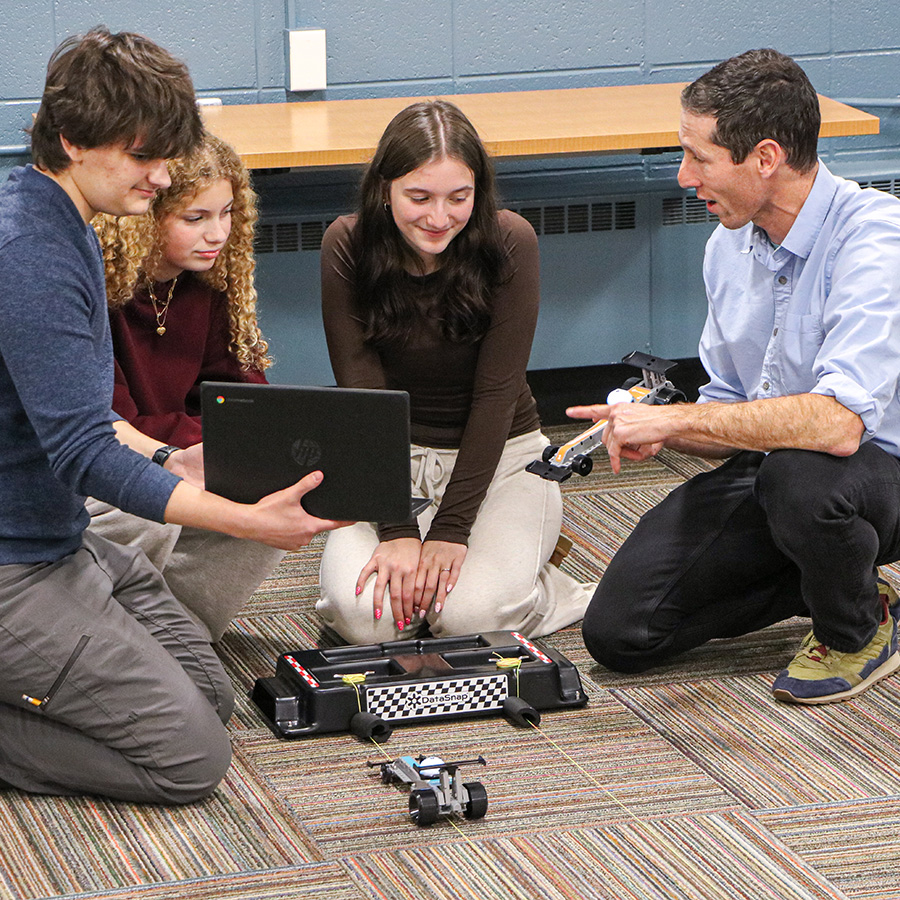
At the heart of the DataSnap Air Racer STEM Lab is its pneumatic race system—a reusable alternative to traditional CO₂‑powered launchers. Instead of relying on single‑use cartridges, this system uses controlled bursts of air to propel each racer down the track, giving students a consistent and dependable starting point for every test run. This not only makes the experience more classroom‑friendly but also allows for repeated trials without additional consumables.
Meaningful Data
This classroom STEM kit comes with two Motion Sensors that ride in the racers as they fly down the track. The sensors monitor a variety of data, including velocity, acceleration, and force. Using the free DataSnap app, students can see the data from their race. Then, they can adjust the vehicles based on their findings. This post‑race data review helps students connect their design choices to real engineering outcomes. The data review turns each run down the track into an opportunity for evidence‑based improvement and deeper STEM understanding.
Engineering Challenges
The Air Racer experience is built around the engineering design cycle. Students construct their vehicle, run races using the pneumatic system, then use the DataSnap app to analyze their results after the race. They can evaluate factors like speed and acceleration, then make thoughtful adjustments to improve performance. This cycle of building, testing, analyzing, and refining helps students think and problem solve like real engineers.

Skill Development
This classroom STEM kit is designed to help students develop foundational engineering and physics skills through engaging, hands‑on activities. Using the Air Racer components and data from the motion sensors, learners explore:
- Velocity and acceleration
- Newton’s laws of motion
- Force, energy transfer, and weight distribution
- Aerodynamics and collision dynamics
- Design optimization through iteration
These topics appear in both the included standard and advanced curricula, enabling teachers to support a wide range of grade levels and abilities.
Standards-Aligned Learning
The DataSnap Air Racer STEM Lab is built to fit seamlessly into existing STEM and CTE programs thanks to its alignment with NGSS, ISTE, and ITEEA standards. This ensures every lesson reinforces essential engineering and scientific practices, from analyzing motion to engaging in iterative design. The curricula provide structured, standards‑aligned activities that help teachers meet learning goals without additional prep time.

Ready-to-Use Curricula and Slides
This classroom STEM kit comes with two curricula, one that is more conceptual and another that dives into advanced math. It comes with slide presentations created with the intention that students go through them in small groups as they engage in this unique learning experience. Additionally, the lab comes with digital Student Engineering Workbooks that align with the slide presentations. Each curriculum takes 6-12 hours to teach.
Additional Resources
- Explore all our STEM training tools
- Download our free STEM career exploration curriculum
- Get free posters and infographics for your classroom