DataSnap is cleaning up and shaping classrooms one unbroken egg at a time.
For years, the classic egg-drop project has been a staple in science classrooms — but it often leaves behind a time-consuming mess. Science teacher Carrie Bahn felt there had to be a better way. That’s why she chose to pilot Realityworks’ DataSnap™ Impact STEM Lab, a new tool that offers a clean, mess-free way to explore impact forces and engineering design.
 “Previously, using a raw egg had quite a few drawbacks,” said Bahn, who teaches eighth grade science at Minnesota’s Anoka Middle School for the Arts. “[It was] quite wasteful and cracked/broken eggs could make quite a mess, even when putting them into sandwich bags — the broken shell could puncture it, allowing for slimy leaks.”
Carrie Bahn
Science Teacher | Anoka Middle School for the Arts | Anoka, MN
The egg drop challenge is part of Bahn’s Amplify Science curriculum, which is phenomenon-based and includes engineering projects. Although Amplify guides students through lessons and digital simulations, Bahn observed several challenges with the included engineering projects, from hard-to-collect data to limited hands-on activities.
When Bahn heard of Realityworks’ DataSnap Impact STEM Lab, she thought it would be a good opportunity to enhance her required curriculum with more real-world experiences.
 Why the Traditional Approach Fell Short
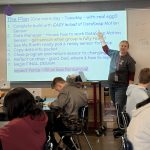
Bahn identified several challenges within her existing curriculum: collecting accurate data with stopwatches left room for human error; hands-on activities were limited to observation; and engineering projects, like the classic egg drop, offered binary results — the egg broke or it didn’t — with no measurable data to analyze.
“Collecting data was weak,” stated Bahn. “Either their egg remained intact or it broke. We could count a crack as a third option, but there was not very much drive to improve.”
Meet the DataSnap Impact STEM Lab
Reailtyworks‘ DataSnap Impact STEM Lab is a 7-item kit that reimagines the traditional egg drop challenge. Students begin by customizing their own Impact Ships, which house DataSnap Motion Sensors that collect real-time velocity and acceleration data.
That data is sent to students’ computers via an app, much like AirPods sync to cell phones. By collecting data on force, velocity and acceleration in real time, students can revise and improve their designs rapidly and repeatedly — and without messy clean-up.
“Students LOVED using DataSnap Impact STEM Lab!” said Bahn. “There was so much pride and responsibility shown by students. Each group had one ’tech leader’ who was responsible for synching the DataSnap [Motion Sensors] to their Chromebook. The ‘tech leaders’ were respectful and assertive … They also took pride in sharing the data with their teammates. The amount of buy-in was huge!”
Bringing Engineering Design Theory to Life
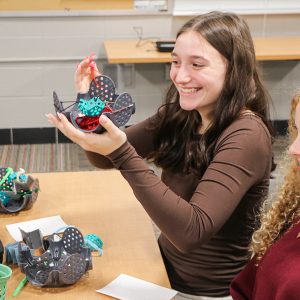
By giving students a chance to build their initial design, then test and retest based on real-time data, this hands-on lab brought engineering design theory to life for Bahn’s students, allowing them to make connections and improve their understanding of fundamental concepts.
“[The] DataSnap Impact STEM Lab really motivated students to go deep into the engineering process by allowing for as many trials as time would allow,” said Bahn. “Students could make the smallest change to their pod and get a comparable number to allow them to make data-driven decisions.”
Bahn divided her students into groups of 2-3 and had them record their best drop scores. As students set goals, tested theories and correlated those theories with the materials they used, Bahn observed collaboration, competition, and above all, increased student engagement.
Looking Ahead
After the lab, Bahn posted students’ drop results among different classes, sparking competition between classrooms and creating school-wide engagement about the engineering design process. Students were able to see real numbers and test specific variables over and over again, resulting in increased motivation, ownership and even community building.
“I would love to use DataSnap Impact STEM Lab again!” said Bahn. “When students have a number to compare, they are more motivated to try multiple modifications to their pod AND make those modifications as small changes to gauge their effectiveness — really work the engineering process… It was great seeing them so much more motivated, thinking more critically of their designs, having deeper discussions, and more chances to test each other’s ideas. DataSnap is definitely enriching the curriculum we’re currently using.”
Learning tools used:
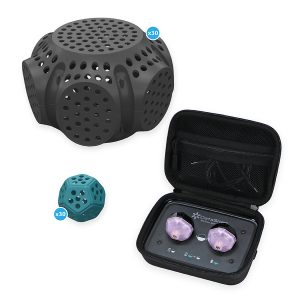
DataSnap™ Impact STEM Lab
The DataSnap Impact STEM Lab offers a clean, repeatable way to explore impact forces and engineering design.
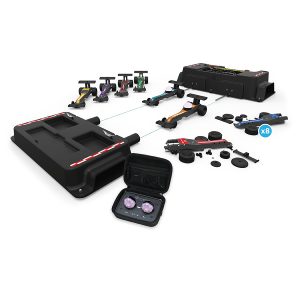
DataSnap™ Air Racer STEM Lab
This lab replaces single-use canisters with a reusable, safe, and engaging system that brings physics and engineering concepts to life.
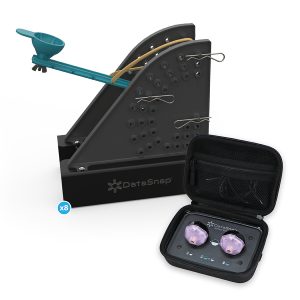
DataSnap™ Projectile STEM Lab
This lab introduces AI foundations by guiding students through predictive data analysis and early machine learning concepts, making it a future-ready STEM experience.
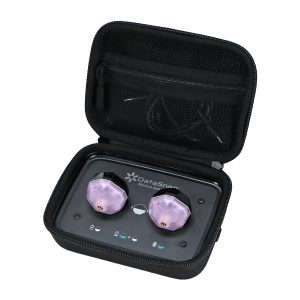
DataSnap™ Motion Sensor (2 Pack)
These extra sensors let more students gather data for their labs at the same time.