Whitehall Memorial High School Agriculture Teacher Melinda Goplin knows the value of hands-on learning. Her Generation Z students prefer to learn by doing; they thrive when growing vegetables in the school’s greenhouse or raising pigs for meat.
“I’m a firm believer that the majority of students learn best if they can touch, if they can feel, if they can do,” said Melinda. “Most students are tactile learners and that’s why students take our ag classes – they know that the nature of what we teach is hands-on learning, and that’s what draws them in the first place.”
That attraction is one of the reasons Melinda agreed to help us develop our Swine Litter Processing Simulators. These fuzzy piglet simulators may look like cute stuffed animals, but thanks to Melinda’s real-life experiences in her western Wisconsin agriculture classroom, they offer a variety of opportunities to practice skills and explore careers.
Keep reading, or watch the below video, to learn how a little ham can make a big difference in your ag classroom.
Building confidence through safe, repeated practice
Melinda grew up on dairy and pig farms; each year, her agriculture students raise pigs from 50 to 280 pounds. One of her biggest challenges: Instructing students with little to no farm experience.
“If it lines up to when we’re doing that unit, I take my students out to a local pig farm and we watch and sometimes help with the processing of litters,” said Goplin. “It’s always scary for some of those students to have to hold a real, live pig… we’re so far removed from students having real-life experiences in agriculture. They’re nervous about it – they don’t want to give it a shot; they don’t want to ear notch because they’re scared they’ll do it wrong.”
Simulators remove the fear of harming live animals. They allow students to practice repeatedly until they feel confident enough to do the real thing.

Assisting educators with little or no piglet processing experience
CTE teachers have diverse degrees and work experiences. Melinda sees these simulators as a particular benefit to teachers who have never processed piglets before.
“I thought about the teachers out there who look at a curriculum and one of the units is processing pigs and they’ve never done it,” said Melinda. “How do they go about teaching that? It can be very uncomfortable. A lot of teachers might even skip over it, because it’s not comfortable or they don’t have access to a live pig farm that they’re close to. These lesson plans can help initiate that process.”
Connecting students to their food
Looking at how food is grown is one of many links between food and agriculture science education. According to Melinda, her lessons on swine litter processing are opportunities to show students where food comes from and learn more about potential careers.
“There are so many people who have a desire to be in touch with their own food products,” Melinda told us. “A lot of people want to raise their own animals now, raise their own meat. Those people need to know some of these basic healthcare tasks to be able to take care of their animals.”
Exploring agriculture careers
Melinda says that one of the biggest misconceptions her students have is that they have to be a farmer to have a career in agriculture. In fact, the pork industry alone supports about 550,000 U.S. jobs, ranging from pork producers and meat processors to transport and other businesses.
“When I use Realityworks’ items, we talk about how this product came to be – how an engineer had to figure out what a real pig looked like, etc. One of the important parts of having a career in agriculture is knowing what agriculture is so you can create something for that consumer and that producer,” said Melinda. “These tools are a way to give students a broader understanding of all the opportunities in agriculture.”
Creating memorable learning experiences
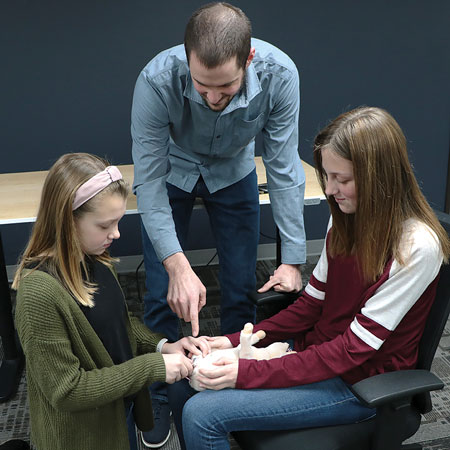
Melinda has seen the disconnect that occurs when her students are presented with textbooks or videos. Research shows that collaboration and learning by doing drives engagement for Generation Z students. In Melinda’s classroom, any chance to incorporate hands-on simulators and models is a chance to help her students relate to and remember her lesson.
“I’m a firm believer that the majority of students learn best if they can touch, if they can feel if they can do,” said Melinda. “Most students are tactile learners. They won’t remember the article in 5 years, but they’ll remember their experience.”
How are you incorporating hands-on learning opportunities into your classroom? Share your thoughts in the comments below.
Resources for learning more
Looking for more information on our Swine Litter Processing Simulators and other hands-on tools for agriculture classrooms? Consider these resources:
-
- Watch Melinda’s video testimonial below:
- Learn how our animal science learning aids like these piglet simulators can help you create a 21st Century agriculture classroom
- Download a free guide on using scenario-based learning to explore careers
- Explore all of the training tools and resources we offer for agriculture education in our 2021 Agriculture Program Catalog