 Looking for an engaging tool to help teach your students about common childhood illnesses? Realityworks’ latest infant simulator can help your students get hands-on practice diagnosing and treating these illnesses without the risk of harm or infection. Every child is going to get sick at some point, and it’s important for students interested in childcare and healthcare careers to know the signs and what to do when a child in their care is sick. Read on to see how you can use the Common Childhood Illnesses Baby to teach these vital skills in your classes.
1. Middle Ear Infection
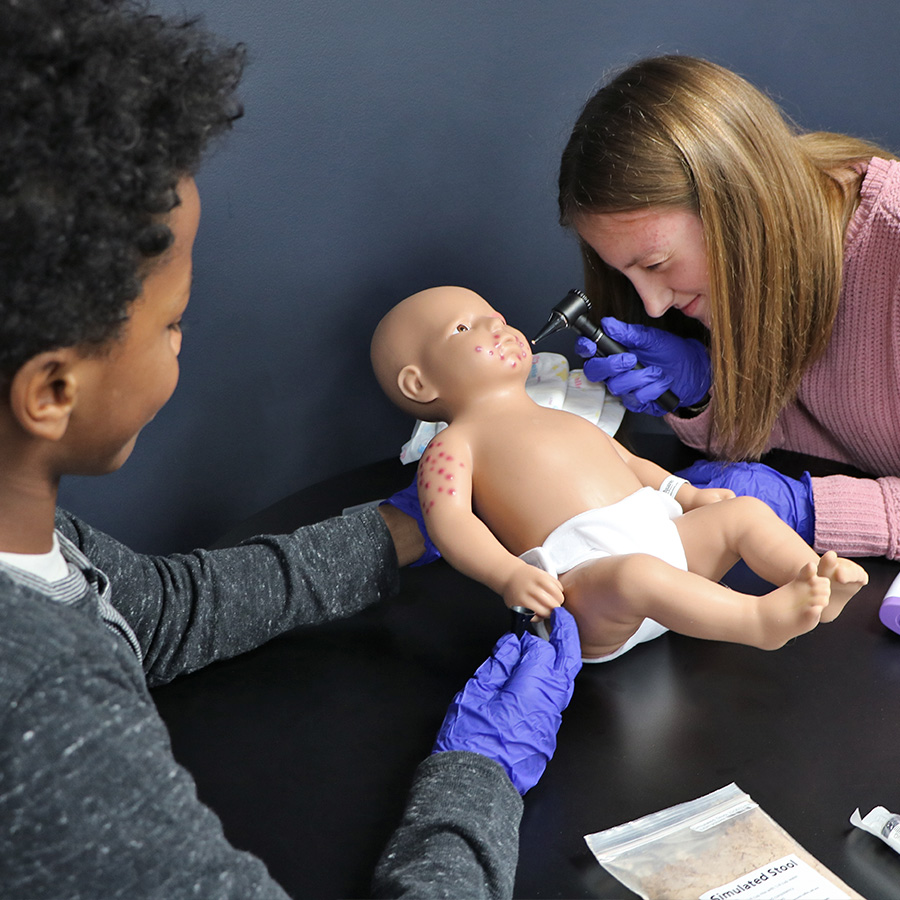
Around 80% of all children will get a middle ear infection at some point. To practice diagnosing this illness, the Common Childhood Illnesses Baby comes with a lighted otoscope that students can use to look in the baby’s ears. One ear is perfectly healthy and the other features redness and swelling associated with middle ear infections, allowing students to compare the two.
2. Fever
As many childcare and healthcare professionals know, fever is a common symptom found in children. The Common Childhood Illnesses Baby comes with an adjustable forehead thermometer that works with the baby. Students can practice taking the infant’s temperature and you can set the thermometer to the temperature they want. You can even toggle between Celsius and Fahrenheit.
3. Hand, Foot, and Mouth Disease
Another common childhood illness this baby simulates is hand, foot, and mouth disease. The infant simulator has the telltale rash that students can visually identify. With 200,000 cases in the U.S. every year, it’s important for students pursuing childcare or healthcare careers to be able to recognize the symptoms.

4. Diarrhea
This simulator can also replicate diarrhea. The Common Childhood Illnesses Baby comes with 20 disposable diapers, baby wipes, and simulated stool for students to practice changing messy diapers with. The stool is a dry mix that you can adjust to your desired consistency.
5. Chickenpox
Chickenpox is one of the most common childhood illnesses, which is why this infant simulator features the recognizable blisters associated with the disease. Students can practice identifying the illness and applying calamine lotion (not included) to the simulator’s soft, silicone skin. There are about 4,000,000 cases of chickenpox per year, so students interested in childcare and healthcare will likely encounter this condition in their future careers.
6. Pink Eye
About 6 million people experience pink eye every year. To practice diagnosing this common childhood illness, our infant simulator has one healthy eye and one displaying pink eye symptoms. It comes with an eye dropper so students can practice proper eye drop application as well.

7. Diaper Rash
Diaper rash is one of the most common skin conditions in infants. The Common Childhood Illnesses Baby features the telltale red rash found in infants with diaper rash. Students can use the baby to practice visually identifying this condition.
More Unique Features
The Common Childhood Illnesses Baby also comes with 20 syringes for students to practice measuring liquid medication with. Additionally, it includes a downloadable curriculum with seven lessons covering the illnesses listed above. The complete curriculum takes about seven hours to complete, but you can select specific lessons or activities to work into your current lesson plan.
See a complete curriculum overview here.
Additional Resources
Looking for more activities to help teach childcare and healthcare students?
- Check out our FREE childcare and healthcare career exploration lesson plans written by subject matter experts
- Watch our on-demand webinar covering how to prepare students for childcare careers with a CDA credential
- Check out some of our FCS and health science scenario kits in this blog post