 Want to create a healthcare simulation lab but have concerns about cost? Simulation is well-documented as a teaching methodology in health science education, both for teaching technical skills as well as soft skills like empathy and understanding. What’s more, simulation resonates with Generation Z students, who prefer to learn by doing.
Of course, choosing the right training tools for your healthcare simulation lab can be daunting. After all, there are pros and cons to both low- and high-fidelity simulators, from cost to impact.
We collaborated with educators and subject matter experts to create a line of medical manikins that will ease your planning load (and your budget). Best of all, each of these six manikins come with hours of course content, from lesson plans and activities to assessments.
Consider your desired educational outcome
When considering the best option, it comes down to identifying your desired educational outcome and understanding which model would best achieve your goal. Task trainers, standardized patients, hybrid simulation, and medical manikins have all proven to be effective and invaluable training tools.
There are two main categories in simulation: low fidelity and high fidelity. Low-fidelity simulators are realistic models that mimic areas such as anatomy and physiology. High-fidelity items like mannequins can talk, bleed, and feature anatomic sounds. Both come with their own pros and cons.
For instance, low-fidelity simulators may be less expensive to purchase and maintain, but not as realistic. High-fidelity simulators may be incredibly realistic but can be very expensive. They may excite students but can be intimidating.
Research shows that both types of fidelity show an increase in critical thinking and empathy, two essential health care skills. The key is to use the appropriate types of fidelity that create the required perception of realism that will allow participants to engage in a relevant manner.
High-fidelity simulators are often used more as assessment tools than practice tools. For most high school programs, low-fidelity medical manikins will do the job. As you consider building a sim lab, carefully consider the programs and skills that will be taught.
Meet our medical manikin family
As you begin to think about the type of medical manikins you’d like to include in a basic skills lab, think about the skills that you want to teach and match accordingly. Seek out charts like this one to compare functions and features so you can make the best choice.
Here at Realityworks, we offer medical manikins that represent all age ranges as well as some special medical conditions. All include standards-based curriculum as well as other instructional resources.

About the size of a newborn, our Infant Vital Signs Trainer is the “youngest” nursing manikin we offer. This trainer lets students practice taking basic infant vital signs and conducting newborn physical assessments, including blood pressure and auscultation.
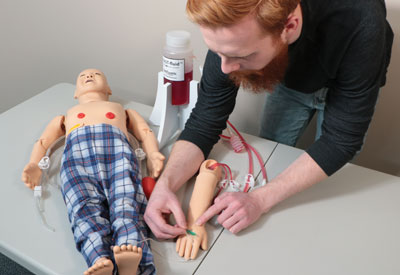
Our Pediatric Nursing Manikin is the size of a 3-year-old. It meets current AHA CPR guidelines, as it provides directed, specific, real-time coaching feedback on the rate and depth of chest compressions. Students can also perform over a dozen nursing procedures.

Our life-sized Adult Nursing Manikin also meets current AHA CPR guidelines. Students can use this multifunctional tool to practice over 20 basic care procedures.
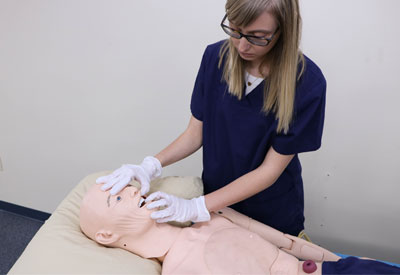
The Geriatric Nursing Manikin is an elderly medical teaching mannequin that features realistic joints and size. Students can use it to practice over 15 basic nursing functions, from scalp and face washing to colostomy care.
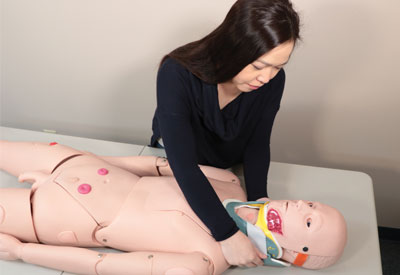
Our Closed Fracture Trauma Manikin gives students hands-on practice palpating, manipulating and immobilizing closed fractures.
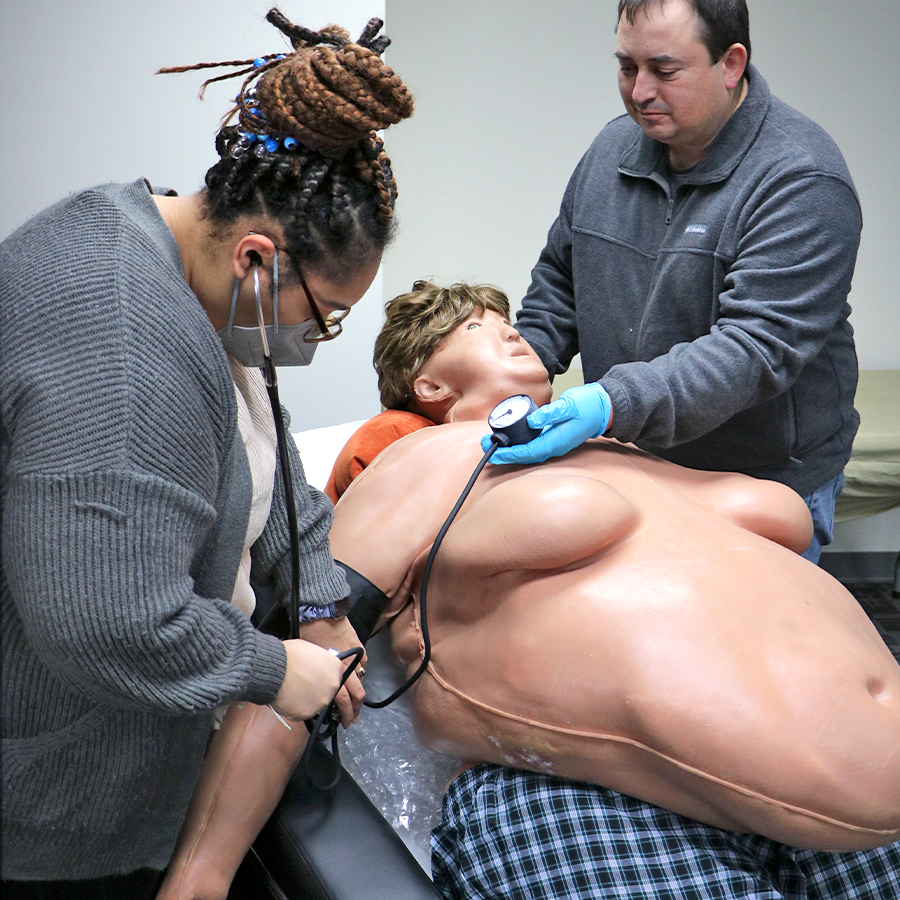
Finally, our new Bariatric Nursing Manikin represents a 350-pound male. We created it to help students prepare for the unique challenges associated with bariatric or obese patients, such as range of motion exercises, ambulation, perineal care and patient transfer and lifting.
In addition to the hands-on skills training these manikins provide, our manikins also include curricula with lessons plans, and lots of them!
Create a low-fidelity NICU
Realityworks also has a whole lineup of low-fidelity infant manikins and simulators with a variety of medical conditions:
- Preemie Baby
- Down Syndrome Baby
- RealCare™ Fetal Alcohol Syndrome Baby
- Infant CPR Baby
- Choking Baby
- RealCare™ Shaken Baby
- RealCare™ Drug-Affected Baby
For instance, students who encounter any of our specialty Babies, they remember what they learn! These Babies are incredibly impactful.
Make a NICU or nursey look and feel even more real by using clear totes on low-cost rolling carts or refurbished or used infant bassinets or incubators.
DIY simulation ideas you can afford
There are many DIY simulation experiences you can provide to your students that are very affordable. Here are a few to consider.
Simulate visual impairment by:
- Smearing glasses with soap or Vaseline to simulate cataracts
- Wearing glasses made with the wrong prescription
- Wearing sunglasses indoors to simulate macular degeneration or glaucoma
Simulate hearing impairment by:
- Using ear plugs or noise-canceling headphones
- Playing a sustained, high-pitched noise to simulate tinnitus
- Gradually turn down the volume on a device to simulate hearing loss over time
Get more DIY healthcare simulation ideas, as well as resources for creating a low-cost simulation lab, by watching the full webinar recently hosted by Realityworks Product Manager and National Consortium for Health Science Education Executive Council Member Denise DuBois:
More resources for building a basic healthcare simulation lab on a budget