 In fast-paced emergency scenarios, confidence and competence can make all the difference, which is why realistic bleeding control training is an essential component of modern EMS education. Using tools like the Trauma Injury Simulator, instructors can immerse students in lifelike situations that replicate severe bleeding, traumatic wounds, and the pressure of real-world response. These hands-on experiences empower learners to practice tourniquet application, wound packing, and bleeding management in a controlled environment, helping them build the life‑saving skills they’ll rely on when every second truly matters.
Comprehensive Bleeding Control Training Options
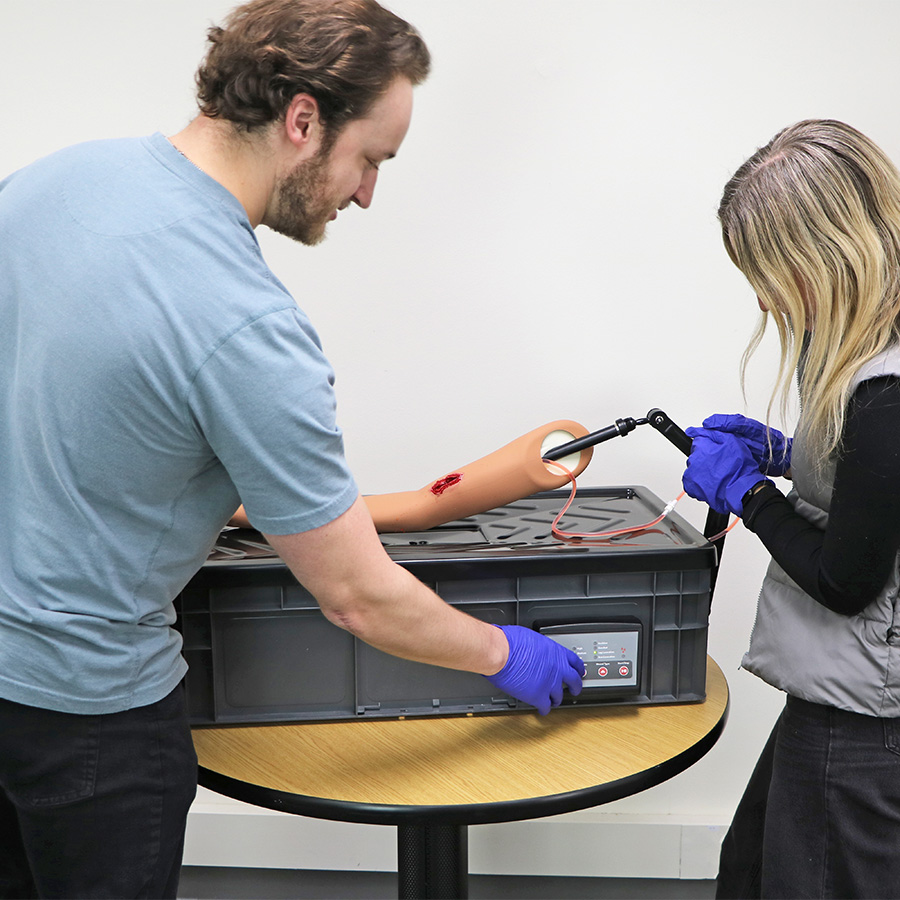
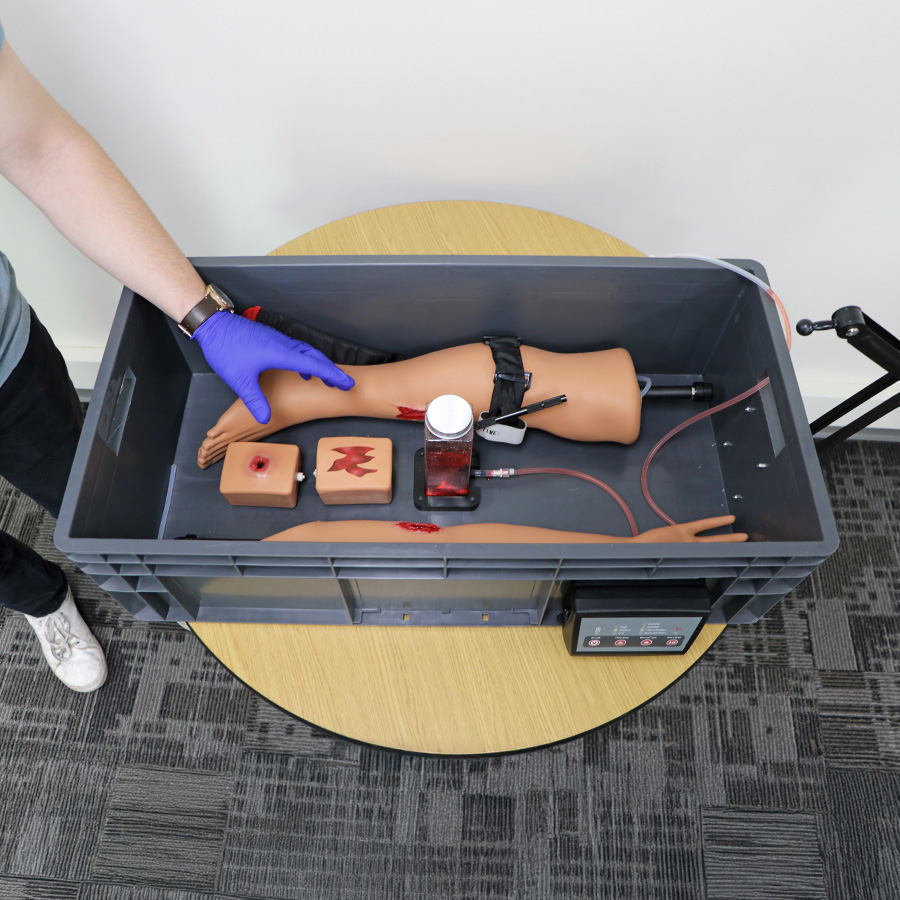
With the Trauma Injury Simulator, two students can be engaged in realistic bleeding control training simultaneously. They can practice applying tourniquets to the lacerated arm and leg with the included combat application tourniquets or other tourniquets you have in your classroom. Additionally, learners can get experience packing simulated gunshot and avulsion wounds. You can even customize the “blood’s” flow rate.
Real-World Application
In emergency situations, every second counts — and the ability to quickly recognize and control life‑threatening bleeding is one of the most critical skills future EMS professionals can develop. Realistic bleeding control training gives students the opportunity to practice the same techniques they’ll use in the field, helping them build muscle memory, reduce hesitation, and respond with confidence. By working with lifelike wounds and adjustable blood flow, learners experience the pressure and urgency of real trauma events in a controlled classroom environment.
Ready-to-Use Curriculum
Save time when planning bleeding control training lessons with this simulator’s included curriculum. It features five lessons that cover how to identify life-threatening bleeding, proper tourniquet placement and application, and more. The complete curriculum takes about three to four hours to complete. It comes with presentation slides, student activities, and assessment tools. It aligns to the American Red Cross and NREMT.
Classroom Flexibility
Whether you teach in a high school Health Science program, a technical college EMT course, or a community-based first responder training program, the Trauma Injury Simulator fits seamlessly into a wide variety of learning environments. It’s easy to incorporate into skills labs, rotations, demonstrations, or certification prep sessions. Plus, it supports both beginner and advanced learners. This means instructors can deliver personalized practice opportunities that meet students exactly where they are.
Why it Matters: Uncontrolled bleeding is the leading cause of preventable trauma death. Rapid recognition leads to rapid intervention, which saves lives.
Additional Resources
- Decorate your classroom with our free posters and infographics on EMT careers, healthcare careers, and more
- Check out this blog about hands-on medication administration practice for healthcare students
- Explore all our healthcare teaching tools