 What does it feel like to struggle with tasks you’ve done your entire life? For students learning about geriatric care, that’s a difficult question to answer through reading alone. Textbooks can explain how aging may affect vision, hearing, mobility, strength, and dexterity, but simulation offers a more personal perspective.
Realityworks’ Geriatric Simulator is a wearable training tool designed to simulate common age-related physical changes. As students complete everyday activities while wearing the simulator, they experience firsthand how routine tasks can become more challenging. That shift in perspective helps bring classroom learning to life and encourages students to think differently about the experiences of older adults.
Understanding the Challenges Older Adults Face
When students wear the Geriatric Simulator, activities such as walking, reading instructions, writing a note, or picking up an object can suddenly require more time and concentration. Tasks that once felt easy may become frustrating, forcing students to slow down and adapt.
Those moments often spark meaningful discussion. Students begin to recognize the barriers older adults may encounter in everyday life and consider how healthcare professionals can help make those experiences safer, easier, and more comfortable. The result is a learning experience that goes beyond memorization and encourages critical thinking, observation, and reflection.
Designed for Future Healthcare Professionals
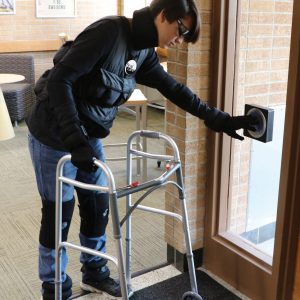
The Geriatric Simulator is designed for healthcare education programs that prepare students to work with patients across a variety of settings. It’s well suited for CNA, nursing, allied health, physical therapy, occupational therapy, and other health science programs. Whether students are exploring a healthcare career for the first time or preparing for clinical experiences, the simulator provides an opportunity to better understand the physical changes they may encounter when caring for older adults.
Learning Through Experience
One of the benefits of the simulator is its flexibility. Educators can incorporate it into skills labs, classroom activities, patient care scenarios, or career exploration experiences.
As students complete everyday tasks while wearing the simulator, they often gain a new appreciation for the extra effort some activities require. Using components such as vision simulation glasses and other wearable accessories, students discover how tasks that once seemed routine can require more time, concentration, and problem-solving.
The learning continues after the activity ends. Reflection and discussion allow students to share what surprised them, what challenges they faced, and how those experiences might affect an older adult’s daily life. These conversations help students connect what they experienced to real-world responsibilities.
Building Awareness and Confidence
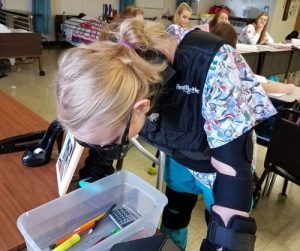
By experiencing simulated age-related limitations firsthand, students develop a greater awareness of the challenges many older adults face. They learn to think more critically about communication, accessibility, safety, and support while building confidence in their ability to work with aging populations.
The Geriatric Simulator isn’t intended to perfectly recreate the aging process. Instead, it gives students an opportunity to step outside their own experiences and view everyday tasks through a different lens. For many learners, that perspective becomes one of the most memorable and meaningful parts of their healthcare education.