Are you looking for fun, engaging ways to offer health science career exploration for middle school students? Middle school is a great time to get students thinking about what they want to be when they grow up. Plus, with careers as athletic trainers, EMTs, and exercise physiologists growing at a faster rate than average, now is the perfect time to introduce students to health science occupations. That’s why we’ve compiled this list of interactive tools you can use to help students explore the world of health science.
1. Blood Pressure Simulator
Use this award-winning Blood Pressure Simulator, a one-of-a-kind learning aid, to introduce students to a basic patient care skill: taking blood pressure. This wearable simulator distinguishes blood pressure sounds and Korotkoff phases. The simulator comes with everything you need to facilitate small-group activities: a cuff, trainer and pulse simulator, plus a Quick Start Guide, and online access to curriculum.
The included curriculum takes approximately one to two hours to complete but can be adapted to a longer block of time with supplemental materials. It features lessons on patient-focused care and procedures for taking blood pressure. The curriculum includes presentation slides, student activities, and assessments that you can pick and choose to create the most ideal career exploration lesson for your students.
We recommend five simulators for a 20-student class exploring careers within health science, sports medicine, or therapeutic services.
Use this simulator to explore careers in therapeutic and diagnostic services, biotechnology research and development, athletic training, exercise physiology, personal training, physical therapy, kinesiology, emergency medicine, medical assistance, and nursing.
Add soft skills practice with these supplemental scenario cards: Nursing Career, Nursing Career: Geriatric Patients, Medical Assistant Career, Sports Medicine Career, and EMT Career

2. Concussion Education Kit
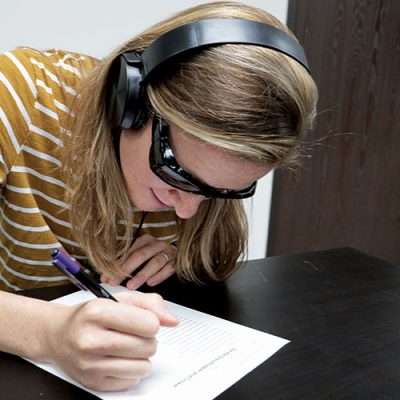
Use our Concussion Education Kit to help students begin to understand the effects of a concussion, how a concussion can feel, and how to treat and prevent them. This interactive kit has supplies for up to 10 students to experience a concussion simulation at one time. It includes 10 Traumatic Brain Injury Concussion Simulation Experience kits, which consist of Concussion Simulation Glasses and headphones. You also get a brain and cerebral arteries model students can study up close, as well as two posters to supplement classroom discussions.
The curriculum takes about five to seven hours to complete. It covers topics such as introduction to traumatic brain injury (TBI), concussion signs and symptoms, and TBI treatment and prevention. The goal is to help students learn the basic principles of TBIs, then experience the simulation to really make learning “sticky.”
We recommend one kit for a 20-student class exploring health science, sports medicine, or therapeutic services careers.
Use this kit to explore careers in shaken baby syndrome education, prevention, and treatment; therapeutic and diagnostic services; athletic training; exercise physiology; personal training; physical therapy; kinesiology; emergency medicine; and nursing.
Add soft skills practice with these supplemental scenario cards: Child Care Career, Medical Assistant Career, Sports Medicine Career, and EMT Career
3. Taping and Wrapping Skills Sim Kit
Introduce students to the fundamentals of taping, wrapping, and bracing in sports medicine with the Taping and Wrapping Skills Sim Kit. Use the included scenarios and supplies to give students hands-on practice with over 20 common taping, wrapping, and bracing techniques. The kit includes 15 rolls of adhesive tape, cohesive tape, elastic bandage, and prewrap foam. You also get a taping and wrapping storage box, 15 tape cutters, and more.
The included curriculum takes approximately five to six hours to complete. It features lessons on topics such as introduction to taping, wrapping, and protective equipment; taping versus bracing; and lower extremity taping. For easy facilitation, this kit includes a teacher’s guide with detailed steps of activities, time and materials needed, student handouts, and any information instructors need to teach the lesson.
We recommend one kit for a 20-student class exploring health science, sports medicine, or therapeutic service careers.
Use this kit to explore careers in therapeutic services, athletic training, exercise physiology, personal training, physical therapy, kinesiology, emergency medicine, and medical assistance.
Add soft skills practice with these supplemental scenario cards: Medical Assistant Career, Sports Medicine Career, and EMT Career

4. Splints and Braces Supply Pack
Use this comprehensive Splints and Braces Supply Pack to create hands-on opportunities for large groups. This supply pack includes enough materials for multiple students to practice common immobilization and splinting techniques simultaneously. It comes with a five-piece rapid splint kit, traction splint, six-piece air splint set, and more!
The curriculum takes about four hours to complete. It addresses joint and long bone and spinal immobilization. After completing the curriculum, students will be able to define open and closed fractures, demonstrate joint injury and splinting techniques, demonstrate how to measure a cervical collar, and other medical skills — or you can use it to introduce students to these basic splinting and bracing techniques and help them develop a better understanding of their importance.
We recommend one pack for a 20-student class exploring health science, sports medicine, or therapeutic service careers.
Use this pack to explore careers in therapeutic services, athletic training, exercise physiology, personal training, physical therapy, kinesiology, emergency medicine, medical assistance, and nursing.
Add soft skills practice with these supplemental scenario cards: Nursing Career, Nursing Career: Geriatric Patients, Medical Assistant Career, Sports Medicine Career, and EMT Career
5. BVM Ventilation Trainer
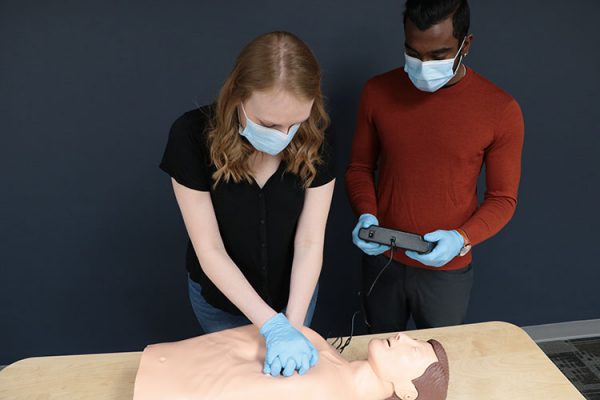
Use the BVM Ventilation Trainer to provide hands-on experience practicing an essential emergency skill: basic airway management. This trainer lets students practice manual ventilation with a bag valve mask, as well as oxygen administration via a non-rebreather mask. It also gives students experience with CPR and BVM ventilation of an apneic adult patient with one- and two-rescuer techniques.
The included curriculum takes approximately one to two hours to complete but can be adapted to a longer block of time with additional materials. It features lessons on the purpose and parts of a bag valve mask, correct use of a bag valve mask, and troubleshooting common bag valve mask problems. The curriculum includes presentation slides, student activities, and assessments.
We recommend one trainer for a 20-student class exploring health science, sports medicine, or therapeutic services careers.
Use this kit to explore careers in therapeutic and diagnostic services, athletic training, exercise physiology, personal training, physical therapy, kinesiology, emergency medicine, medical assistance, and nursing.
Add soft skills practice with these supplemental scenario cards: Nursing Career, Nursing Career: Geriatric Patients, Medical Assistant Career, Sports Medicine Career, and EMT Career
6. AED Trainer
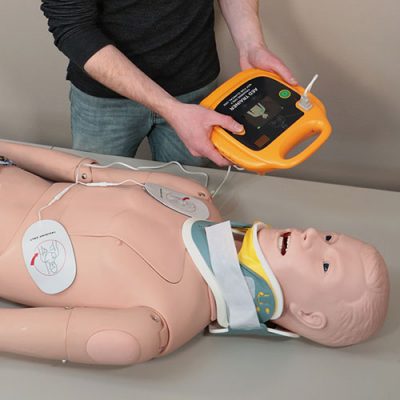
Prioritize safety when exploring Basic Life Support and Automated External Defibrillator (AED) skills with our AED Trainer. This easy-to-use trainer simulates AED procedures without using high-tension shock defibrillation. It comes with a storage case, two adult AED training pads, two pediatric AED training pads, and more!
The trainer’s curriculum takes about two to three hours to complete. Use it as your guide for exploring cardiac arrest management and AED. The goal is to help students learn how to identify and manage cardiac arrest using CPR and the AED Trainer on adults, children, and infants. You can even teach students how to apply an AED to a patient and use the AED Trainer.
We recommend one trainer for a 20-student class exploring health science, sports medicine, or therapeutic services careers.
Use this trainer to explore careers in therapeutic and diagnostic services, athletic training, exercise physiology, personal training, physical therapy, kinesiology, emergency medicine, medical assistance, and nursing.
Add soft skills practice with these supplemental scenario cards: Nursing Career, Nursing Career: Geriatric Patients, Medical Assistant Career, Sports Medicine Career, and EMT Career
7. Geriatric Sensory Impairment Kit
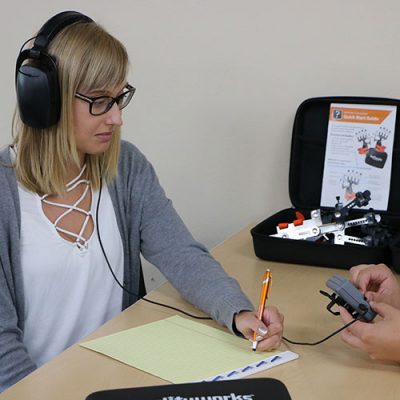
Use our Geriatric Sensory Impairment Kit to help students develop a basic understanding of the common sensory challenges elderly patients face — essential skills for future health care professionals! The hearing impairment simulator allows students to experience tinnitus, high-frequency hearing loss, general hearing loss, and dementia-related confusion. This kit also includes arthritis and tremor simulators.
The included curriculum takes approximately 7 to 13 hours to complete. It features lessons on hearing loss and impairment, the impact of aging on bones and joints, and understanding tremors in the elderly. It comes with presentation slides, student activities, and assessments.
We recommend four kits for a 20-student class exploring human service, health science, sports medicine, or therapeutic services careers.
Use this kit to explore careers in family and community, personal care, therapeutic, diagnostic, and support services as well as biotechnology research and development, physical therapy, nursing, emergency medicine, and medical assistance.
Add soft skills practice with these supplemental scenario cards: Employability, Leadership, Nursing Career, Nursing Career: Geriatric Patients, Medical Assistant Career, Sports Medicine Career, and EMT Career
8. RealCare™ Geriatric Simulator
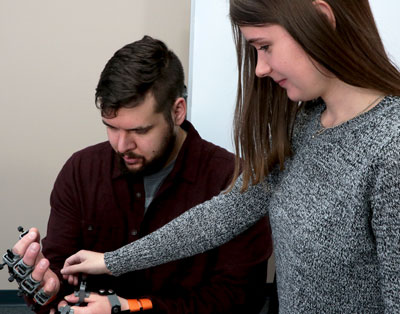
Our award-winning wearable Geriatric Simulator lets students personally experience a variety of age-related physical challenges such as stooped posture and limited range of motion — experiences that could help future health care professionals provide better care to older patients. The simulator comes with an adjustable weight vest, two ankle weights, four wrist weights, two elbow and knee restraints, and more.
The curriculum takes about 10 to 15 hours to complete. Choose from lessons on geriatrics and gerontology careers, visual impairment, and declining mobility due to aging. It aligns to National Health Education Standards, National Standards for FCS Education, Common Career Technical Core Standards, and Common Core State Standards.
We recommend four simulators for a 20-student class exploring human services, health science, sports medicine, or therapeutic services careers.
Use this simulator to explore careers in family and community, personal care, therapeutic, diagnostic, and support services as well as health informatics, biotechnology research and development, personal training, physical therapy, kinesiology, nursing, emergency medicine, and medical assistance.
Add soft skills practice with these supplemental scenario cards: Employability, Leadership, Nursing Career, Nursing Career: Geriatric Patients, Medical Assistant Career, Sports Medicine Career, and EMT Career

9. Hemiplegia Simulator
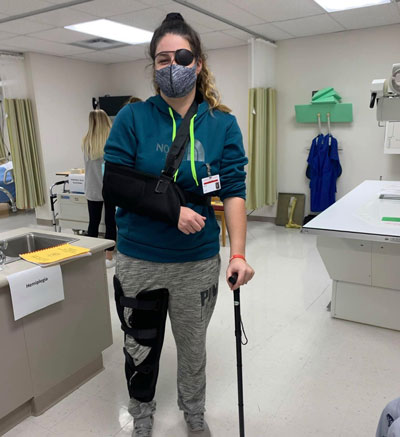
The Hemiplegia Simulator is a wearable simulator that enables students to experience paralysis on one side of their body. This hands-on tool is a great resource for introducing students to patients’ or family members’ disabilities due to stroke or similar conditions. It comes with an adjustable cane, arm sling, wrist brace, knee immobilizer, eyepatch, and ear plugs.
The included curriculum takes approximately one to two hours to complete but can be adapted to a longer block of time with supplemental materials. It features lessons on physical symptoms, treatment, and prevention of hemiparesis as well as patient-focused care. The goal is to help students learn about the causes, symptoms, treatment, and accommodations as they relate to hemiplegia.
We recommend four simulators for a 20-student class exploring human services, health science, sports medicine, or therapeutic services careers.
Use this simulator to explore careers in family and community, personal care, therapeutic, diagnostic, and support services as well as health informatics, biotechnology research and development, personal training, physical therapy, kinesiology, nursing, emergency medicine, and medical assistance.
Add soft skills practice with these supplemental scenario cards: Employability, Leadership, Nursing Career, Nursing Career: Geriatric Patients, Medical Assistant Career, Sports Medicine Career, and EMT Career
10. Geriatric Medication Management Simulation Kit
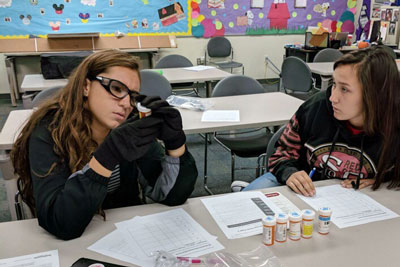
Our Geriatric Medication Management Simulation Kit is a unique learning aid that will enhance classroom activities focused on professionals who work with and care for older adults. In this case, students can experience the challenges older adults may face managing multiple medications, and as a result, begin to develop empathy and understanding. This kit contains a set of six pill bottles with prescription labels for activities, plastic pill capsules, cataract simulation glasses, and sensory impairment gloves.
The included curriculum takes approximately one to two hours to complete. It features lessons on medication management for elderly patients and as well as patient-focused care. If it makes sense for your program, you can use this kit to give students a fully immersive experience of what it is like to manage multiple medication while experiencing poor vision and low manual dexterity.
We recommend one kit for a 20-student class exploring human services, health science, or therapeutic services careers.
Use this kit to explore careers in personal care, therapeutic, and diagnostic services as well as nursing.
Add soft skills practice with these supplemental scenario cards: Employability, Leadership, Nursing Career, Nursing Career: Geriatric Patients, Medical Assistant Career, and EMT Career
11. CNA Skills Sim Kits
Use these CNA Skills Sim Kits to add scenario-based learning to your career exploration lessons. In this case, your scenarios will focus on those that Certified Nursing Assistants (CNA) commonly experience, such as caring for patients with sensory impairments. Each kit includes all the tools needed to create three specific scenarios.
The kit’s curriculum takes about three hours to complete. It includes three simulation scenarios based on the INACSL Standards of Best Practice, scenario roles and set-up, a patient description, a pre-brief, a debrief, and a scenario guide with step-by-step facilitator instructions and a prop list. The three scenarios revolve around dressing and grooming, ambulation, and feeding assistance.
We recommend two kits for a 20-student class exploring health science, sports medicine, or therapeutic service careers.
Use this kit to explore careers in therapeutic and diagnostic services, physical therapy, and nursing.
Add soft skills practice with these supplemental scenario cards: Nursing Career, Nursing Career:
Geriatric Patients, Medical Assistant Career, Sports Medicine Career, and EMT Career
Learn More
If you’re looking for information on middle school career exploration opportunities, we suggest:
-
- Our free career exploration curriculum, which introduces students to in-demand careers within health science
- This free guide on using scenarios to explore careers