 Veterinary terminology is the foundation of every successful veterinary and animal science program—but memorizing terms alone doesn’t prepare students for real-world animal care. A hands-on approach helps learners truly understand and use veterinary language with confidence. The Veterinary Medical Terminology Kit gives students an engaging way to build, practice, and apply essential terms they’ll use throughout their veterinary education and future careers.
Why Hands-On Learning Matters
Veterinary terminology can feel overwhelming when taught through memorization alone. Hands-on learning strategies—like building words and writing definitions—help students better understand how veterinary language works and improve long-term retention. Hands-on learning helps students move beyond memorization by actively engaging with concepts, making veterinary terminology easier to understand. These approaches also encourage deeper engagement, making terminology more meaningful and easier to apply in real-world animal care settings.
Color-Coded Veterinary Terminology Tiles
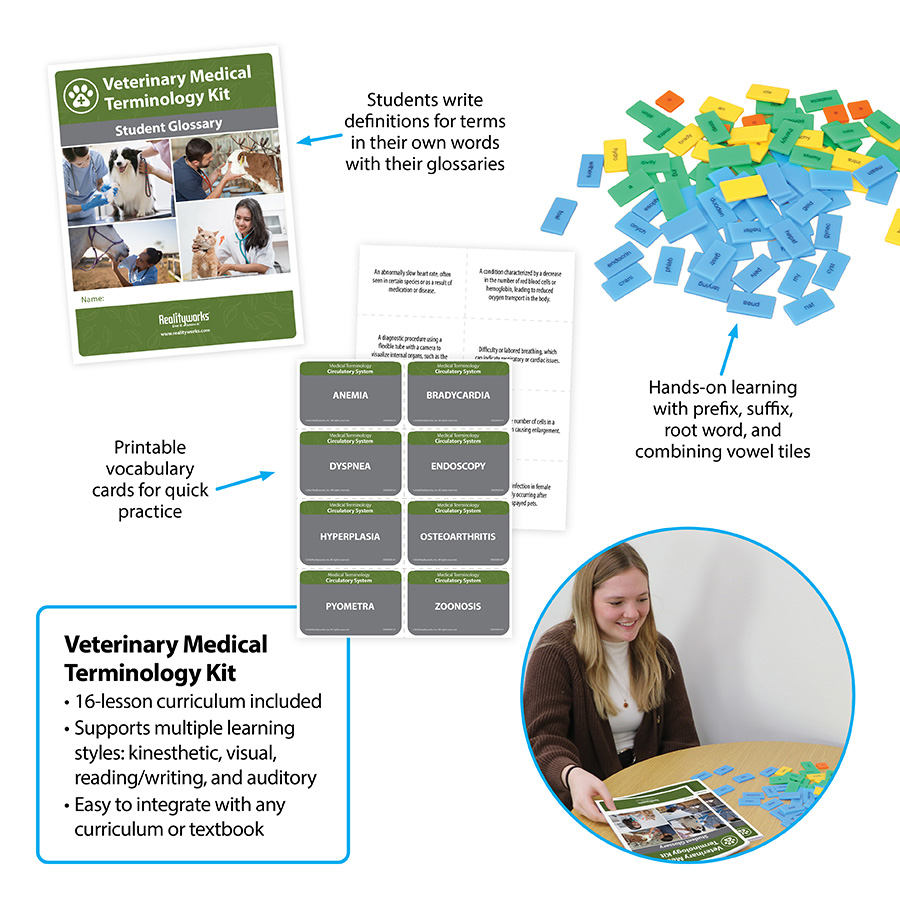
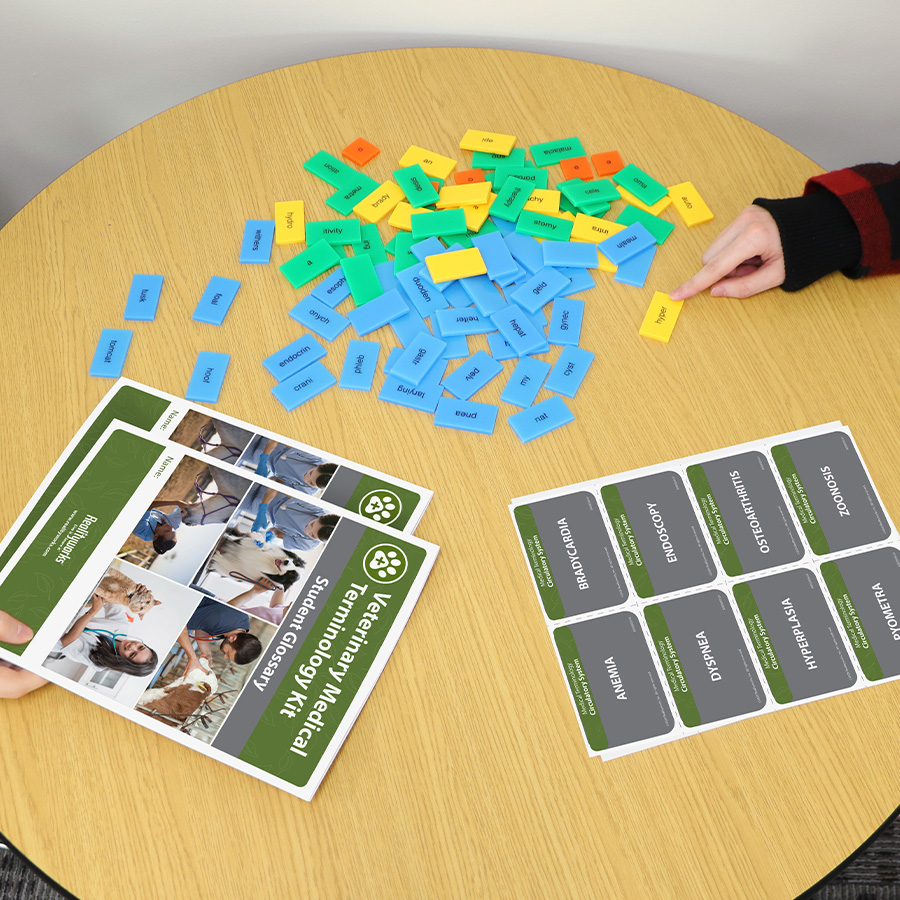
Our favorite part of this kit is the color-coded terminology tiles that feature prefixes, root words, vowels, and suffixes. It comes with five sets of 210 tiles that break down into 17 prefixes, 44 suffixes, 143 root words, and 6 combining vowels. By arranging the blocks, students can build and break down complex veterinary terms, reinforcing their understanding of word structure and meaning. This hands-on process helps students see how veterinary terminology is constructed while making challenging language more approachable and engaging.
Engaging Student Glossaries
The 20 student glossaries feature over 50 pages of veterinary terminology for students to write in their own definitions, plus several blank pages for students to add other words. Even if reading and writing isn’t every student’s preferred learning style, writing information down plays an important role in learning. Research shows that it improves students’ ability to recall what they learned in the lesson. Once the glossary is complete, it becomes a great study tool that students can use to review the terms.
View a sample of the glossaries here.
Printable Vocabulary Cards
This kit includes printable vocabulary cards, providing a flexible and effective way to reinforce key veterinary terminology. Each card clearly presents essential terms alongside concise definitions, making complex words easier to remember. Teachers can easily integrate the cards into a variety of classroom activities—such as matching exercises, small-group review, or assessment prep—while students can use them independently for self-paced study and reinforcement.
Check out our Bovine Veterinary Terminology Cards as an example.
Standards-Aligned Curriculum
Included with the Veterinary Medical Terminology Kit is a downloadable 16-lesson curriculum that covers essential topics like the integumentary system, cardiovascular and lymphatic systems, respiratory system, and more. With up to 14 hours of content, this curriculum can be taught in its entirety or broken into specific lessons and activities. This allows for seamless integration into your current lesson plan. It aligns to AFNR Animal Systems and CASE Animal Health and Veterinary Science.
See an overview of the curriculum here.
Who Is This Kit Designed For?
This veterinary terminology kit is ideal for high school veterinary science, animal science, and career and technical education (CTE) programs. It works especially well for introductory vet science courses, pathway programs, and classes preparing students for industry credentials or postsecondary education. Educators who value hands-on, student-centered instruction will appreciate how the kit supports diverse learning styles, reinforces foundational knowledge, and helps students confidently use professional veterinary language in both academic settings and real-world animal care scenarios.

Classroom Application
Teachers can use the Veterinary Medical Terminology Kit in a variety of instructional settings—from introducing new vocabulary and reinforcing lessons to small-group activities and assessment review. The hands-on components support differentiated instruction and give students multiple ways to engage with veterinary terminology, regardless of learning style. The kit also makes it easy to encourage collaborative learning, as students work together to build terms, discuss meanings, and solve vocabulary challenges.
What Students Gain
- Stronger understanding of veterinary terminology and word structure
- Improved confidence using professional veterinary language
- Increased retention through hands-on and written practice
- Better preparation for advanced coursework and careers in animal care

Additional Resources
- See how STEM in CTE is transforming the classroom in this blog post
- Explore all our vet science training tools here
- Watch this free, on-demand webinar on starting an engaging vet science pathway program