 Career and Technical Education (CTE) programs prepare students for high-demand careers by integrating academic knowledge with hands-on technical skills. Incorporating STEM principles into CTE curricula enhances problem-solving abilities, technological literacy, and workforce readiness. By merging STEM with CTE, schools can ensure students are equipped with both theoretical knowledge and practical experience, essential for thriving in today’s job market.
3 Key Benefits of STEM in CTE
There are many reasons to implement STEM in CTE Departments, but we’ve highlighted three primary reasons below including developing workforce-ready technical skills, bridging the gap between academics and industry, as well as enhancing problem-solving and innovation. These benefits not only strengthen student engagement but also ensure that CTE programs remain aligned with the evolving demands of today’s STEM-driven workforce.
Developing Workforce-Ready Technical Skills
- STEM-infused CTE programs align with industry standards, providing students with hands-on experience in fields like engineering, healthcare, and information technology.
- Hands-on learning with technology fosters critical problem-solving and adaptability in real-world work environments.
- According to the National Alliance for Partnerships in Equity, CTE and STEM offer access to high-skill, high-wage, in-demand programs of study and pathways to carers with financial stability.
Bridging the Gap Between Academics and Industry
- STEM integration in CTE programs connects students with real-world applications of science, technology, engineering, and math in career pathways.
- Industry partnerships provide students with internships, apprenticeships, and certification opportunities.
- Research indicates that students who participate in CTE-STEM programs are more likely to enter STEM-related degree programs.
Enhancing Problem-Solving and Innovation
- STEM in CTE encourages students to apply technical skills to solve complex challenges through hands-on projects.
- Exposure to data analysis, hands-on tools, and engineering design helps students develop innovation-driven mindsets.

Teaching Tools for Integrating STEM into CTE
Bringing STEM into CTE doesn’t have to be overwhelming. With the right tools, educators can create hands-on learning experiences that build technical skills, foster innovation, and prepare students for real-world careers. Below, we’ve highlighted STEM resources tailored to key CTE departments to help you get started. These tools not only support curriculum goals but also spark curiosity and problem-solving in ways that resonate with today’s learners.
STEM in Trades
Career pathways in the trades—like construction, manufacturing, and engineering—are increasingly driven by technology and innovation. Integrating STEM into these programs helps students develop essential skills in electrical systems, mechanical problem-solving, and design. By combining hands-on tools with problem-solving, educators can prepare students for modern trade careers that demand both craftsmanship and applied STEM skills.
Trailer Circuits STEM Kit
The Trailer Circuits STEM Kit is the ideal solution for educators who want to make learning electricity engaging, tangible, and safe. Teaching electricity can be challenging—its invisible nature often makes it hard for students to grasp how it powers the world around them. This pack of three Trailer Circuits Trucks transforms the mystery of electricity into a concrete set of skills through the real-world context of wiring a trailer, making the learning process both accessible and practical.
The kit brings real-world electrical challenges into the classroom, giving students hands-on experience with circuit design, troubleshooting, and repair. As they wire and test both 4- and 7-way trailer harnesses, learners apply STEM concepts like Ohm’s Law, series and parallel circuits, and multimeter usage in a practical setting. This kit bridges the gap between abstract electrical theory and real-world application, helping students transfer knowledge to fields like robotics, automotive repair, and engineering.

RC Tractor Pull Challenge
Unlock the power of STEM education with the RC Tractor Pull Challenge! This hands-on learning tool helps students explore key concepts in force, motion, friction, and gravity. The set includes five remote-controlled tractors, complete with adjustable weight distribution, tractor hitch, spur and pinion gears, and rear tire sizes. Students can experiment with different configurations to optimize their tractor’s performance. This encourages critical thinking, problem solving, and teamwork as they dive into real-world applications of engineering and physics principles.
This teaching tool offers a dynamic way to explore STEM concepts through hands-on experimentation and mechanical design. The process of modifying and testing their tractors brings physics and engineering principles to life, reinforcing concepts like Newton’s Laws, friction, mechanical advantage, and force angles. Through guided test trials and data analysis, learners apply math and science to optimize their designs and articulate the reasoning behind their modifications.

Electrical Wiring Kit
The Electrical Wiring Kit helps teach students the essential principles and techniques of electrical wiring. This portable, battery-operated kit provides a safe and repeatable way for students to practice wiring common electrical circuits, offering instant assessment and corrective feedback as they work. The kit enables students to work on real-world electrical tasks, including wiring outlet, light, and switch circuits.
This kit brings the real-world skills of an electrician directly into the classroom, offering students hands-on experience with standard tools, wires, and fixtures used on construction sites. As students install and test circuits using the included Assessment Tool, they apply STEM concepts like electrical theory, troubleshooting, and safety protocols. The kit reinforces learning from science, robotics, and engineering classes by connecting abstract electrical knowledge to practical applications.

STEM in Agriculture
Modern agriculture is powered by innovation—from precision farming to sustainable food production. Integrating STEM into ag programs helps students explore environmental sustainability, animal science, and food production through hands-on experiences. With tools like aquaponics systems and veterinary science simulators, students gain the skills needed to thrive in evolving agricultural careers. These experiences not only deepen understanding of modern farming practices but also inspire students to become problem-solvers in a rapidly changing industry.
Educational Aquaponics System
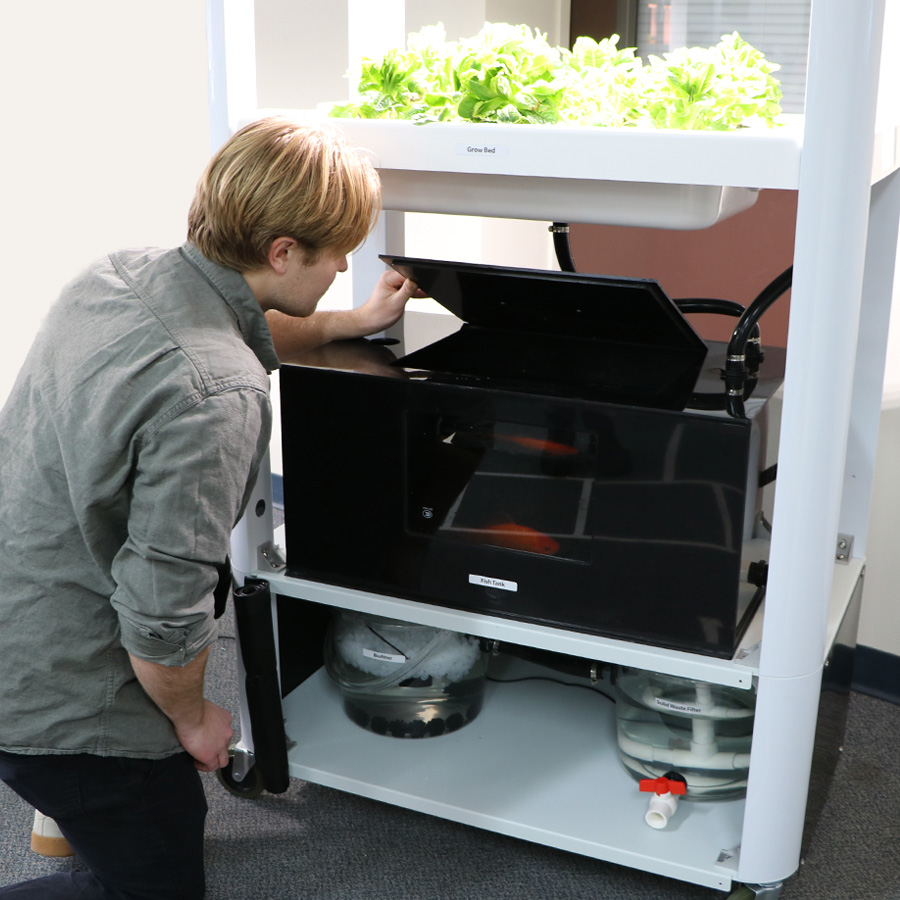
Introduce students to sustainable agriculture with our Educational Aquaponics System. This self-contained system supports up to 10 fish and 14 plants, providing a real-world opportunity to experiment with aquaponic growth methods. Students can observe the interconnected processes of fish, filtration, and plant fertilization as they witness plants growing through the biofilter process. It’s a powerful way to teach systems thinking, environmental stewardship, and the science behind sustainable food production.
This system brings STEM into agriculture by combining biology, chemistry, environmental science, and engineering in one hands-on learning experience. Students explore sustainable food production by managing a living ecosystem where fish and plants coexist. This real-world application of scientific principles encourages experimentation, data collection, and problem-solving, while reinforcing key STEM concepts like pH balance.
Bovine Birthing and Ultrasound Simulator
The Bovine Birthing and Ultrasound Simulator is an innovative educational tool designed to teach students essential skills in livestock management. This hands-on, safe, and repeatable practice system allows students to gain valuable experience in birthing calves and performing ultrasounds. For calf pulling practice, the simulator includes a model that replicates the weight of a newborn calf. The ultrasound simulator uses sensing technology to offer 14 ultrasound scenarios.
This simulator is an ideal tool for integrating STEM into agriculture education by combining anatomy, veterinary science, and diagnostic technology in a hands-on learning experience. Students explore reproductive systems while practicing ultrasound techniques used in real-world livestock management. This simulator reinforces STEM concepts such as biological systems, imaging technology, and problem-solving, helping learners understand the science behind breeding.

Farm to Fork Lab Kit
Introduce students to the journey of food from farm to plate with the Farm to Fork Lab Kit. This supplemental kit includes materials for a variety of lab activities that focus on critical farm-to-table issues, such as production. The kit features scenario cards to enhance student problem-solving skills, helping them consider ethical dilemmas and meal planning.
This kit is a hands-on resource that brings STEM into agriculture by guiding students through the entire food production cycle—from cultivation to consumption. It encourages experimentation, data analysis, and systems thinking as learners investigate how agricultural inputs affect food quality and safety. This application of STEM principles helps students understand the science behind food systems.

STEM in Health Science
Healthcare careers demand both technical expertise and technological fluency. STEM integration in health science programs allows students to engage with patient care scenarios and medical technology. These experiences build critical thinking and prepare students for roles in patient care, diagnostics, and medical technology. By blending science and technology with hands-on learning, educators can equip students to meet the demands of the healthcare industry.
ECG Simulators
The Adult and Pediatric ECG Simulators are award-winning, unique teaching tools designed to provide students with hands-on experience in ECG/EKG lead placement and rhythm interpretation. These simulators allow students to practice accurate lead placement through rib palpation. With their software and curriculum, the simulators offer individual practice and assessment opportunities to strengthen rhythm reading.
These simulators are powerful tools for integrating STEM into health science education by combining anatomy, physiology, and biomedical technology in a hands-on format. Students learn to interpret electrical signals from the heart, apply electrode placement techniques, and analyze ECG waveforms. The simulators provide real-world experience with tools used in clinical settings, helping learners understand how electrical activity.

Adult Nursing Manikin
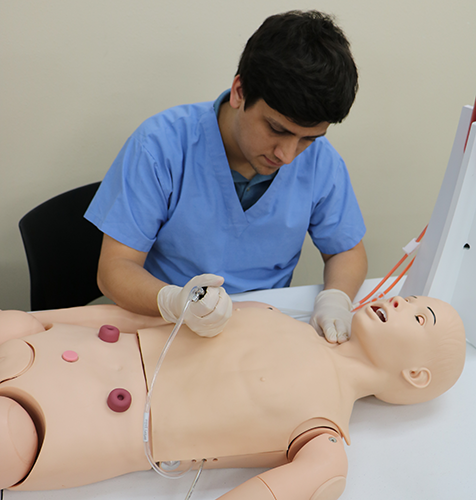
Enhance your nursing and healthcare training with the Adult Nursing Manikin, a life-size, award-winning model designed to simulate realistic, interactive scenarios for practicing over 20 essential care procedures. This manikin allows students to perform a wide range of tasks, including CPR, patient assessment, wound care, and more. It’s an ideal tool for both classroom instruction and clinical skills development
This manikin is a versatile tool for integrating STEM into health science education by providing realistic, hands-on practice in patient care and clinical procedures. Students apply anatomy, physiology, and medical science concepts as they perform tasks like wound care, injections, and vital signs monitoring. This experiential learning reinforces STEM principles such as data interpretation, systems thinking, and technical precision.
Multipurpose Venous Training Arm
The Multipurpose Training Arm is a versatile simulation tool designed to help students practice a wide range of clinical procedures in a safe, controlled environment. It allows learners to perform venipuncture, IV insertion, intramuscular injections, and other essential skills using realistic anatomical features. With lifelike skin texture and vein structure, this trainer provides an authentic experience that mirrors real-world patient care.
This training arm brings STEM into health science by connecting anatomy, physiology, and medical technology through hands-on learning. Students apply scientific principles like fluid dynamics and pressure while practicing technical procedures, reinforcing their understanding of clinical systems. Troubleshooting and precision-based tasks promote critical thinking and problem-solving.

STEM in Family and Consumer Sciences (FCS)
FCS programs offer unique opportunities to apply STEM in childcare and education careers. By incorporating models, simulation technology, and scenario-based learning, students develop practical skills in child development, childcare education, and classroom management. These STEM-infused experiences help students connect academic concepts to real-world applications, making learning both meaningful and future-focused.
RealCare Baby® 4 Infant Simulator
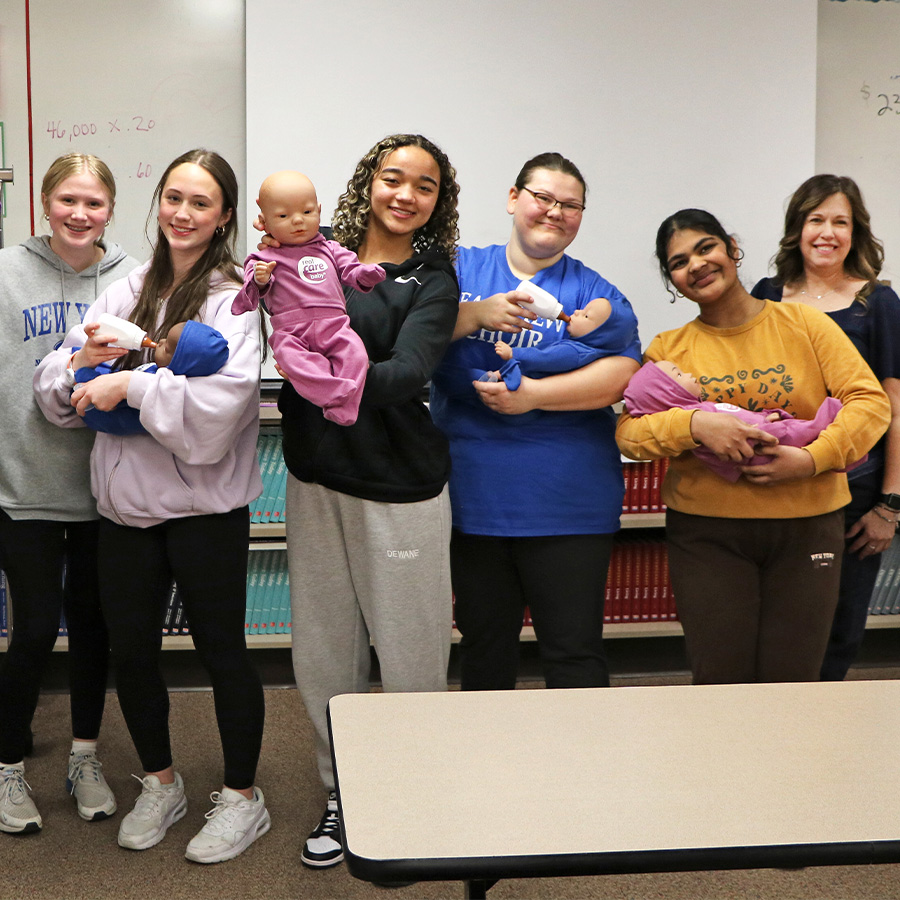
Give students a realistic caregiving experience with RealCare Baby 4, an interactive, take-home infant simulator that teaches feeding, burping, rocking, diapering, and play. Baby responds to realistic infant needs, and monitors activities like tummy time and car seat usage. Baby even babbles back in response to hearing its caregiver’s voice! Paired with curriculum and instructional resources, RealCare Baby 4 empowers educators to deliver meaningful, data-driven lessons on basic infant care.
The RealCare Baby is a powerful tool for integrating STEM into FCS by combining technology, behavioral science, and data analysis in a realistic caregiving simulation. Students care for an infant simulator that tracks responses to care needs, allowing them to reflect on decision-making. This experience reinforces STEM concepts such as sensor technology, human development, and data interpretation, while promoting empathy and responsibility.
Fetal Development Kit
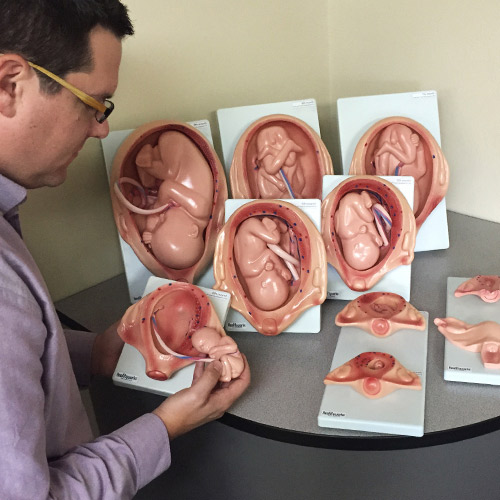
With the Fetal Development Kit, students get an in-depth look at embryo and fetal development. Students can touch, feel, and examine a detailed, life-size model of each fetal development stage. Additionally, incorporate the included curriculum for a complete experience. This hands-on approach helps students visualize complex concepts and better understand the stages of human development. It’s an ideal resource for courses in human growth and development and early childhood education.
This kit is a valuable tool for integrating STEM into FCS by providing a hands-on way to explore human growth and prenatal biology. Through realistic models representing each stage of fetal development, students engage with anatomy, physiology, and developmental science. This resource reinforces STEM concepts such as biological systems, genetics, and health education, while encouraging critical thinking and observation skills.
Elementary Education Scenario Kit
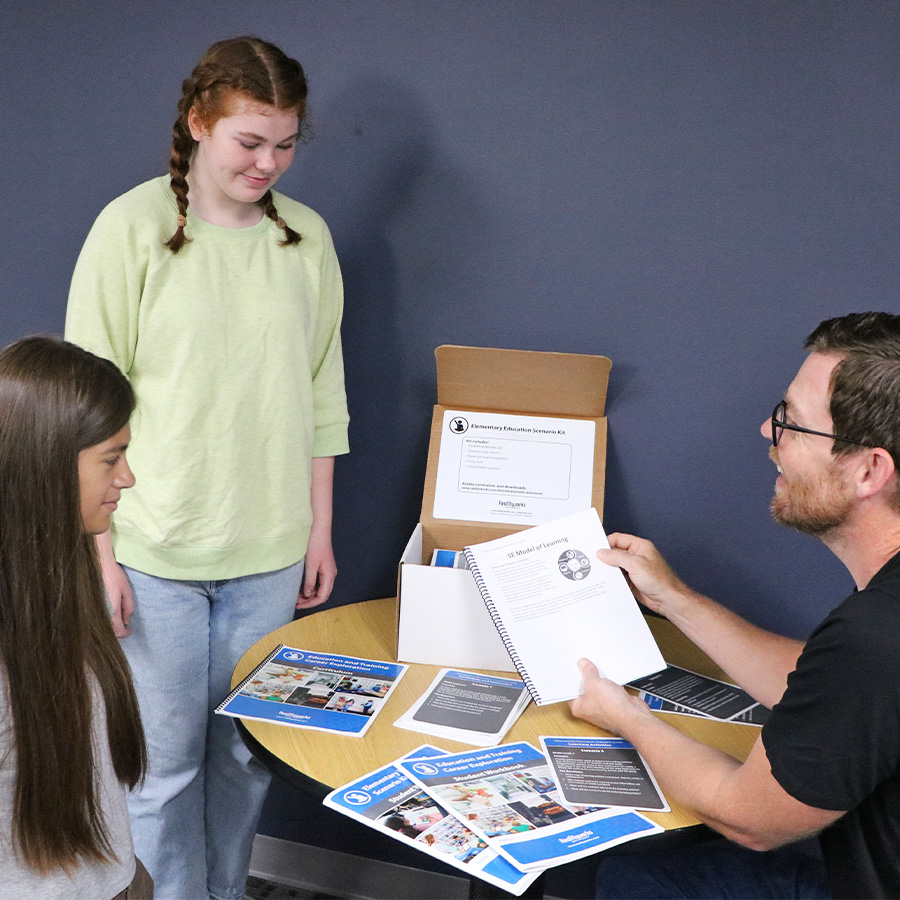
The Elementary Education Scenario Kit is a supplemental program designed to prepare future educators for the unique challenges of teaching at the elementary level. This kit offers a standards-aligned curriculum that immerses students in real-world scenarios, enhancing their problem-solving and classroom management skills.
This is a valuable resource for bringing STEM into FCS by helping students explore the science of learning and behavior through realistic classroom scenarios. As students analyze and respond to common challenges faced by early childhood educators, they apply problem-solving and decision-making skills. This kit encourages learners to think critically about child development, classroom dynamics, and instructional strategies.
Additional Resources
- Watch our free webinar on entrepreneurship and STEM
- Download and print free educational posters on trades careers in STEM, agriculture careers in STEM, and more
- Check out our free career exploration lesson plans, including one on STEM