 Food and nutrition is a subject students can experience firsthand. Students can investigate food safety, practice kitchen skills, explore nutrition, and even grow their own food, all while building skills they can use beyond the classroom.
Hands-on learning gives students the opportunity to practice what they’re learning and make connections to everyday life. Below are five Realityworks solutions to help bring those experiences into your classroom.
Build a Strong Foundation in Food Safety
Start with one of the most important foundations: keeping food safe.
The Food Safety Kit gives students opportunities to practice essential food safety concepts, including handwashing, foodborne illness prevention, the temperature danger zone, cross-contamination, and safe food preparation.
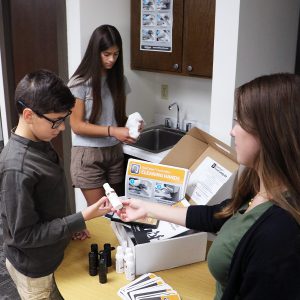
With tools such as Glo Germ™ Gel and UV lights, students can see how easily contamination can spread and practice ways to prevent it. They can also work through food safety scenarios and review safe cooking and storage practices. These activities help connect classroom lessons to decisions students may make at home or in a future food-service career.
Help Students Identify Hazards Before Accidents Happen
Once food safety is covered, take a closer look at the kitchen itself.
The Kitchen Safety Kit helps students identify and prevent common hazards, including burns, falls, cuts, sanitation issues, and electrical hazards.
Students can work through a realistic kitchen walkthrough featuring hazards such as a fake spill, chipped dish, overloaded outlet, and burning pot. They identify what’s unsafe, explain the risk, and determine how to correct it. This is a practical way to help students develop the habit of viewing their surroundings with safety in mind.
Develop Essential Culinary and Knife Skills
With safety basics in place, students can start building essential culinary skills.
The Knife Skills Kit provides a structured way to practice knife safety, knife anatomy, common cuts, and cutting techniques.
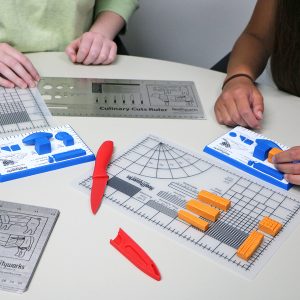
Students use measurement-guided cutting boards, finger guards, rulers, 3D knife-cut models, and other materials to practice and compare different cuts. They can also explore why consistency matters and how uniform cuts can affect cooking time, texture, appearance, and overall quality.
Practicing these skills gives students a chance to build confidence before moving on to more advanced food preparation.
Explore the Science Behind Food and Nutrition
Food and nutrition go beyond what’s on the plate.
The Food Science and Nutrition Kit gives students opportunities to explore nutrients, food labels, food processing, and the physical and chemical properties of food.
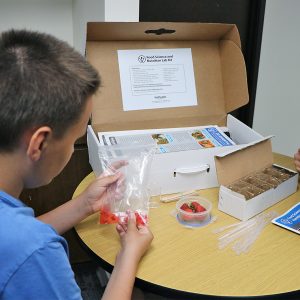
Students can explore essential nutrients, examine food production and processing, and make observations through hands-on activities. Materials such as lab workbooks, nutrient posters, beakers, funnels, pipettes, and other lab supplies help turn these concepts into something students can explore for themselves.
Connect Food Production to Agriculture and Sustainability
From the kitchen to the garden.
The Plant Mini Educational Hydroponics System Class Pack gives students a compact way to explore controlled-environment agriculture and grow plants without soil. As students monitor plant growth, they can explore topics such as food systems, sustainability, and the role agriculture plays in providing nutritious foods.
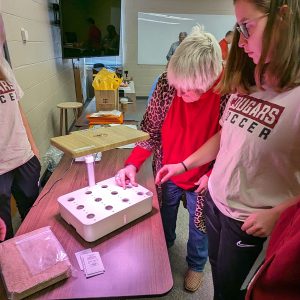
The growing experience can also connect to other parts of your course. Use classroom-grown ingredients as a starting point for conversations about recipes, nutrition, menu planning, or access to fresh foods.
Bringing Food and Nutrition Concepts to Life
Foundations of Food and Nutrition courses cover a lot, from safety and culinary skills to nutrition, food science, and food production.
Hands-on experiences can help bring those concepts together. Instead of simply listening to lessons, students have opportunities to practice, investigate, and apply what they’re learning. Together, these tools can support a natural progression through foundational food and nutrition concepts:
Start with safety → Build culinary skills → Explore nutrition and food science → Connect food to agriculture and sustainability
When students have opportunities to learn by doing, foundational concepts become more memorable.
Learn more about these and other experiential learning resources at Realityworks.com!