It all began in 1993, when Realityworks co-founders Rick and Mary Jurmain viewed a television program that showed teens using eggs and flour sacks to simulate caring for an infant. Rick commented to Mary that these seemed like poor substitutes for real infants. “There’s no crying or waking up at night,” he’s remembered as stating. So, Mary challenged the former NASA engineer to invent something better. By the end of that year, he had created the first prototype of what would be known as the RealCare Baby® infant simulator, or Baby (formerly Baby Think It Over®). Throughout the years, Baby has grown into much more than just a teenage pregnancy prevention tool. In honor of Baby’s 25th birthday, we’ve compiled a list of 25 of our favorite ways to use the world’s most advanced infant simulator.
1: Educate students on different parenting styles
As students care for Baby the way real parents do, you can discuss how researchers classify parents, and how different parenting styles affect kids.
2: Open students’ eyes to the realities of teen parenting

With a needy infant simulator constantly in tow, Baby provides students with real-life insights into the responsibilities that come with being a teen parent.
Get a free classroom poster featuring tips for maximizing your parenting curriculum here.
3: Practice basic infant care techniques
From diapering and swaddling to burping and changing diapers, Baby is a great way to teach students the basics of how to care for an infant.
4: Discuss life goals
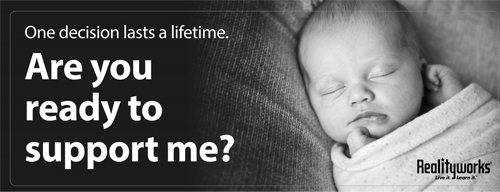
“Sometimes it’s the smallest decisions that can change your life forever.” — Keri Russell
Goals change over a lifespan, but how would personal goals be affected by having children as teenagers? The curriculum that accompanies Baby makes it easy to dive into the social, emotional, physical and financial impacts of having a baby.
Download free interactive posters about the impact of teenage pregnancy here.
5: Emphasize the importance of healthy choices
Teenage pregnancy is associated with numerous social issues. Lower education and socioeconomic status are examples. Baby is a tangible, memorable tool for helping students understand the importance of making healthy choices.
Enhance lessons on teen pregnancy with our free Teen Pregnancy Prevention infographic.
6: Research the cost of raising a child
One of the lesson plans that accompany Baby is a “Baby Costs” worksheet. Having students calculate the cost of an infant the first year of life, even up to the age of 18, makes an impact. (It’s also a good way to incorporate math into your program.)
7: Demonstrate car seat safety
Car seats are designed to protect children from injury or death during vehicle collisions, and knowing how to properly install them is key. Have students practice installing Baby’s car seat with Baby in it. Some educators even bring in guest speakers like police officers and firefighters to discuss the importance of proper car seat installation (see a fun example here).
8: Address infant safety topics
Parents play an important role in keeping a child safe — no matter how old he or she is. Use Baby to jump-start research projects on tools to help protect a baby, like how to baby-proof a house, avoid Shaken Baby and Flat Head Syndrome, etc. Also, with Baby’s temperature sensing capabilities offer great opportunities to discuss the dangers of leaving infants in a car on a hot, sunny days.
9: Discuss infant nutrition
Use Baby to prompt discussion on infant nutrition, from breastfeeding and formula feeding to first foods.
You can also use the breastfeeding device available for Baby to add more impact to these lessons.
10: Educate students on infant skin conditions
How many times do new parents ask themselves, “What is that rash on my child?” Students can learn to identify and care for common infant skin ailments (that only seem to appear after the pediatrician’s office is closed!) using our Infant Skin Conditions Kit with Baby.
11: Provide hands-on babysitter training
New babysitters can get hands-on opportunities practicing the basic infant care skills they’ll need to provide a high level of care when babysitting real infants.
12: Provide infant care practice sessions for expecting parents and first-time caregivers

Similar to babysitting training, expecting parents and other caregivers can practice the basic infant care skills they will soon be providing for their child with Baby.
Learn how author BJ Hollars used RealCare Baby to refresh his own parenting skills here.
13: Show students what to expect when someone is expecting
We’ve spoken to many educators who make tours of their local hospital’s maternity ward a regular part of their Baby program. You can also have students create a baby registry checklist to understand what a new parent really needs.
14: Provide hands-on infant care opportunities for future social workers
By providing the most realistic infant care experience possible, Baby can be used for a variety of “in the field” learning experiences that address intervention issues.
Shaken Baby Simulator, Fetal Alcohol Syndrome Baby and Drug-Affected Baby are also great resources for these lessons.
15: Give residents of rehabilitation and re-entry programs realistic opportunities to practice parenting and childcare skills
Correctional facilities have used Baby to help teach important parenting and life skills that be used once individuals are released. Lessons on nurturing and attachment, relationships, communication, the role of the father, literacy development and parenting styles can all be enhanced through hands-on practice with Baby, which helps simulate a nurturing experience for the assigned caregivers.
16: Train future pediatric healthcare providers on how to care for infants

Baby is an effective learning aid for teaching future pediatricians, neonatal nurses and other pediatric healthcare workers how to care for infants.
17: Expose students to child care careers
Students can experience childcare careers by using Baby to simulate a day care setting. Caring for Baby can open students’ eyes to the responsibilities involved with working with infants.
Explore our other childcare career preparation tools here.
18: Expose students to technology
Feature Baby in STEM and coding classes to discuss Baby’s programming and software capabilities and you might just inspire a new generation of coders.
19: Ignite discussions on empathy and sensitivity towards new parents
The shame associated with the stigma of teen pregnancy can be brutal. How can you assist young parents during this challenging time? Use Baby to jump-start discussions on the stigma of have a baby as a teenager.
20: Discuss healthy parent-child relationships
The best parenting comes from parents who create an environment that produces experiences that positively affect the growth of the individual child. Use Baby to jump-start lessons on healthy parent-child relationships. Have students conduct research projects and even role-play with Baby.
21: Address the physical, emotional, social impacts of having a child
Ensuring that adolescent parents receive adequate social and emotional, medical, and academic support is essential to both the parent and baby’s futures. As students embark on their simulation experience, address the social and emotional pressures that arise.
22: Provide an engaging lesson on multi-tasking
By assigning Baby for an extended period, students will have to figure out how to manage a variety of everyday tasks while caring for an infant. Things like showering, attending class, participating in extracurricular activities, even grocery shopping, are suddenly much harder as Baby goes wherever its student caregiver goes during a simulation experience.
23: Prompt discussion of daycare, preschool and early childhood education options and costs
By exploring the variety of education options and recommendations from infant developmental stages through college during their RealCare Baby experience, students can learn early childhood education options, how much those options costs and why they’re important.
24: Expand journaling and writing skills
Reflection is an important part of the RealCare Baby experience. By giving your students the chance to journal about their time with Baby, they can practice writing and critical thinking skills.
A great tool to facilitate reflection and writing activities are our RealCare Baby Experience Student Workbooks.
25. Show off and gain interest in FCS programs
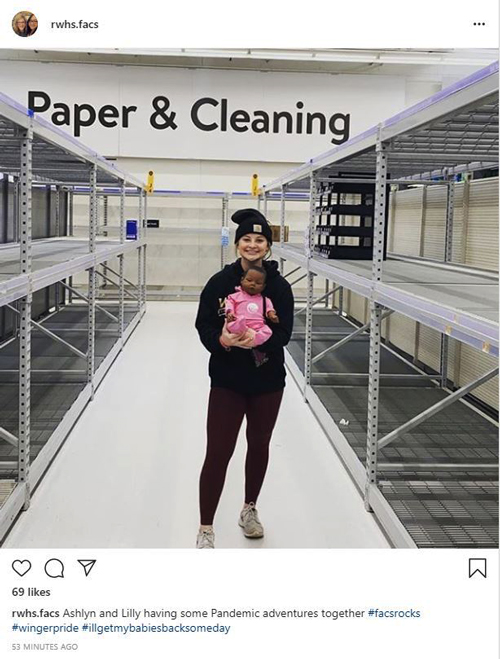
Teachers constantly tell us that students register for their FCS programs so they can experience Baby. One great way to garner attention for your program is by having students create and share social media posts of their experiences with Baby. We love the hashtag #RealCareBaby, but we recommend a common one for your class, too.
Need help using social media in your program? Check out our free Social Media for FCS Programs curriculum.
Now that you’ve read all our 25 ways we recommend using Baby, it’s your turn to share. What are some of your favorite ways to use Baby? Share your comments below or on social media using the hashtag #RealCareBaby
We’re celebrating RealCare Baby’s 25th birthday! Learn how you can help here.
Hey my name is Natasha Harris my husband and I would like to know how to Purchase a real care baby doll
Thanks for your interest, Natasha! Due to the educational nature of RealCare Baby and the teaching resources that are necessary for an effective program – lesson plans, assessment tools, activities, etc. – we sell only to educational and social service organizations. Thank you!