We recently hosted a webinar about why virtual reality welding training works for today’s CTE students. Featuring Realityworks Product Manager Jamey McIntosh, Realityworks Support Specialist Chris Potapenko and Arizona welding instructor Kenton Webb, the webinar, “Why VR Works: A Panel Discussion,” featured candid conversations about how instructors across the country are implementing tools like the guideWELD® VR welding simulator into their programs. Presenters discussed specific ways these 21st Century training tools can be used to engage students, foster skill development, boost confidence and save money.
Below are excerpts from the live presentation (you can watch the complete recording here).
1. Virtual reality welding simulators are great tools for beginners

“I’ve found it best to start off with my beginning level classes where a lot of those kids have never welded before so they don’t know the difference in between live and virtual. It’s definitely helped them as they’ve started off with something harder… then, when they get out into the shop, it’s a lot easier for them when it comes to the live application of it. It also helps them build their confidence. Sometimes welding equipment is terrifying to kids. They’re scared of the sparks and the heat and the fire.”
– Kenton Webb
“It’s a great tool and utility to bring in new students to get them started with the basics of welding. It eliminates some of the fear factors that go into getting them out on the real machine where they’re dealing with the heat, the sparks, the fumes. It’s a great resource to have in that safe classroom environment. It’s going to teach them all of the core functions of welding. It will give them that immediate feedback as well that they’re looking for.”
– Chris Potapenko
2. Custom WPS creation enables more personalized training
“I’ve created 9 separate WPS’s that the students have to go through and hit at an 80% or higher before they can move on to the next WPS… “Once they’ve finished and hit that mark in the classroom, I have the guideWELD® LIVE and they go out and use those with the actual hands-on weld.”
– Kenton Webb
“Being able to create your own welds that your community might be doing. We have schools that say, ‘just down the road we have welding jobs open. I want my students to be able to get those welding jobs, and I want my students to be able to practice those kinds of welds.’ They can put into guideWELD VR the exact parameters that they need to do. It ties in that career interest.”
– Jamey McIntosh
3. Virtual welding can improve learning for students
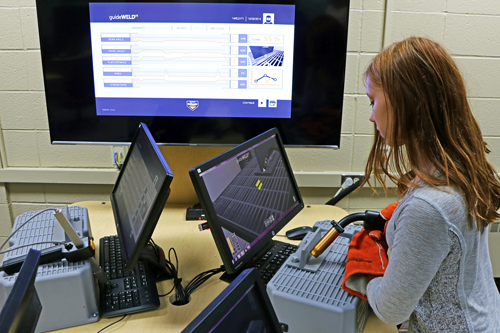
“They do get immediate feedback. They can actually see what they’re doing wrong immediately as they’re going through the weld. That definitely helps them. Even with my special education students, it gives them more feedback that they need and gets them more comfortable using it before they go out and use the real thing. It covers your basic work angles, travel angles, distance and all of that so when I’m using that terminology out in the shop, it’s not going over their head because they’ve been introduced to it.”
– Kenton Webb
4. Virtual welding can save your program money
“I was able to figure out what I would pay for the steel if I was doing these joints – what it would cost per joint. Because the guideWELD VR system counts every attempt that they do whether they pass it or fail it, so there were some of my classes that, if they were out in the shop, they would have burned through $800 worth of material… and that’s not even including the gas and wire, nozzles and tips that they would have burned through learning how to do it on the live thing. It definitely helps educators justify the cost for it. In terms of down the road, this is saving us money. For some of those programs that don’t have funding for unlimited metals and stuff like that, it gives them a little more time to start them off in the class but then still not worry about running through all of their material before the end of the year.”
– Kenton Webb
5. Students love the gaming aspect of virtual welding
“With kids being more tech-savvy and gamer-savvy, they really do enjoy doing it because they are coming to school to play a game. You are getting a little bit more buy-in and interest as well. Another thing I noticed is some of them will turn it into a competition. They’ll see one kid get a 95, then the other kids are like, ‘oh, I can do better.’ They are going back for more and trying to beat each other with a little competition.”
– Kenton Webb
Resources for continued learning
- Watch our complete webinar, “Why VR Works: A Panel Discussion,” on-demand anytime here
- Download our case study, “Welding Education in the 21st Century,” here
- Get a free guide for implementing our welding training tools here
- Learn how Kenton increased welding program enrollment in his high school by over 400% here

Hallo. i like to know about VR. Can we mixed VR with Distance Learning
Please reach out to our team for more information: information@realityworks.com