 Looking for wearable simulators to help your students develop nursing soft skills? In a recent webinar, we shared a variety of teaching tools that can help you create a wearable geriatric simulation program. Read on to explore hands-on, wearable learning aids that help students walk in the shoes of an aging individual.
Power of Wearable Simulators
Wearable simulators offer realism while protecting privacy. A few years ago, University of Minnesota completed a research study, in partnership with Realityworks and Innovative Design Labs, about the efficacy of wearable simulators. The University of Minnesota published their research results in Clinical Simulation in Nursing in 2023. Their results showed:
- Peer physical examination limits learning and threatens psychologically safety
- A wearable simulator system offers more realism while protecting privacy
- A student participant wearing a simulator was rated satisfactory by student and faculty participants.
Wearable simulators have the added benefit of teaching both nursing soft skills and technical skills. This cost-effective realism helps build empathy, understanding, and sensitivity. Furthermore, a 2022 article published by Healthy Simulation indicates that wearable healthcare simulators lead to better prepared learners. The article stresses the benefits of wearables in focusing the student not just on technical skills, but also on the absolutely necessary aspects of communication skills while performing procedures.
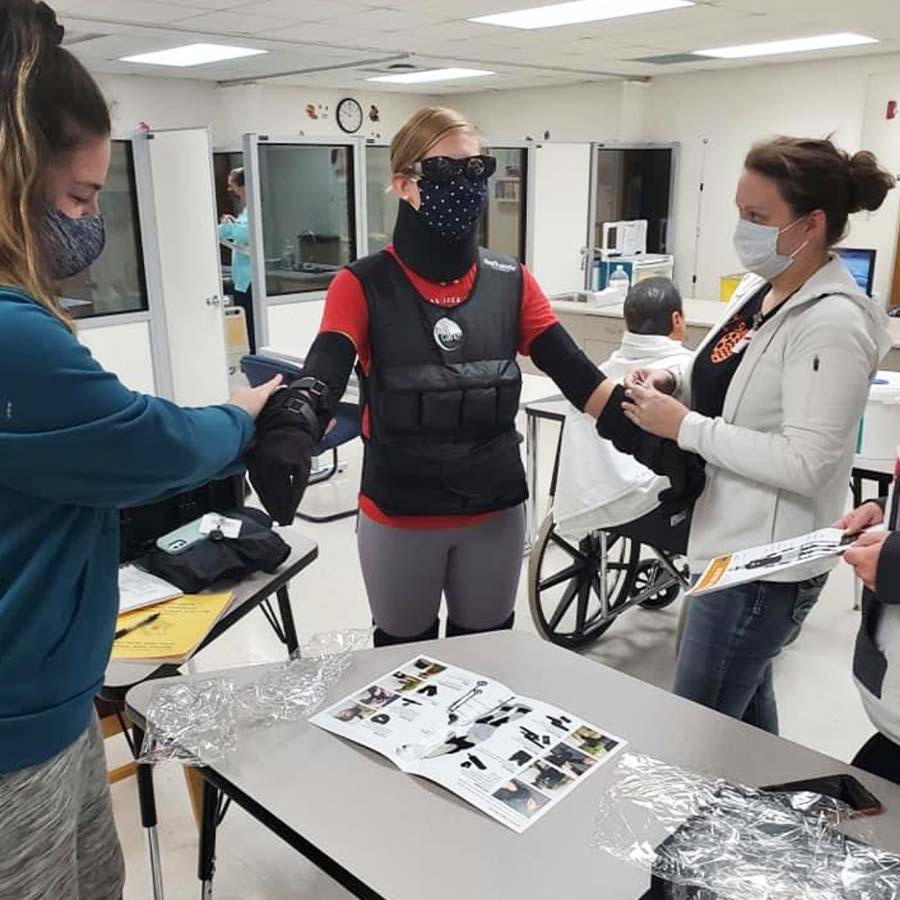
5 Wearable Simulators for Developing Nursing Soft Skills
1. Geriatric Simulator
The Geriatric Simulator enables users to experience visual impairment, restricted range of motion, decreased mobility, and more. Use this award-winning wearable simulator to help students develop nursing soft skills. It includes a sensitivity suit, walker, storage case, and curriculum. Here is a full list of impairments students can experience with this simulator:
- Visual impairment
- Glaucoma
- Macular degeneration
- Cataracts
- Diabetic retinopathy
- Retinal detachment
- Retinitis pigmentosa
- Restricted range of motion
- Decreased mobility
- Stooped posture
- Loss of sensation in hands
- Joint stiffness
- Loss of strength
- Fatigue
- Change in body image
- Decreased sense of balance
- Confusion
2. Geriatric Sensory Impairment Kit
Use the Geriatric Sensory Impairment Kit to help students develop nursing soft skills and understand common sensory challenges faced by older adult patients. This kit includes the Hearing Impairment Simulator, Geriatric Arthritis Simulator, and Geriatric Tremor Simulator.
The Hearing Impairment Simulator features headphones that enable the user to experience tinnitus, high-frequency hearing loss, general hearing loss, and dementia-related confusion. For understanding arthritis, students receive a wearable for each hand that simulates moderate to severe arthritis. Additionally, induce hand tremors with the Geriatric Tremor Simulator, a portable device that uses EMS technology.

3. Hemiplegia Simulator
The Hemiplegia Simulator enables users to experience paralysis on one side of the body. This helps them develop nursing soft skills and gain an understanding of patients’ or family members’ disabilities due to stroke or similar conditions. It includes a curriculum that addresses the physical effects of hemiplegia, plus teaching tools like presentation slides and assessment activities.
4. COPD and Mobility Challenges Simulation
The COPD and Mobility Challenge Simulation is a series of two wearable simulation experiences that allow students to walk in the shoes of an individual with COPD or mobility issues. The COPD simulation allows users to experience shortness of breath, wheezing, chest tightness, and lack of energy. The mobility simulation helps users experience difficulty ambulating and a shuffled, unsteady gait.

5. Dementia Simulation Experience
Use the Dementia Simulation Experience to help students develop nursing soft skills and understand the effects of dementia. This interactive kit has supplies for 20 to 30 students to participate in a dementia simulation simultaneously with 10 students acting as the dementia patients and the others role-playing as the caregivers or family members.
4 Best Practices for Using Wearable Simulators
1. Encourage Group Interactions
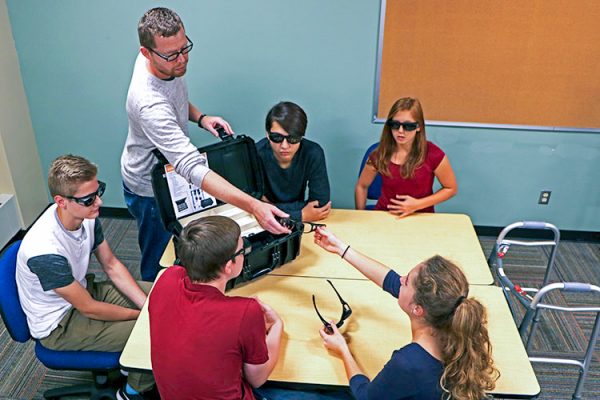
When groups of students experience a geriatric suit together, it enriches their conversations. Students can compare how they feel and engage with one another as they try to complete physical tasks, like tying their shoes or using a cell phone. This group dynamic leads to deeper discussion and better understanding of the impact the simulator has on everyone.
2. Take Time to Reflect
Debriefing at the end of an experience can be beneficial for students. You can begin by asking about their emotional responses. Then, extend the conversation to include specific things you may have observed during the exercise. Here are some reflection questions you could ask your students:
- How did it go?
- How did you feel during this experience?
- How will you incorporate this experience into your future caregiving?
- How can we improve safety for our patients?
3. Use Scenarios
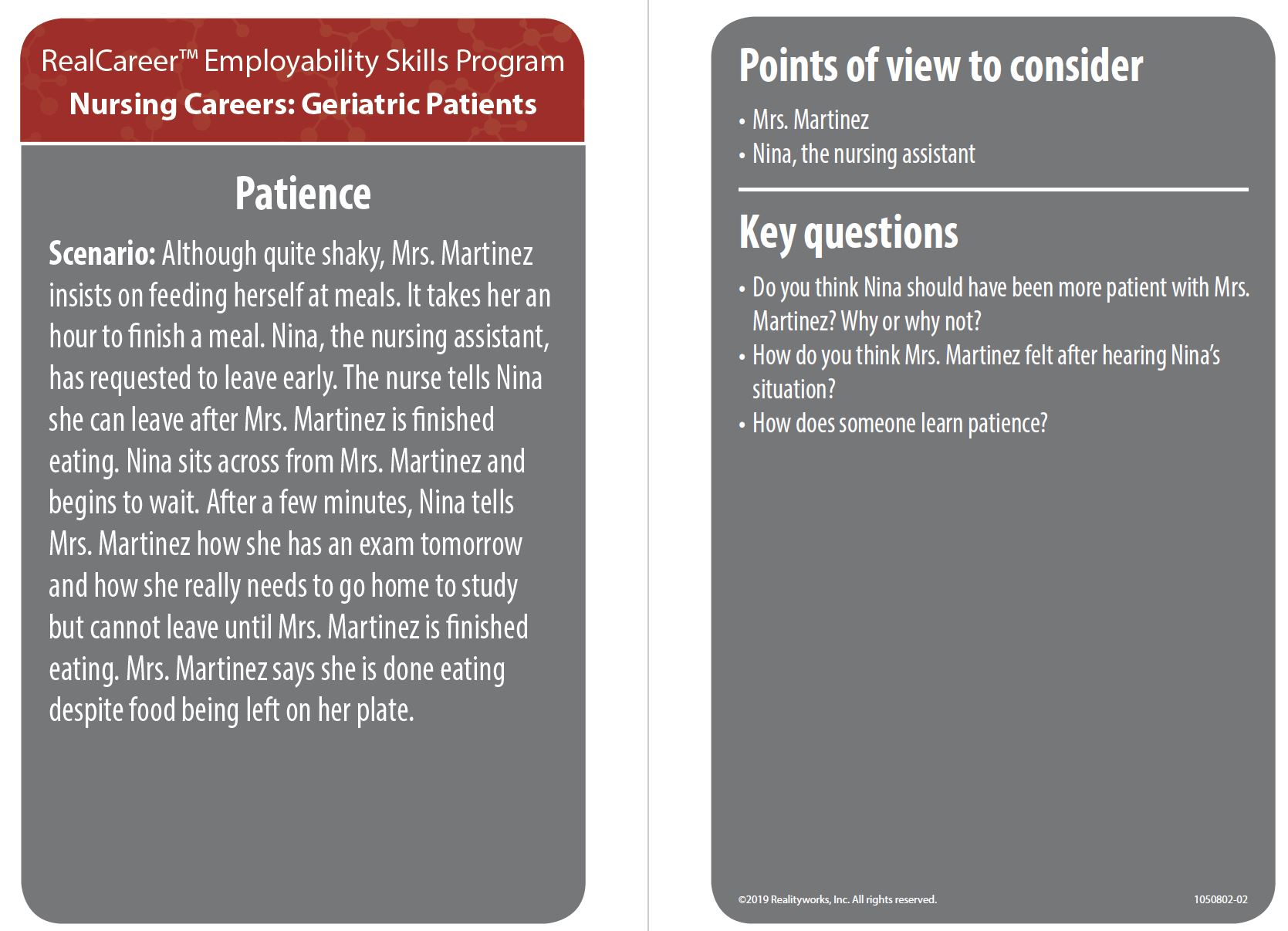
Use wearables in scenarios with one student playing the patient, wearing the simulator, and one or more students playing caregivers, such as nurses or CNAs. This is a great way to develop nursing soft skills by teaching empathy, communication, and more. You can even set up a hospital or nursing home room right in your classroom.
4. Set Up Stations
Create several small-group stations in your classroom for students to move through. One station could feature the complete simulation suit, one station could feature the visual impairment glasses, another could simulate hearing loss, and so on. The Geriatric Simulator curriculum even includes several research projects that students could focus on in another station.
Additional Resources
Looking for more resources to develop nursing soft skills and get students interested in health science careers?
- Watch the full webinar for free here
- Download our free Geriatric Implementation Guide
- Discover our free career exploration lessons