 When students learn about subjects like common birth defects and disorders, it can be difficult for them to fully understand the effects of these conditions without hands-on tools and visuals. Whether they’re exploring the defects of anencephaly or the physical attributes of Down syndrome, hands-on models provide an in-depth look that can’t be replicated in presentation slides or videos. That’s why we created the Birth Defects and Disorder Model Set, which addresses Down syndrome, spina bifida, cleft lip, anencephaly, clubfoot, and tetralogy of the Fallot. Read on to learn more about these unique models and the topics they address.
Visualizing Common Birth Defects
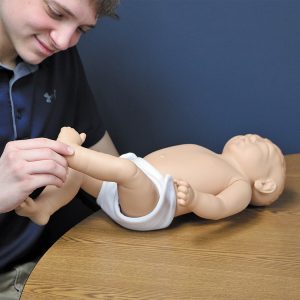
The model set includes the Birth Defects Baby, which shows what anencephaly, cleft lip, clubfoot, and spina bifida look like on an infant. It can be used to facilitate discussion on the risk factors, health challenges, and misconceptions associated with these conditions. The model set comes with downloadable curricula featuring a corresponding lesson on understanding common birth defects.
Understanding Down Syndrome
The Down Syndrome Baby depicts 12 physical attributes of infants is Down syndrome, such as a prominent forehead, Brushfield spots, and a small nose. Its included lesson comes with presentation slides about Down syndrome, student activities, and pre- and post-assessments. It was created in alignment with the National Standards for Family and Consumer Sciences Education.

Exploring Congenital Heart Defects
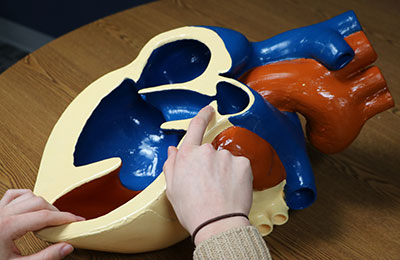
Visualizing common birth defects that affect internal organs can be even more challenging for students. The enlarged Tetralogy of Fallot Heart Model displays the misplaced aorta, pulmonary stenosis, ventricular septal defect, and right ventricular hypertrophy that make up this condition on a grand scale. This allows students to easily see the defects as you present them to the class.
Engaging a Variety of Students
This model set’s downloadable curricula feature three hours of content. It designed for middle and high school students as well as clinical and community education. Each lesson helps students gain awareness of the causes and risk factors for the common birth defects and disorders addressed. Students will document their initial knowledge to see how much they learned about each condition’s misconceptions, statistics, and characteristics at the end of the lesson.
View a full curricula overview here.
Resources
Looking for more resources and inspiration for your FCS or health science classes? Consider these: