 As valuable healthcare team members, Patient Care Technicians (PCTs) provide essential support to nurses and doctors. They are involved in every aspect of patient care, from monitoring vital signs to ensuring patient comfort — and demand for professionals with these skills is growing. If you’re starting or refreshing your own patient care technician program, consider these resources. They’ll help you save planning time, as well as understand how to align our own PCT training tools to help jump-start your courses.
What does a PCT do?
Students often wonder what the differences are between different career paths within health science. Let’s take a moment to break things down and compare nursing assistants to medical assistants to PCTs or technicians. (Ultimately, “patient care technicians” and “patient care assistants” are synonymous.)
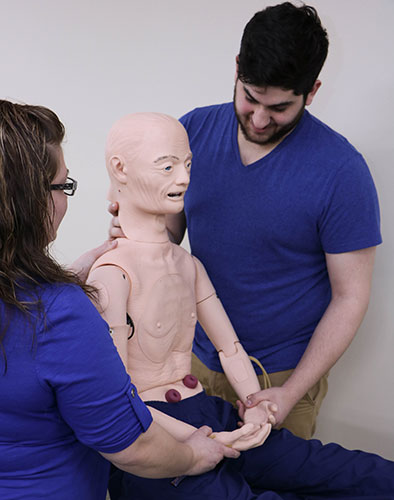
In terms of certification, nursing assistant requirements vary from state to state. Certification for both medical assistants and PCTs are recognized nationally. In terms of responsibilities while on the job, nursing assistants are primarily clinical in nature: assisting with activities of daily living and patient movement and transfers are common examples of nursing assistant duties.
Medical assistants and PCTs both build on the foundation of nursing assistant duties with additional responsibilities. PCTs often include phlebotomy procedures and EKG. Medical assistants are likely have those same advanced skills along with collecting vital signs, some types of medication administration, as well as having an administrative component to their job, including checking patients in and out and answering phones.
Simply put, nursing assistants are the entry level position; patient care technician falls in the middle; and medical assistants have the highest level of responsibility of the three positions. The salary levels reflect this as well.
What makes an effective PCT program?
These 6 elements, as defined by the Career Pathways Toolkit, are important to consider for any pathway you’re going to develop, including health science:
- Build cross-agency partnerships and clarify roles
- Identify industry sectors and engage employers
- Design education and training programs
- Identify funding needs and sources
- Align policies and programs
- Measure system change and performance
As you create your own PCT program, be sure to consider these six elements and how you could use them to guide your own program development.
Getting started

There are many places you can start, and a whole lot of resources available to you!
PCTs fall squarely within the therapeutic services career pathway of the health science career cluster. This career cluster is focused on planning, managing, and providing therapeutic services, diagnostic services, health informatics, support services, and biotechnology research and development.
One really helpful link is Advance CTE’s National Career Clusters® Framework, which serves as an organizing tool for Career Technical Education (CTE) programs, curriculum design and instruction. Their website offers an editable planning tool: their Plan of Study! This will help you lay out the courses you’ll need in your plan of study.
Build an advisory council
Involving local healthcare industry leaders and clinical professionals in your pathway development is critical. How can you understand what local employers are looking for in a health care professional if you don’t ask? Consider putting together a health care advisory council. Choose these from a variety of settings and levels of responsibility to get a variety of viewpoints and input.
Meet on a regular basis, perhaps quarterly. Have a frank dialogue and ask, “What are you looking for in your employees?” “Does your course content align with what they are looking for in the patient care technicians they hire?” To lighten the load, think about combining your advisory council with other health science specialties to get the most information in the most efficient manner possible.
Use your advisory council members to form partnerships. Are they willing to allow students at their location for field or job experience or job shadowing? Are they interested in coming in to be a guest speaker in your classes?
Engaging employers is one of the 6 key elements for developing career pathways.
Seek industry-recognized credentials
Many districts require that any career pathways created lead to industry-recognized certifications or credentials of some sort.
To find the right certifications or credentials for your program, ask the right questions, like:
- Does your state department recommend a specific certification or testing agency?
- Are your instructors licensed to teach dental assisting courses?
- What are local employers looking for?
- Is employment transferable?
- What is the cost of certification or a specific credential?
If you are newly developing a program, make sure you research and find out what to do so your students get certified properly. Are there any other certifications that students can go after? For example, CPR?
Think back to the six key elements for developing career pathways. Certifications and credentials are part of the step for aligning policies and programs.
Building a Patient Care Technician Pathway Program
Here are three examples of organizations that provide certification testing services. There are differences in content, services provided, and associated costs for testing and certification between these organizations, so we recommend that you do some digging to find out which matches with any requirements your state or district might have. Of course, there are others!
- American Medical Technologists
- National Patient Care Technician Organization
- National Association for Health Professionals
PCT content outline examples

When you visit an organization’s website, they will all have examples, like this one from American Medical Technologists. (Realityworks has no affiliation with any specific program; we are not promoting any program in particular.)
This is a summary of what is included in the AMT exam, but there is a more detailed outline of included content that follows, and most of them include what percentage of the exam is related to what content areas. If you are in a district that is specifically feeding your students through the program to obtain certification, this information is gold. Once you’ve chosen the right program, you can use this information to inform what you cover in your courses and you can glean your course pacing as well by understanding how important that content is when it comes to the certification exam.
National organizations with assessments or competitions
There are other organizations that offer technical and/or skills assessments.
The National Consortium for Health Science Education offers a Health Science Assessment. Although not a right-to-work credential, the assessment:
- Adds credibility of a national certification of achievement
- Satisfies Perkins requirements for technical attainment
- Validates student mastery of foundational healthcare knowledge and skills
Benefits for students include:
- Nationally recognized end-of-pathway certificate
- Validates skills attained with standards listed
- Certificate for job interviews and resumes
- Recognition on college applications
- Easier articulation into college programs
HOSA sponsors dozens of knowledge and skills competitions at the state and national level relating to a wide variety of health science topics. HOSA members are encouraged to take full advantage of the HOSA National Competitive Events Program as a way to increase the knowledge and skills as they prepare for future health occupations.
Consider hands-on learning aids and resources!
Here at Realityworks, we offer a combination of resources and curriculum that can help you realize your ideal PCT program. First, you should know that with all the products we create, we enlist subject matter experts to create curricula to go hand in hand with the hands-on learning tools. Our subject matter experts are exactly that: experts in their fields. They understand the roles and responsibilities of the field, as well as the certifications in the field. We are so proud of the work they do to help teachers, the boots on the ground, in making their jobs easier.

Our Patient Care Technician Package can help you jump-start your PCT program. Here is where your students get the hands-on learning of transferable career skills and foundational knowledge they will use in patient care technician careers. These packages are completely customizable as well. Each product comes with curriculum that’s already been created for you. Curriculum includes teacher presentation slides, pre- and post-assessments, as well as student activities that have been designed by subject matter experts.
Once you see the breadth of content that is available, you can begin to figure out how to plug it into the courses you have in your Plan of Study. If you already have some of these experiential resources, you can begin to review the curriculum topics included and see where they best fit in your pathway.
Additional resources for starting a Patient Care Technician Pathway Program:
- Careertech.org is a great resource for all pathway programs, and includes specific health science information as well.
- NCHSE also provides a curriculum crosswalk which can be extremely helpful in planning your courses. It takes their foundation standards and allows you to map where in your own curriculum you are covering those topics. These exercises provide transparency and accountability for the topics included and can help keep everyone on the same page regarding what is happening when during the curriculum.
- Use our Patient Care Technician Program Implementation Guide to understand how our comprehensive solutions can help you create 21st Century patient care technician programs that fit your unique needs.