As she prepared for the 2020-2021 academic year, Gallatin High School (GHS) Family and Consumer Sciences teacher Bethany Ringer knew interactive learning aids would be key to helping her students develop child care skills. She had spent the previous nine years teaching across town at Bozeman High School, where her students enjoyed hands-on learning experiences in the school’s child care center. This year, Ringer was welcoming students for the first time to GHS, which was constructed to meet the district’s increasing student population. Although the new building offers many benefits, it does not have a child care center – and in a pandemic year, safety concerns prevented coordinated trips to Bozeman’s.
 “The goal of my program is to introduce students to the idea that early child care is a viable career option. I want to give them a jumping-off point so they have some idea what the job looks like and they can hit the ground running if they enter the field,” said Ringer. “These tools were an easy way to offer those learning opportunities – packaged and ready to go!”
Bethany Ringer
Family and Consumer Sciences teacher
Gallatin High School
Bozeman, MT
When Ringer discovered Realityworks’ CDA Scenarios Kit and Child Care Center Design Kit, she saw an opportunity to bring hands-on learning into her classroom.

“The goal of my program is to introduce students to the idea that early child care is a viable career option. I want to give them a jumping-off point so they have some idea what the job looks like and they can hit the ground running if they enter the field,” said Ringer. “These tools were an easy way to offer those learning opportunities – packaged and ready to go!”
Ringer was already familiar with Realityworks, having used their RealCare Baby® infant simulators and RealCare® Pregnancy Profile® Simulator in her FCS courses for years. As her focus has shifted to include child care skills as well as infant health and safety and pregnancy and fetal development, Ringer returned to Realityworks to explore new teaching tools.
“It’s not just MT but all states that are seeing a need for early child care educators. You’re doing your research and staying on trend, especially with these kits,” said Ringer. “The products you provide, the lesson plans and whatnot, are a great starting point.”
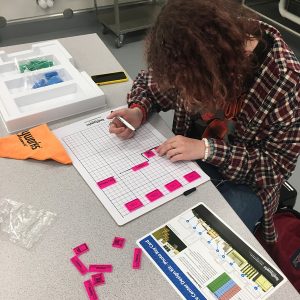 Students in Bethany’s occupational child care course have already taken child development and expressed interest in the topic as a potential career. Realityworks’ CDA Scenarios Kit and Child Care Center Design Kit caught her eye because they both offer engaging, interactive methods for exploring child care skills.
The CDA Scenarios Kit introduces students to 78 different scenarios from real-world child care settings, while the Child Care Center Design Kit uses lesson plans and manipulatives to teach students best practices for laying out learning center rooms. Ringer uses both kits in her occupational child care classes.
“I use the scenarios in tandem with the Child Care Center Design Kit,” Ringer shared. “Because the CDA Scenarios are based on all the competency standards, it’s super easy to find a specific competency. I select the standard, talk through the different scenarios, and students can apply what they learned. It makes the discussion way more fun and way more engaging.”
Ringer incorporated the CDA Scenario Cards throughout her curriculum, like student projects on infant, toddler and preschool development. She uses them to review material at the end of a lesson, and to scaffold learning as needed.
“It’s much more interesting than just asking students for answers to questions,” said Ringer. “With these, I can ask them what they would apply from the lesson to a certain scenario. Plus, there are situations that are a bit more tough, so I can save those for later.”
When it came time for students to learn about child care center design, Ringer used her kits instead of pens and graph paper. She immediately noticed how much easier it was for students to understand realistic room scaling.
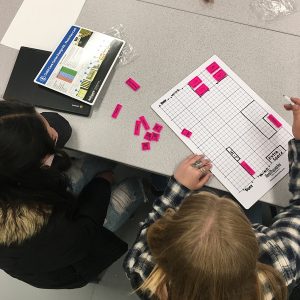 “We have this idea of what a space is, but having that understanding of how much space a crib takes up, or a table, really puts you into that more realistic mindset of, how do I adjust?” said Ringer. “When you just draw it, you can make the tables smaller so you can put everything you want in. But when you have the board and the furniture to scale, you can’t modify the size of the furniture – you have to modify your creative thinking and problem-solving.”
Ringer says the design kits helped students connect what they had learned to the real world.
“Although we’re not able to interact with the kids at our child care center, we were still able to tour it,” she shared. “I could hear everyone recognizing the furniture they’d already seen in the kits.”
Ringer is already planning different ways to use her new kits next year, when her students can access the district’s child care center. Although she sees these kits as becoming more “supplemental than instrumental,” they will still offer valuable opportunities to learn and reflect on important child care skills.
“There’s this momentum gaining for early child care right now,” said Ringer. “I want to make sure that my students are on top of it and a part of it!”
Learning tools used to build child care skills:
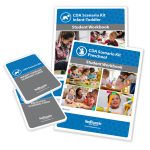
CDA Scenario Kit
Our CDA Scenario Kit uses interactive, real-world child care situations to prepare students to earn their Child Development Associate (CDA) Certification. Students will learn and practice skills they’ll need on the job in child care settings.
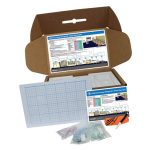
Child Care Center Design Kit
This interactive Child Care Center Design Kit includes curriculum and manipulatives to teach students best practices for laying out learning center rooms.