Pacing Guide
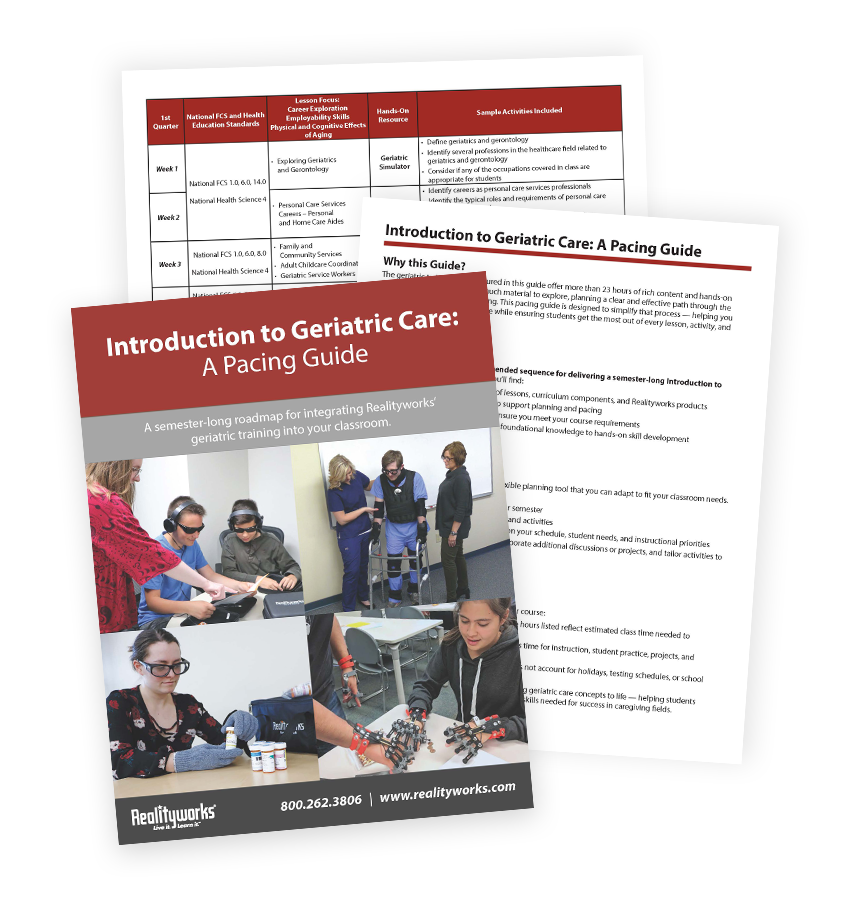 Geriatric Pacing Guide
This guide offers a week-by-week breakdown of lessons, products, and standards to help you integrate geriatric kits seamlessly into your curriculum.


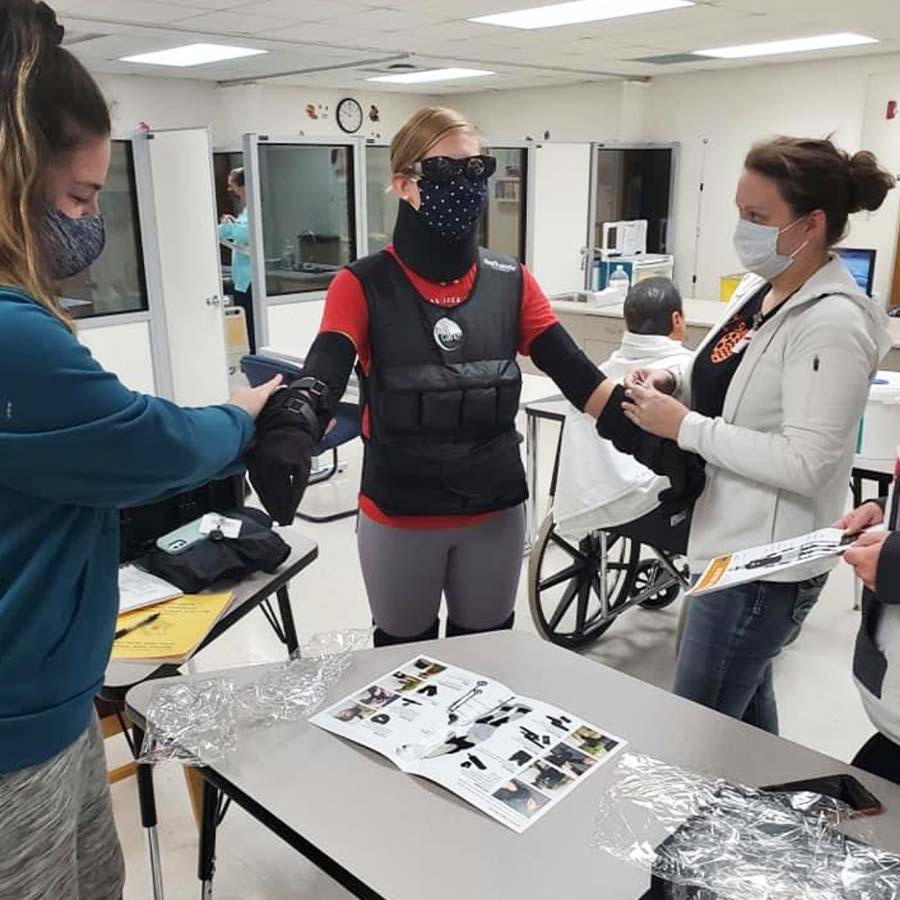
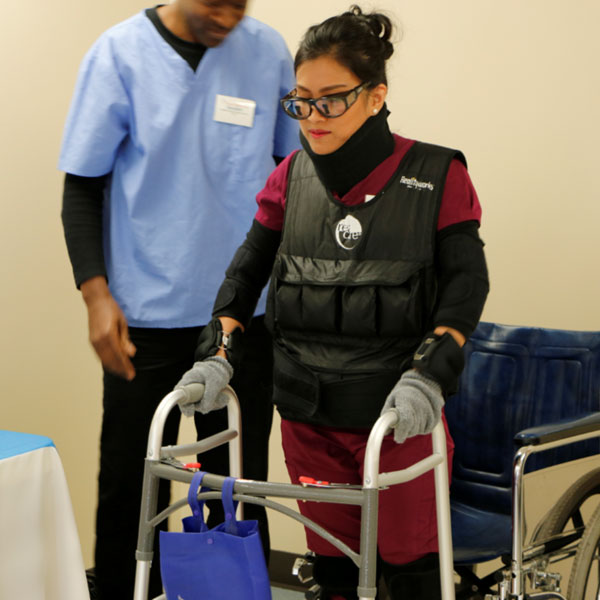
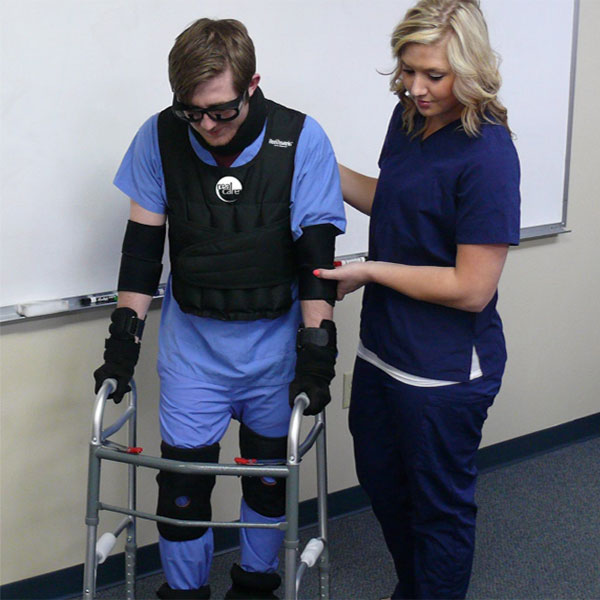
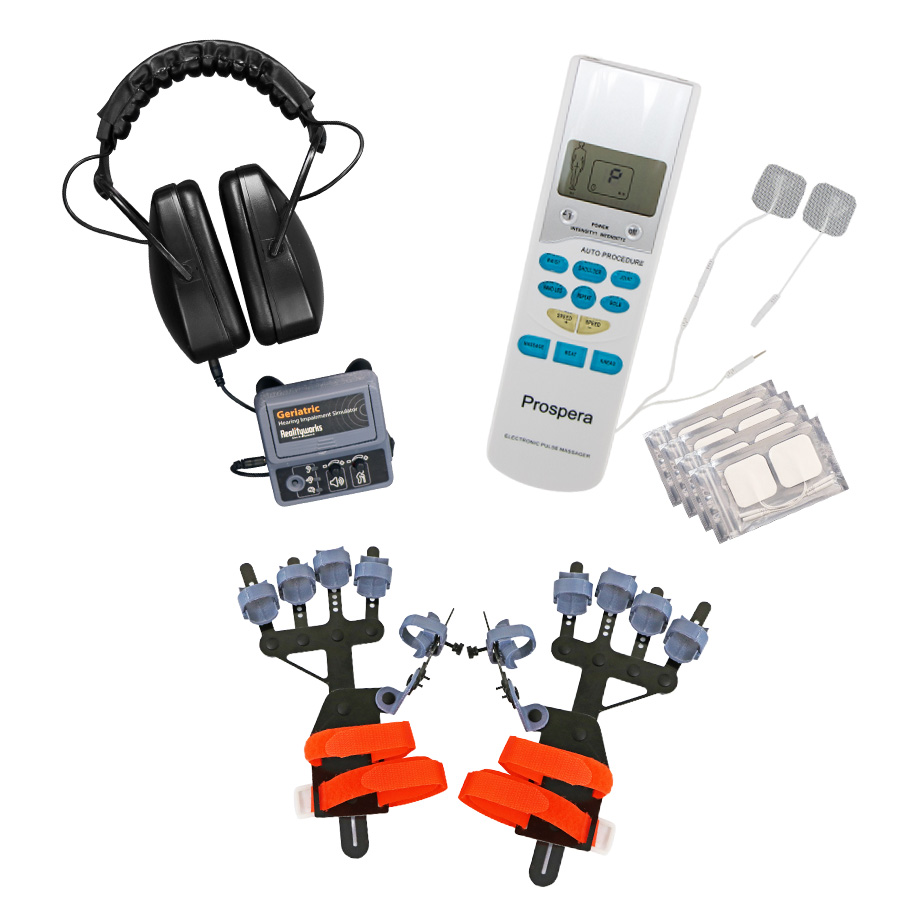
The Geriatric Simulator is an award-winning educational tool designed to help students develop empathy and a deeper understanding of the challenges faced by older patients or individuals with limited mobility. This wearable simulator allows students to experience firsthand the physical and visual impairments that many older adults live with daily, including stooped posture, restricted range of motion, and conditions like glaucoma.

$3,499.00
Request a Free QuoteGeriatric Pacing GuideThis guide offers a week-by-week breakdown of lessons, products, and standards to help you integrate geriatric kits seamlessly into your curriculum.

The Geriatric Experience
Lesson topics:
1. Exploring Geriatrics and Gerontology
2. Visual Impairment
3. Declining Mobility Due to Aging
4. Impact of Aging on Bones and Joints
5. Hearing Loss
6. Cognitive Changes with Aging
7. The Geriatric Experience
8. Amazing Aging
Teaching hours: 10-15
Includes: Presentation slides, student activities, and assessments
Aligns to: National Health Education Standards, National Standards for Family and Consumer Sciences Education, Common Career Technical Core Standards, Common Core State Standards
Geriatric Experience Curriculum Overview
Geriatric Experience Curriculum Sample
Health Science Curriculum Overview

Use our Career Exploration Station Activity Sheet to incorporate a lesson specific to career exploration.
 The Geriatric Simulator enables users to experience:
Great for in class training, demonstrations, and remote learning.
What careers can this Geriatric Simulator help students prepare for?
Potential career opportunities include geriatric care manager, geriatrician, geriatric nurse practitioner, geriatric pharmacist, geriatric physician assistant, geriatric psychiatry, social worker, occupational therapy, home health aide, CNA, nursing home aide, rehabilitation specialist, and senior care provider.
What classes is the Geriatric Simulator often used in?
This trainer is commonly used in classes and programs such as healthcare nursing, gerontology, lifespan development, respite care, CNA training, and more.
Video – Using the RealCare Geriatric Simulator
How do I clean the Geriatric Simulator?
This product should be hand-washed and air-dried only. Do not wash any part of the Geriatric Simulator with a machine. To clean the visual impairment glasses after each use, gently wipe them with an approved cleaning agent. Approved cleaning agents include disinfectant wipes, soapy water, and 70% isopropyl alcohol wipes.
How are other teachers using the Geriatric Simulator?
Check out this blog for some great ideas of how others are using the Geriatric Simulator.
What sizes are available for the vest?
The vest has adjustable straps, creating a one-size-fits-most wearable simulator
What visual impairments do the glasses simulate?
The visual impairment glasses simulate glaucoma, macular degeneration, cataracts, diabetic retinopathy, retinal detachment, and retinitis pigmentosa.
How many simulators would you recommend for a 20-student classroom?
We recommend four simulators for a 20-student classroom.
Do you offer product support?
Yes! Our product support team is available M-F 8am-5pm Central Time via phone, email, or chat. Contact customer support here.
What other program support do you provide?
We offer free webinars, blogs, and classroom resources to help your program succeed. Follow Realityworks on your favorite social media platforms: X (formerly Twitter), Facebook, LinkedIn, Instagram, TikTok, and YouTube for other tips and tricks.
Free Program Resources – Empathy Guide, Implementation Guide, webinars and more
Poster Study Download – Use of Simulation to Improve Empathy Among Undergraduate Students
Customer Story – Empathy Simulators Enhance Nurse Aide Training at VA Community College
Customer Story – Virginia OT Students Use Geriatric Simulators to Walk in Future Clients’ Shoes
Blog – Creative Ways to Boost Health Science Classroom Engagement
Blog – Use This Aging Simulator to Develop Healthcare Students’ Empathy
Blog – 6 Hands-On Tools for Geriatric Care Training
Featured Product Demonstration: RealCare™ Geriatric Simulator
International Pricing May Vary.
Check out our International page for appropriate contacts.

Linda Caruso –
The nursing students love the Geriatric Simulator. When the students put on all the equipment it gives them a better understanding of what a Geriatric Patient is going through with issues such as mobility. Using this simulator makes things so realistic for students. We get so many compliments about the kit. Great investment.
Cynthia Acevedo –
Parlier High School purchased this simulator for our medical pathway and our students really enjoyed the making the geriatric experience real. We had a campus walkthrough and various staff members even got to enjoy this products. It was awesome!
Anne –
The Geriatric Simulator has been a great resource for teaching occupational therapy students. I am able to use pieces of the Simulator in particular units, such as a low vision, and has a whole at the end of the semester to put everything together. It is a great additional to our course.
Hannah C., MSOT, OTR/L, OTA/L, Assistant Professor, Occupational Therapy Assistant Program –
The time it takes to put on all of the simulator components has been helpful for students to realize just how significant the impact is on a client’s life. I think it’s helped clients’ challenges become more real to them.
Amanda L., MOT, OTR/L Director, Associate Professor Occupational Therapy Assistant Program –
As a director, I was immediately drawn to the increased opportunity for engagement that the simulators would bring as instructional methodologies to facilitate hands-on learning, critical thinking, and clinical reasoning prior to direct patient care.
Sadonya S., MSN, RN, Assistant Professor, Simulation/Lab Coordinator –
The students loved being able to put themselves in the position of a geriatric patient. They said it helped a lot with empathy toward the patient. They especially liked the weighted vest, walking with the glasses and walker (and we added in breathing through a straw during their walking time also). They had a new perspective once our sensory lab was completed.
Glenda –
This is an excellent training simulator. With COVID19 we are not allowed into facilities to complete clinical training and this simulator has allowed us the opportunity to provide training in our simulation lab and give our students as real as possible learning opportunities!
Sadonya Suttles –
Excellent product for teaching Allied Health students! They absolutely love this product. I receive so many compliments on how this product makes the geriatric experience so real. They really can empathize with those with diseases or understanding the challenges of our geriatric population.
Rebecca Park –
This is my first time using the Geriatric Simulator and it was a great one! I used as a precursor to starting my nurse aide training program and the students LOVED it! The curriculum was a great and the PowerPoints were very helpful. Empathetic training at it’s best! Thank you!
Eric –
Our students enjoy the realism of the equipment and the authenticity of the limits that face the geriatric population. Allows students to grasp real care considerations when interacting with geriatric patients.
Holly Pate –
This is an excellent tool for teaching empathy and increasing understanding of the patient’s challenges for any healthcare student. The one suggestion I would offer is to make the set of glasses also available as a separate purchase. The glasses are useful to Diagnostic Medicine class; the other items are NOT part of the standards for that course.
Bobby Scanlon –
The Geriatric Simulator helps me to teach empathy for our elderly and disabled residents each and every time I use it during the Nursing Assistant courses I teach. I can see the light bulbs come on by the facial expressions of my students as they attempt to see to perform tasks wearing the visual deficit equipment. Or how difficult it can be to take a deep breath when walking around the classroom wearing a vest which is weighted to simulate the heaviness of their chest after taking medications designed to control blood pressure or just plain having a breathing deficit from chronic COPD. It has been a great tool when talking about the different body systems, aging changes and conditions which can impact all of us at some point as we get older. As a nurse educator I would highly recommend the suit as an interactive teaching tool to avoid the over lecturing and the boredom that can sometimes happen.
Jeanie Stanek –
The Geriatric Simulator is such an awesome tool for teaching empathy and sensitivity to CNA and nursing students. It helps them really put themselves in the shoes of the elderly and feel what it’s like to have restricted mobility, loss of vision, and other conditions elderly people deal with.
I have used this tool a little untraditionally in the past — as a way to engage with potential employees at job fairs. It really helped me connect with potential applicants and let them see exactly how big of an impact they could make on the lives of the elderly if they chose to work in a senior care facility.
I absolutely love how this tool can be used for education and recruitment purposes.
Highly recommend it for your program!
– Jeanie Stanek
Employment Marketing Consultant
The Northworks
http://www.thenorthworks.com