As today’s classrooms continue adapting to the pandemic, learning aids that engage students in person and via video remain valuable. In a recent webinar, Realityworks product manager Jamey McIntosh shared our top animal systems tools for engaging agriculture students. If you teach reproductive, digestive and muscular system content in your classroom, keep reading. You’ll learn our top tips for teaching animal systems content remotely or in person. Use these ideas, along with the lesson plans we’ve made available during these unprecedented times, to help your students stay engaged in any learning environment.
Teaching style: remote Lecture
Although there are disadvantages to traditional lectures, a dynamic lecture can be an engaging, straightforward way to communicate with students, especially when those students are remote. If this is the case in your classroom, consider using demonstration to engage your students. Demonstrations give your students something to look at, helps hold their attention and can jump-start small- or large-group discussions.
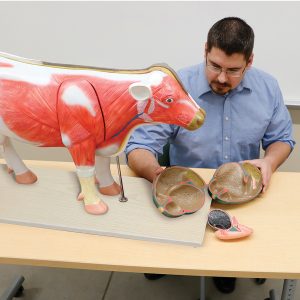
Our favorite animal systems tool for this teaching style: “Claire” the Cow Model
This oversized model features realistic details of the reproductive system, the digestive system, and udder structures. You can highlight each piece as you remove it from the model and discuss both internal and external anatomy of the cow.
Bonus: Our Cow Model includes lesson plans and activities that emphasize digestive and reproductive systems. Access these lesson plans even if you don’t own our Cow Model by clicking here.
Teaching option: Lecture + Presentation Slides
There are many benefits to a good PowerPoint presentation, from ease of use to a smooth presentation flow. If you’re addressing animal systems content via PowerPoint, consider both a “show and tell” and “tell and show” option. Conduct a demonstration (see above) then present your content via slides, or present the content on your slides, then conduct a demonstration. And don’t forget that “less is more” then it comes to PowerPoint slides – keep your content concise.
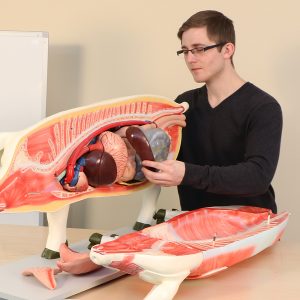
Our favorite animal systems tool for this teaching style: “Priscilla” the Pig Model
Like all our animal systems model, Priscilla comes with comprehensive curriculum. It includes a teacher guide, student activities, assessments and presentation slides that address anatomy and pork cuts, the pig digestive tract and the pig reproductive system. Combine the slides and a demonstration of this large, realistic model to engage your virtual or in-person students.
Bonus: Access the lesson plans that accompany our Pig Model even if you don’t own it already by clicking here.
Teaching option: Lecture + PowerPoint Slides + Activity
Activities help students understand the purpose of your lesson content and develop a deeper understanding of important concepts. Reflection, in particular, is a great activity for encouraging deeper thinking and analysis of the content you just covered.
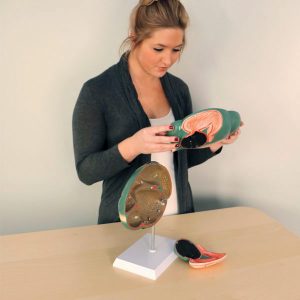
Our favorite tool animal systems tool for this teaching style: Digestive System Models
Like all our animal systems model, our Digestive System Models include reflection activities like worksheets and quizzes that make it easy to incorporate opportunities for reflection into your lessons. You can pass around these models for students to interact with during your lecture and presentation, then conduct a reflection activity to encourage a better understanding of the cow ruminant, horse stomach and pig stomach.
Bonus: Our Cow Ruminant Model, Horse Stomach Model and Pig Stomach Model include lesson plans and activities that emphasize digestive systems. Access these lesson plans even if you don’t own these models by clicking here.
Teaching option: Lecture + PowerPoint Slides + Activity + Hands-On
Hands-on or experiential learning grabs students’ attention and helps them connect concepts to the real world. Get creative and encourage as much participation as you can. By working with what you have, whether it’s clay or our own animal systems models, you’re giving your students more opportunities to learn, engage and develop skills.
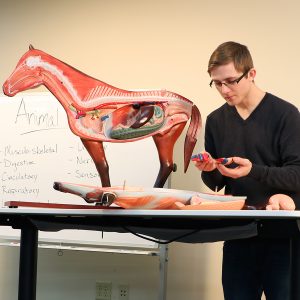
Our favorite animal systems tool for this teaching style: “Hattie” the Horse Model
This detailed, color model offers a lifelike view of the internal and external anatomy of a horse. Better yet, it splits at the midline to reveal 11 removeable body parts and organs, giving students plenty of opportunities for hands-on learning.
Bonus: Our Horse Model includes lesson plans and activities that emphasize horse anatomy, the digestive system and the reproductive system. You can access these lesson plans even if you don’t own our Horse Model by clicking here.
Learn more
Looking for more information on animal systems tools and teaching animal systems content? Consider these resources:
- Watch Jamey’s complete webinar on-demand anytime: “Engage Your Students in Animal Systems: Tools for Teaching Reproductive, Digestive & Muscular Systems”
- Explore the features we hold our animal models to in this blog, “3 Essential Features of a Good Animal Anatomical Model”
- Use this free, downloadable Agriculture Program Implementation Guide to understand how our comprehensive solutions for agriculture education can be used to create the 21st Century animal science program that best fits your unique program needs