 Every veterinary science classroom can benefit from an animal care trainer that brings real-world career skills to life—and the Canine Vital Signs Trainer does just that. Designed to help students practice essential canine health assessments like heart rate, respiration, and temperature checks, this hands-on tool prepares learners for careers in veterinary science and animal care. Whether you’re teaching high school students or supporting certification prep, this trainer makes learning both engaging and career relevant.
Real-World Practice Without the Risk
The Canine Vital Signs Trainer offers an incredibly lifelike experience that helps students build confidence and competence before working with live animals. This hands-on approach bridges the gap between theory and practice, allowing students to develop essential skills in a safe, controlled environment. Whether used in a classroom lab or skills assessment, the trainer provides an immersive experience that mirrors real-world veterinary scenarios.
Teaching Heart and Breathing Rates
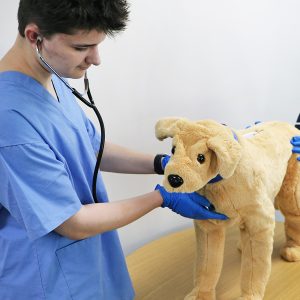
Press the buttons on the back of this animal care trainer to cycle through six heart and respiratory rate scenarios for students to assess. Using a standard stethoscope, students can listen to the trainer’s heart rate. It even breathes at different rates! The trainer includes:
- 2 healthy scenarios
- 2 scenarios with high heart rates and fast respiratory rates
- 2 scenarios with low heart rates and slow respiratory rates
Assessing Rectal Temperature
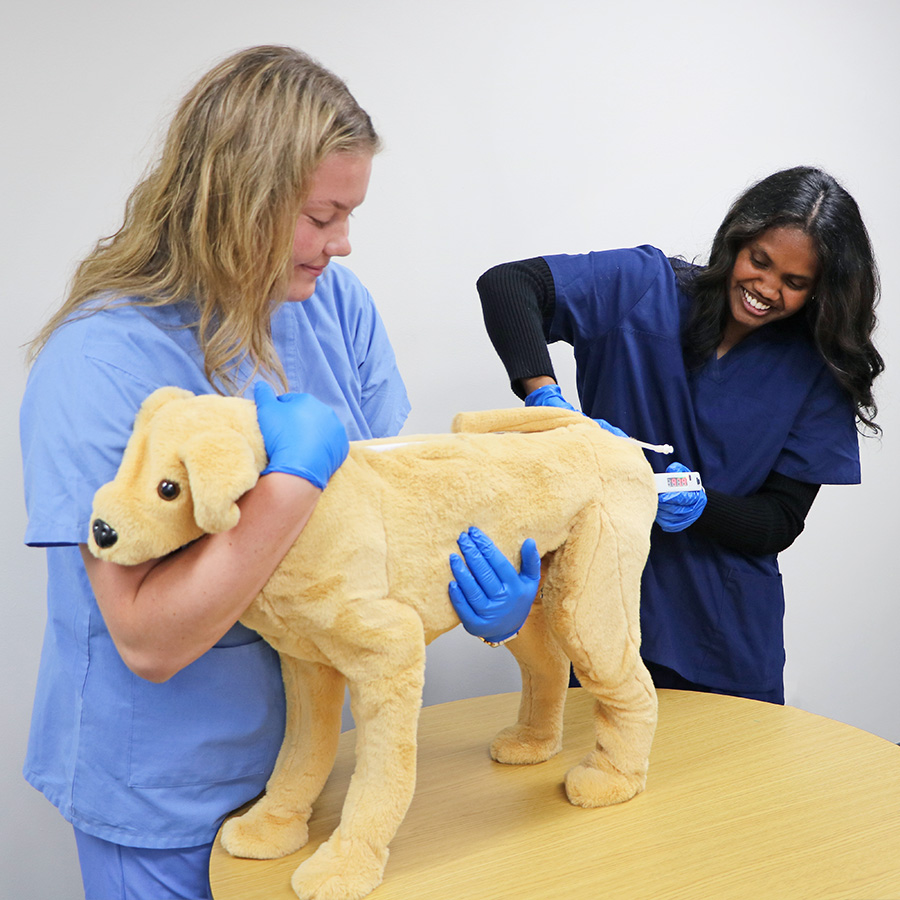
Using the same intuitive interface on the Canine Vital Signs Trainer, you can select from five temperature scenarios. Students then use the included thermometer to take the trainer’s rectal temperature, just as they would with a live animal. This hands-on experience helps learners practice proper technique and develop confidence in performing this essential skill. Once they take the temperature, students must interpret the reading to determine whether it falls within a healthy range or indicates a potential health concern. The trainer includes:
- 2 healthy temperature scenarios to reinforce baseline knowledge
- 2 fever scenarios to simulate infection or inflammation
- 1 low temperature scenario to represent hypothermia or shock
Simulated Sample Collection
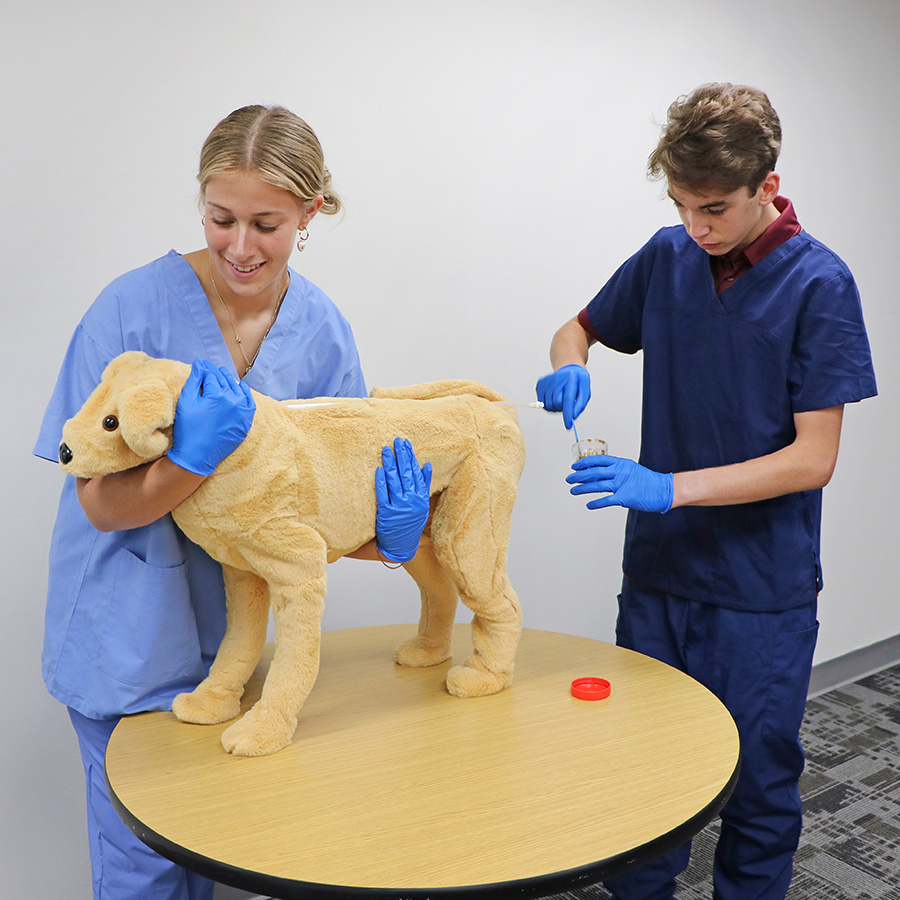
Students can also practice urine and fecal sample collection on this animal care trainer. For a urine collection, fill the included syringe with water and attach it to the tube near the Canine Vital Signs Trainer’s tail. Depressing the plunger moves the water through the trainer and out its penis, where student can practice collecting the sample with the included tool. You can even add food coloring to the water for more realism!
Additionally, mix the included Simulated Stool powder with water to your desired consistency and use the other included syringe to apply it to the trainer’s rectum. Students can use the fecal loop and collection container that comes with the trainer to practice stool sample collection. When practice wraps up, simply pull the rectum out of the trainer and clean it with the provided tool in the sink.
Curriculum Included
Not sure where to begin? This animal care trainer comes with a downloadable curriculum that features lessons on landmarks for vital signs, a proper vital signs check, and sample collection procedures. The complete curriculum takes about six hours to teach, but you can easily select specific lessons or activities that best align with your class. Presentation slides, student activities, and assessment tools are all included to save you time.
Built for Career Readiness
The Canine Vital Signs Trainer is designed to support key learning outcomes in veterinary science and animal care programs. Its hands-on functionality and ready-to-use curriculum align with several national and state standards, including:
- National AFNR Career Content Standards
- Texas Essential Knowledge and Skills (TEKS) §130.9 for Veterinary Medical Applications
- NAVTA Clinical Practice Standards
- NOCTI Vital Signs Assessment Criteria
By practicing vital signs monitoring students gain proficiency in foundational clinical skills that are essential for careers in veterinary medicine and animal care. These skills are also valuable in FFA Veterinary Science Career Development Events (CDEs), where accurate assessment and interpretation of vital signs can impact competition performance. Whether preparing for certification exams, career pathways, or competitive events, this trainer helps students build the confidence and competence needed to succeed in real-world animal care settings.
Additional Resources
- Decorate your classroom with our free posters and infographics on vet science careers, agriculture careers in STEM, and more
- Check out this blog about tools, tips, and best practices for vet science program success
- Explore all our vet science teaching tools here