 We were so excited to hear that our auscultation simulators won gold in the 2022 Better Future New York Design Awards‘ Product Design – Medical category. This award celebrates creative and innovative designs for medical products. To qualify, we got to chat with our product development team to learn the ins and outs of these two simulators. It was fascinating to hear about the design and creation process. Here’s what they told us.
1. What Are Realityworks’ Auscultation Simulators?
We created our Auscultation Trainers to help medical students learn correct stethoscope placement as well as how to accurately recognize healthy and unhealthy heart, lung, and bowel sounds. We included three components to ensure true-to-life practice sessions. Keep reading to learn how our torso/vest, RealityScope, and smart device with app engage students with real-life learning experiences.
2. Who Created the Auscultation Simulators?
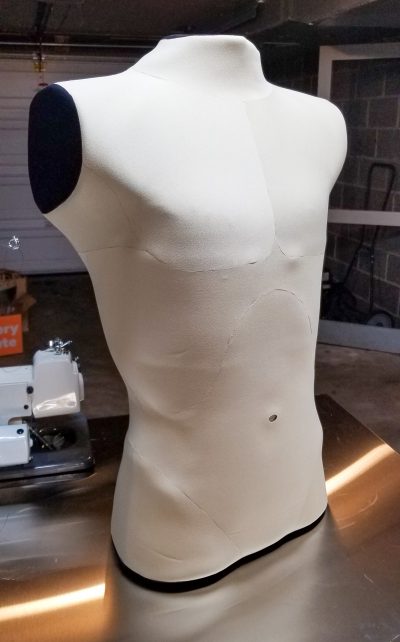
A team of more than 15 people at Realityworks, plus outside development partners, collaborated to create our Auscultation Trainer and Wearable Auscultation Trainer. Internally, our mechanical engineering lead focused on the manikin development. Two interns helped him with some of the modeling and prototyping. Our mechanical engineering manager worked closely with a development partner of ours, who led the RealityScope design.
On the electrical side, a senior software engineer, electrical engineer, and test technician were key internal contributors. During the testing and rollout phase of the project, a test technician, product rollout manager, document control manager, manufacturing engineer, and lead designer all had important roles to play.
3. What Makes The Auscultation Simulators Unique?
We gave the Auscultation Trainer a clear torso that details major organs for easy auscultation site identification. We did this to help beginner students learn. For more advanced students, we included a skin-like cover to hide the organs. The included RealityScope connects to any stethoscope to let students hear heart, lung, and bowel sounds when placed over a corresponding auscultation site. Students can also practice rib palpation on the torso through the skin overlay.
The included smart device features an app programmed with actual recordings of auscultation sounds engineered to sound correct through a stethoscope. This unique feature that helps ensure students are learning from practice that is as realistic as possible. The sounds will only play when students move the RealityScope over a precise auscultation site and apply the correct pressure. These sounds create scenarios that can be used for both practice and assessment sessions.

4. Why Were These Simulators Created?
When nurses perform a physical assessment, auscultation is one of the four main techniques they use. Performing auscultation with a stethoscope is an important part of a physical examination. Auscultation allows for the identification of a variety of illnesses that might otherwise go undetected. Nursing students need to master skills on stethoscope placement, patient positioning, and familiarity with heart, lung, and other body sounds. These are important for ensuring nurses are performing auscultation properly.
However, many trainers are very expensive and don’t teach the correct locations of sounds. Our auscultation simulators are more affordable and of higher quality to help students hone these necessary skills when they don’t have in-person access to patients.
These auscultation simulators allow students to practice finding and identifying sounds from realistic locations in the back, chest and abdomen. The included smart device has an app with sounds and scenarios for students to listen to not just heart and lung, but bowel sounds as well. Students practice locating sounds on a torso or a person wearing the vest to make the practice with the trainers as realistic as possible.
5. What Were the Biggest Design Challenges You Faced?
Our team faced several design challenges when creating these auscultation simulators, including:
- Developing a tooling method for a relatively low volume but large physical size manikin that provided interior access to the front and back for electronics placement
- Acquiring sound files and working with subject matter experts to identify desirable scenarios and sounds as well as appropriate locations
- Developing an algorithm using different numbers and sizes of RFID (radio frequency identification) tags to define small and large read zones on the manikin
- Creating a dynamic table to specify those regions for the stethoscope attachment device to make development and adjustment easier
- Developing life-like graphics to apply to the exterior of the manikin that show the appropriate internal organs in proper orientation to the physical landmarks
- Coordinating tweaks to the physical design, the graphic design, and the layout of electrical components to ensure alignment between all three
- Creating a good user interface for the app by working with instructors to understand how the product would be used in a classroom in both practice and assessment modalities

6. What Efforts Were Made Toward Product Sustainability?
Rather than develop our own device we used an off-the-shelf mobile platform that we could build on top of. This brings challenges with adjusting to changes another supplier is making to their products over the coming years. However, it means we can leverage their tooling, maintenance, and production investments. Plus, we have a flexible device that can do more than just one application.
Almost every meeting and collaborative effort was done remotely. Despite having a team that spanned multiple states and even around the world, we traveled very little.
Prototyping was done in our own prototype shop. We were able to CNC out tools from locally sourced wood products, thermoform plastic in house, and rapidly iterate prototypes. Much of the handheld accessory design was validated with digital models and then in-house 3D prints. Since much is dependent on correct manual placement and programming of over 100 RFID tags within the body, we’ve invested time into developing automated and semi-automated test tools to make final functional tests both effective and cost conscious.
7. What Does Winning This Award Mean to You?
Our development team puts a lot of effort into creating helpful, effective, and accurate tools, and we don’t always get to see the direct impact in the classroom or real world. An award like this by an acclaimed independent panel against great competition shows we are doing something right!

Learn More
Looking for more information on our awards and health science learning aids? Consider these:
- Find out more about the Auscultation Trainer’s medical product design award in this press release
- Learn about how the Realityworks Bariatric Nursing Manikin Was Named EdTech Breakthrough Awards 2022 Career Readiness Solution of the Year
- View all our company and product awards